• Skip to primary navigation
  • Skip to main content
  • Skip to primary sidebar
  • Contact Us
  • Pay My Bill
  • Patient Portal
KV Healthcare

KV Healthcare

Your Home for Health

  • Find a Provider
  • Clinics & Specialties
        • Primary Clinics

        • KVH Family Medicine – Cle Elum
        • KVH Family Medicine – Ellensburg
        • KVH Home-based Primary Care
        • KVH Internal & Adult Medicine
        • KVH Pediatrics
        • KVH Women’s Health
        • KVH Rapid Access
        • Specialty Services

        • Anticoagulation Clinic
        • Addiction Medicine
        • Specialty Clinics

        • ENT & Allergy
        • Cardiology
        • Dermatology
        • General Surgery
        • Home Health
        • Hospice
        • Neurology
        • Podiatry
        • Orthopedics
        • Urgent Care
        • Urology
        • Vascular Surgery
        • Workplace Health
        • Wound Care
        • Therapy Services

        • Physical Therapy
        • Speech Therapy
        • Occupational Therapy
        • Cle Elum Therapy Services
  • Hospital Services
        • Services

        • Cardiopulmonary
        • Emergency Department
        • Imaging
        • Laboratory
        • Nutrition
        • Pharmacy
        • Surgical
        • Family Birthing Place

        • About Family Birthing Place
        • Class/Event Calendar
        • What to Expect
        • Birth & Family Education
        • Lactation Services
        • 4th Trimester Resource Center
        • Pregnancy & Infant Loss
  • Patients & Visitors
        • Patient Tools

        • Request Medical Records
        • Checking In
        • Language Services
        • Quality of Care
        • Patient Portal
        • Patient Safety & Security
        • Patient Policies
        • Insurance & Billing

        • Accepted Insurance
        • Price Transparency & Billing Services
        • Washington Health Plan Finder
        • Financial Assistance
        • No Surprise Act - Balanced Billing
        • Insurance vs. Self Pay
        • Bills from Other Providers
        • Pay My Bill
        • Visitors

        • Visiting Information
        • Mother’s Room
        • Café
  • About KVH
        • About KVH

        • About KVH
        • Mission & Vision
        • Board of Commissioners
        • Administration
        • Quality of Care
        • DAISY Award Program
        •  

        • News & Blog
        • Events & Education
        • Contact Us
        • Locations
        • Work With Us / Careers
        • Foundation

        • About the Foundation
        • The Foundation Board of Directors
        • Programs to Support
        • Ways to Give
        • Donate Now
        • Foundation Events
  • Donate Now
  • Pay My Bill
  • Patient Portal
  • Find a Provider
  • Clinics & Specialty Services
  • Hospital Services
  • Patients & Visitors
  • About KVH
    • Mission & Vision
    • Board of Commissioners
    • Administration
    • Contact Us
    • KVH News
    • Our Locations
    • Quality of Care
  • Careers at KVH
    • Culture & Mission
    • Education
    • Providers
    • Non-Clinical
    • Volunteer
    • Nursing
    • Professional Development
    • Clinical
  • The Foundation at KVH
    • Donate Now
    • About the Foundation
    • The Foundation Board of Directors
    • Foundation Events
    • Programs to Support
    • Your Impact
    • Ways to Give

KVH News

Can Rural Healthcare Deliver?

HealthNews · June 24, 2024 ·

Written by: Tricia Sinek, Strategic Projects Coordinator

In the US today, 55% of rural hospitals have closed their maternity units. Women in these communities must travel long distances to deliver their babies. Traveling during active labor increases the risks of complications for both mother and baby. Why is this happening? A perfect storm of conditions is leading to this trend.

The amount hospitals are paid to deliver babies is often lower than the cost of providing this care. To deliver babies safely in a rural setting requires several specialized team members, including maternity-trained RNs available 24/7/365 days a year, physicians available to deliver babies 24/7/365, anesthesiologists 24/7/365, and surgeons for OB emergencies 24/7/365. Additionally, you need specialists who can perform newborn resuscitation if needed. The cost of providing this expert care is huge. At KVH, this cost is over 7.5 million dollars a year. The reimbursement for delivering this care at KVH does not cover the cost of staffing. Because of this shortfall in reimbursement, KVH must make up for these losses with other services they provide. Hospitals that are losing money in their operations cannot pay for the high cost of maternity care. 

The second major force leading to the loss of maternity care in rural communities is the inability to recruit and retain OB/GYNs. Historically, OB/GYNs have worked in both the clinic setting and the hospital – frequently being called away from the clinic to deliver babies. This is a disruptive way to live and disruptive for women getting their in-clinic care. In a rural setting, typically three doctors would share the responsibility for 365 days a year of OB coverage plus see clinic patients Monday through Friday. Each doctor is on-call 24 hours straight to deliver babies, but they also have a full schedule of patients in the clinic Monday through Friday. Typically, an OB/GYN could work all day in the clinic seeing patients, cover OB deliveries all night, and then return to the clinic for another full day of appointments. Rural OB/GYNs working this schedule can conceivably work two to three 33-hour shifts per week, plus additional clinic days. A cultural shift in healthcare has led to providers seeking a better work-life balance, so hospitals are unable to recruit new Doctors for this type of schedule. It is incumbent upon healthcare systems that wish to continue delivering babies to find new staffing options.

KVH remains fully committed to being able to deliver the babies of Kittitas County. This requires us to do two things: first, find a model that works in the rural setting, and second, make enough money with the other services we provide to cover the unfunded costs of delivering babies. We have taken steps starting in 2023 to work with an expert partner in OB/GYN care to provide consistent OB/GYN coverage and separate clinic care from OB Call coverage. This will increase our capacity to serve individuals for all their women’s healthcare needs without interruption. It will also lead to a greatly improved work-life balance for our current and new providers. We believe this to be a win-win for KVH, our staff, and most importantly – our community. Bring on the babies! In the US today, 55% of rural hospitals have closed their maternity units. Women in these communities must travel long distances to deliver their babies. Traveling during active labor increases the risks of complications for both mother and baby. Why is this happening? A perfect storm of conditions is leading to this trend.

‘Phubbing’ and Its Effects on Children

HealthNews · June 13, 2024 ·

Contributor Dr. Elise Herman

Smartphones are a mixed blessing. As amazing as they are, they take our attention away from what is right in front of us—and that can include our children. The term ‘phubbing’ describes snubbing someone we are with by paying attention to a smartphone, and ‘parental phubbing’ means interacting with a phone instead of one’s child. For kids over age 2, we do not have to be interacting with them constantly, but we do need to be emotionally available if they have a question or need us in some way, and being tethered to the phone impairs this.

When a parent chooses looking at their phone over paying attention to their child, the interaction between them suffers- the parent is less engaged with their child who may at first ask for more attention, but then soon give up. The child may become frustrated and sad and act out. Over time, this pattern of phubbing can lead to poor self-esteem and less confidence with other social interactions. Parental phubbing is also related to increased anxiety and depression in children and adolescents.

Research has shown the negative impact of parental phone use on babies, too, who may become more irritable and behave negatively when their parent ignores them to be on their phone. Studies of maternal phubbing revealed babies showing signs of stress (such as increased heart rate and emotional distress) and less effective learning. We know that simple eye contact between an infant and their parent builds brain development, so it is not surprising that taking this vital connection away can have a negative consequence for the child.

While most parents acknowledge that their cell phone usage gets in the way with interacting with their child, they may feel they ‘need it’ to be in touch with others, to keep track of their calendar, take photos, etc.  The more a parent uses their phone and especially ‘phubs’ their older child, the more that tween or teen will use their own phone similarly. Kids learn that it is OK to not be available and connected to those around them and miss out on how to relate to others emotionally.

So how to avoid parental phubbing? It takes real effort to break this habit, and both parents (and other adults in the child’s world) need to be invested in changing. Some suggestions include:

  • Have phone-free times for the whole family- at meals, at the park, while playing games, when out in nature, etc.
  • Have phone-free zones in the house such as the dining area, your child’s bedroom, and the playroom. If you have something urgent to take care of on your phone, explain this to your child and use it as quickly as possible
  • Disable notifications and put your phone on silent or ‘Do Not Disturb’ if you have it with you when you are with your child. If you forget to do this and hear a ‘ping’, ignore it (and then put it on silent mode)
  • Encourage mindfulness; pay attention and really notice what is in front of you. Even when not directly interacting with your child, make pulling out your phone intentional, ask yourself, “Do I really need to use my phone now?”
  • Work on dealing with boredom or ‘empty time’ (such as waiting in line) without reaching for your phone; you will be less likely to do this as a habit when you are with your child
  • Have a ‘code word’ for your child to let you know if they are feeling ignored by your being on your phone; this can be done in a playful manner and will encourage your child to speak up about phubbing

It is not easy to change our habits with technology, but our time with our kids is fleeting and vital to their social and emotional well-being. Being truly present with our children is one of the most important things we can do as parents. In addition, your child is watching, and you have an opportunity to be a good role model in how you handle your smartphone.

more about The contributor

Dr. Elise Herman

headshot of Dr. Elise Herman
Blog Posts
Profile

Dr. Herman is passionate about community health outreach, school programs, and child/family health and wellness. She has more than 31 years of experience as a pediatrician in Ellensburg, Washington, the last 3 with KVH Pediatrics. In 2022 Dr. Herman mostly retired from practice and continues to contribute blog posts and remain a visible advocate for kids in the community.

Celebrating Public Hospital Districts during Hospital Week

HealthNews · May 18, 2024 ·

Written by: Michele Wurl, Chief Public Relations Officer at Kittitas Valley Healthcare

Your access to high quality healthcare should not depend on where you choose to live. In the last decade, more than 100 rural hospitals in the U.S. have closed.  Another 700, 30% of remaining rural hospitals, are at risk of closure.  Many, many more have been acquired by multistate hospital systems, private equity firms, or other for-profit companies.  Rural communities that lose their hospitals not only lose access to care, but they forfeit the economic vitality and many family-wage jobs. Rural communities that lose control of their local hospital find that governance, the ability to determine which services will be available, and how earnings will be reinvested are outsourced to national headquarters. 

Washington state is unique for the number of independent, community hospitals that continue to serve rural residents.  That’s because fifty-six communities in Washington State take advantage of a WWII-era statute that allows for the creation of Public Hospital Districts (PHDs).  These communities made a choice and investment to keep quality care local. Residents of Ellensburg made that choice in 1960 when they voted to form Kittitas County Public Hospital District 1, now operating at Kittitas Valley Healthcare (KVH). In 1969, Upper County voted to form Kittitas County Public Hospital District 2. For sixty years, KVH has been on the forefront of protecting Kittitas County’s community health.  As the only hospital in Kittitas County, KVH is responsible for the well-being of over 44,000 residents who call this valley home and for the millions of visitors who pass through.  Hospital District 2 operates the Medic One ambulance service, providing the only licensed advanced life support paramedics to all Upper Kittitas County, from Snoqualmie Pass to Elk Heights.

Back in 1960, the hospital was the hospital, and primary care was provided by small, private practices scattered around the hospital and throughout the community. Today most physicians choose to become employees of hospitals, health systems, or large groups, and Kittitas County is no different.  Like the rest of the country, we grapple with healthcare access.  This shortage is worse in rural areas and undermines the well-being of rural residents. Public hospital districts stand as unique champions for community-centric healthcare and prioritize accessibility and inclusivity. As nonprofit organizations, every dollar earned goes to answer the needs of the community. By pooling resources and leveraging community partnerships, these districts bridge healthcare gaps, ensuring that essential services are within reach for all residents. Moreover, they foster a sense of ownership and accountability, empowering communities to shape their healthcare futures.

The governing board of a public hospital district is elected by the district’s residents.  These elected board members are responsible for the oversight of the operations of PHDs.  The board is responsible for strategic direction, setting policies, approving budgets, and representing the interests of the community in healthcare matters.  Board members uphold the principles of accountability and stewardship.  Throughout this process, transparency, public participation, and adherence to legal requirements are crucial to ensuring the effectiveness of the publicly elected board.

Public hospital districts make a tangible contribution to the community’s health and economic vitality. PHDs tailor programs and services to address the unique healthcare needs of the residents, from preventive care to specialized treatments. By fostering partnerships with local providers and organizations, the district can create a robust healthcare ecosystem that fosters wellness and resilience.

The benefits of a public hospital district extend far beyond the realm of healthcare. By bolstering the local economy and attracting skilled healthcare professionals, it spurs economic growth and job creation, laying the groundwork for a thriving community.

From May 12 to 18, communities around the country are celebrating Hospital Week, when we honor and recognize the invaluable contributions of hospitals and healthcare workers to their communities.  This is an opportunity to express gratitude and appreciation for the dedication, compassion, and hard work of healthcare professionals. These individuals, including doctors, nurses, technicians, administrators, and support staff, play a vital role in delivering quality care and saving lives every day.

Hospital Week is also a time to thank our community for creating Kittitas County’s two hospital districts.  On behalf of the healthcare professionals and staff, I extend heartfelt gratitude for your unwavering support. We recognize and appreciate the trust you have placed in us as we work towards the shared goal of enhancing healthcare delivery and promoting wellness for all.  As we move forward, we remain dedicated to fostering transparency, accountability, and inclusivity. Together, we will continue to build a brighter future for the people of Kittitas County.

Helping Kids Deal with Climate Change

Elise Herman , MD · May 17, 2024 ·

Contributor Dr. Elise Herman

We are hearing and reading a lot about climate change and our kids are getting lots of exposure to this topic, too. The terms “eco-anxiety” and “climate change grief” refer to the psychological effects- feelings of worry, fear, despair, and hopelessness- that can develop with awareness of the realities of climate change including more extreme weather, increased heat, wildfires, and loss of biodiversity. There are steps we can take to help our kids be more resilient in the face of climate change and help ourselves cope at the same time.

Decreasing your own and your children’s exposure to media, especially media that is sensationalistic, is very important. There is a fine line between being informed and being overwhelmed—our kids feel it, too. Don’t have the news on (radio or TV) a lot, and don’t constantly refresh your online news source. There are media sites such as Earth Rangers which can give information that is more positive, such as what steps are being taken to combat climate change. The National Geographic Kids website explains this issue in a developmentally appropriate way while offering steps kids and parents can take together to help, even in small ways. The documentary show “An Optimist’s Guide to the Planet” on Apple Plus explores people, traditions, and ideas which foster optimism in the face of climate change. Look for books that explain climate change in age-appropriate ways and offer a hopeful outlook. Books that show kids as the ones coming up with some solutions and creating positive change are particularly empowering.

When discussing climate change, ask your child what they have heard and believe. Ask open-ended questions to encourage a conversation. What do their friends think? How are their teachers approaching climate change education? Don’t be afraid to discuss negative environmental stories (wildfires, etc.) and how they are feeling while reassuring them that they are safe. Validate your child’s emotions and response and share some of your own. You may be able to dispel some alarming misconceptions right up front. The bleak and scary possibilities may not come to pass; it is important to leave room for hope and to discuss what positive steps are being taken. Point out some ‘climate victories’ such as more electric vehicles and increasing use of solar and wind power. Knowing that scientists, governments, and environmental organizations are working together to combat climate change can be reassuring.

Encourage a positive mindset and take positive actions. When your child sees you driving less, being mindful with water use, and aiming to conserve energy, you are being a good role model. Find things you can do together—buy less, especially things encased in single-use plastic; consider a more plant-based diet; try to walk and bike instead of driving if possible, at times. Your child may be able to work with their school to help it be more eco-friendly perhaps by decreasing unused food waste, eliminating plastic straw use, or recycling, for example. You can become active with an environmental group or even help your child start one at school. Earth rangers.com has a free club portion geared towards kids with great ideas for your child to take action. Older kids may enjoy sites such as earth.org which highlight young adults making a difference through climate change activism.

Both parents and kids benefit from time in nature, which is known to improve mental and physical health. Getting outside regularly builds connection and a sense of responsibility to nature, as does showing gratitude, especially for the beauty here in Eastern Washington. Do things that help our local environment-plant trees, have a garden, scatter native wildflower seeds. These actions inspire hope and increase a sense of stewardship for the planet. Kids can feel powerless but listening to them and taking action together, even in seemingly small ways, can give them (and us!) a sense of optimism and control. Do consider talking with your child’s healthcare provider or counselor if you note persistent or severe feelings of anxiety or depression related to climate change.

Resources

http://www.earthrangers.com

http://www.natgeokids.com/uk/parents/eco-anxiety-guide-for-parents/

10 Young Climate Activists Leading the Way on Global Climate Action

    more about The contributor

    Dr. Elise Herman

    headshot of Dr. Elise Herman
    Blog Posts
    Profile

    Dr. Herman is passionate about community health outreach, school programs, and child/family health and wellness. She has more than 31 years of experience as a pediatrician in Ellensburg, Washington, the last 3 with KVH Pediatrics. In 2022 Dr. Herman mostly retired from practice and continues to contribute blog posts and remain a visible advocate for kids in the community.

    Meeting Essential Health Services And Reimagining Obstetrics In A Rural Community

    HealthNews · April 25, 2024 ·

    Case Study via AHA.org (American Hospital Association), Meeting Essential Health Services And Reimagining Obstetrics In A Rural Community (pdf), highlights women’s challenges in accessing healthcare services in rural areas like Kittitas County. It discusses the efforts made by KVH, a healthcare provider in the county, to improve women’s health services despite difficulties. The article emphasizes the importance of community support in providing quality healthcare to women in the region. It also encourages readers to join KVH in their efforts to support women’s health services in the community. The article calls for a collaborative effort to provide accessible and equitable healthcare services to women, particularly in rural areas.

    Building a Workforce

    HealthNews · April 22, 2024 ·

    Kittitas Valley Healthcare (KVH) is leading the way to increase healthcare providers in Kittitas County.

    The healthcare workforce shortage is not a new concern, but one that is on top of mind for our industry. Long before the COVID-19 pandemic, the expected number of nursing school graduates did not expect to exceed the number retiring. Add the stress of the pandemic and the emergency staffing needs for hospitals across the nation, and the problem has only been exasperated. Healthcare workers now have many options as healthcare systems across the country are desperate to fill staffing gaps. It is increasingly competitive to find and retain workers. KVH has worked hard on retention efforts for staff- offering free fitness and art classes, career development programs, decreasing benefits costs, and most recently implementing an $18 organizational minimum wage.

    But is it enough to attract new healthcare professionals? In a rural community with limited education programs to develop healthcare workers, you aren’t just recruiting to your organization, you are recruiting to a new community or hoping people are willing to commute. This is why KVH took a different approach. Instead of waiting for applicants to happen to find us for opportunities, we are building our own workforce. This not only helps us recruit new staff but helps us develop and retain our own.

    KVH now offers three apprentice programs with paid on the job training. The Medical Assistant program, which trains students to provide direct medical care in an outpatient clinic setting, is a year-long program where students work with a preceptor to provide supervised patient care with independent coursework. This has been a highly successful program that takes approximately one year to complete.  To date, 50 students have completed the program and are employed at KVH. The pharmacy tech program is a 520-hour clinical rotation. Actual completion time is dependent on the pace of the individual. And, most recently, KVH just got approved to be a training site for a Certified Nursing Assistant (CNA). KVH will be offering paid training for this six-week course to prepare trainees to apply for Patient Care Technician positions in our inpatient hospital units and Home Health.

    We aren’t waiting. We are building our workforce, one employee at a time. Our patients need quality, trained healthcare professionals and our employees need an employer invested in their future.

    Manda Scott, SPHR, MAOL, joined KVH in December 2019 as the Chief Human Resources Officer. With a background in healthcare and nonprofit, Manda’s focus at KVH includes communication, culture, and talent development. She oversees all HR functions for KVH staff, including recruiting and employment, benefits, wellness, labor negotiations, and staff development.

    ​

    The Daisy Award

    HealthNews · April 17, 2024 ·

    The DAISY Foundation was established in 1999 by the family of J. Patrick Barnes, who died of complications of the auto-immune disease Idiopathic Thrombocytopenia Purpura (ITP) at the age of 33.

    During Pat’s eight-week hospitalization, his family was amazed by the care and compassion his nurses provided to Pat and everyone in his family. So one of the goals they set in creating a Foundation in Pat’s memory was to recognize extraordinary nurses everywhere who make an enormous difference in the lives of so many people through the super-human work they do every day.

    To learn more about the program and its growing list of partners, visit www.daisyfoundation.org.

    What is The DAISY Award?

    The DAISY Award is an international program that rewards and celebrates nurses’ extraordinary clinical skills and compassionate care every day. Kittitas Valley Healthcare is proud to be a DAISY Award Partner, recognizing one of our nurses with this special honor bi-annually. DAISY = Diseases Attacking the Immune SYstem

    DAISY Award

    Nominee

    Tamara Lewis, RN, Medical/Surgical Unit

    Reason for Nomination

    Developing a trusting relationship with a patient that aided in identifying a severe wound infection that required a higher level of care.

    Nominator

    Beth Isbell, RN, House Supervisor, House Supervisor Department

    Event

    Tamara was taking care of a patient on Med/Surg, preparing her for discharge after the patient had been admitted four days prior. Through a comprehensive assessment performed by Tamara, she became aware of a severe wound infection in this patient and alerted the provider. This wound infection had gone unnoticed by Nursing as the patient was extremely modest. Tamara’s ability to convey trust and compassion to this patient allowed this patient to feel comfortable enough to be examined and share with Tamara the wound she had kept hidden and confide in her the pain she was experiencing. Tamara is an excellent nurse and took time with this patient to get to the source of some significant findings. The decision was made to transfer this patient to a higher level of care. Tamara’s nursing care and promptness in alerting the provider to her clinical assessment indeed aided in an optimal healthcare experience and recovery.

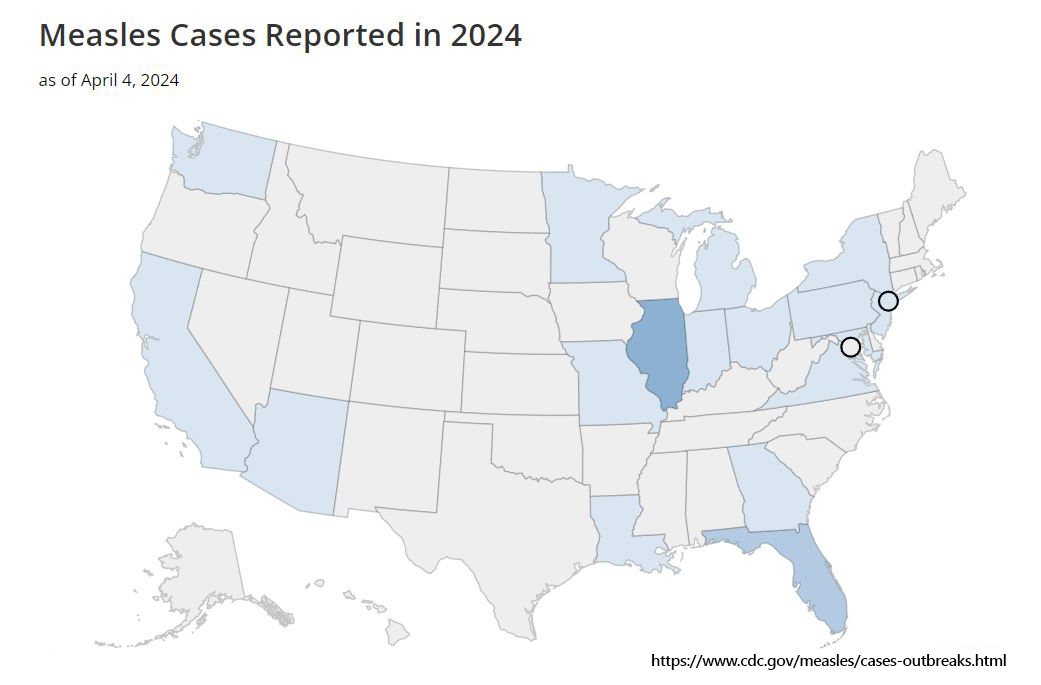
    Measles Cases Rising 2024

    Elise Herman , MD · April 5, 2024 ·

    Contributor Dr. Elise Herman

    Measles cases are on the rise, and although numbers in the US are small right now, there is cause for concern. Measles is one the most contagious human viruses, with a 90% chance of someone who is not immune getting infected if they are near someone with measles. People with measles can infect others for 4 days before they have any signs of being sick, and for 4 days after the rash appears. The virus stays in the air and is infectious for 2 hours after the infected person has left. There is no treatment for the measles virus, however there is life-long immunity (protection) after vaccination as well as infection.

    This recent rise in measles in the US is in part due to a mild drop in kids’ vaccination rates, often related to children missing routine health care visits during the pandemic. Although the current rate of kindergarteners fully vaccinated against measles is good at 92%, the previous rate of 95% was better particularly because that level gives ‘herd immunity’, meaning protection of those that were not or could not be vaccinated (due to young age, cancer treatment, or other immune system problems) by those who are vaccinated.

    The number of measles infections world-wide has increased dramatically, up almost 80% in the last year to 306,000 cases. As people travel more, they can bring the infection home if they are not immune, potentially exposing many people before they know they are sick.

    Measles spreads easily through airborne secretions from coughing or sneezing. Infection is also caused by direct contact with droplets from the mouth, nose, or throat. Symptoms develop 7-14 days later and start with profuse runny nose, cough, and red, swollen, watery eyes. Fever is often up to 104 degrees. The rash develops 3-5 days after cold symptoms begin and starts as flat red spots on the forehead, spreading downwards to the trunk and extremities. Some spots may become raised and join to from larger blotches. It is not usually itchy.

    Measles itself is miserable, but the biggest concern is regarding complications. Serious complications include pneumonia in 1 out of 20 of those infected, encephalitis (brain inflammation and swelling) in 1 out of 1000 infected, and rarely, temporary or permanent blindness (more common in developing countries). One out of 5 unvaccinated people in the US with measles will be hospitalized, and 1-3 out of 1000 will die. Children under 5 and adults over 20 are most at risk of serious complications. Also at increased risk are pregnant women and those with immune system problems.

    Measles vaccination is safe and effective and gives life-long immunity. Prior concern of a connection between the MMR (measles, mumps, and rubella) vaccine and possible autism was based on fake ‘research’ and has been disproven by multiple studies by the American Academy of Pediatrics, the World Health Organization, and the Institute of Medicine.

    There has been a 99% decrease in measles cases since the vaccine came out in 1963. Prior to the vaccine, there were 3-4 million cases annually in the US and about 48,000 people hospitalized, most of which were children. Add approximately 500 deaths and 1,000 cases of encephalitis each year, and it is easy to see how miraculous vaccination has been.

    The best way to protect ourselves, as well as the approximately 9 million people in the US who cannot get the vaccine due to an immune system problem, is to be vaccinated. Measles vaccine is recommended for kids aged 12 months and again between 4 and 6 years. It is also approved for adults who did not receive it as children. There are 2 types of measles vaccines- the MMR (as above) and the MMRV (also protects against varicella/chickenpox). Your child’s health care provider can provide additional information on measles vaccination.

    Recursos en español

    more about The contributor

    Dr. Elise Herman

    headshot of Dr. Elise Herman
    Blog Posts
    Profile

    Dr. Herman is passionate about community health outreach, school programs, and child/family health and wellness. She has more than 31 years of experience as a pediatrician in Ellensburg, Washington, the last 3 with KVH Pediatrics. In 2022 Dr. Herman mostly retired from practice and continues to contribute blog posts and remain a visible advocate for kids in the community.

    National Doctors Day

    HealthNews · March 26, 2024 ·

    By Dr. Kevin Martin, Chief Medical Officer KVH

    March 30 will mark the 182nd anniversary of the first use of anesthesia in surgery by Dr. Crawford Williamson Long, and so that is the day we celebrate National Doctors Day. At Kittitas Valley Healthcare, we take that as an opportunity to celebrate all of our providers and thank them for their commitment to our health and our community.

    All the healing professions have an oath, pledge, or declaration that promises to respect and serve people.  Mine, The Declaration of Geneva – 1994, started, “I SOLEMNLY PLEDGE myself to consecrate my life to the service of humanity.”  Osteopathic physicians, physicians’ assistants, and nurse practitioners make similar promises.

    Healing work, our service, takes many forms. It might be fixing a surgical problem, or diagnosing a medical one, or facilitating life’s inevitable transitions. It was the latter that drew me to family medicine, delivering babies and providing hospice care. Each of us finds the work that fulfills us, but that work is always about humanity.

    When I started in private practice in 1998, probably 90% of my time at work was spent in the exam room with patients and families.  I would come out of a room, spend a couple of minutes with a Dictaphone, and head to the next room. If I had someone in the hospital, I would make rounds at 7:00, at lunch, and at 5:30.  I routinely saw 25-30 patients a day and was home for dinner or a kid’s game or recital. Primary care providers (PCPs) in a mature practice would have up to 3,000 people in their care. A workforce of 20 PCPs and a handful of surgeons, gynecologists, and other specialists could easily care for today’s population of Kittitas County.

    That is not the work today. There is much more that we are expected to document at every visit. Some of the requirements come from the government and many more from insurers. Typing at a computer is slower than dictating. Studies and procedures need prior authorization from payers. Studies have shown that today’s primary care doctors spend 1-2 hours outside the exam room for every hour they spend in it, and the same is true to some extent across all specialties. High functioning primary care providers see 16-18 patients a day, frequently work into the night from home, and can only care for perhaps 1,500 people; 1,250 is probably a better number. The care that 20 PCPs could do before 2000 now needs at least 40, probably closer to 45.

    Many providers are retiring earlier, especially since 2021, and we are not graduating new doctors fast enough to keep up. In 2023, the American Association of Medical Colleges (AAMC) reported that 83% of practicing physicians are over 40 and 23% are over 65.  Nationally, some estimate we are short up to 30,000 providers, and AAMC expects that shortage to grow to as much as 139,000 by 2036. The shortage hit rural areas in the South and West hardest, and we feel it.

    Every year at KVH, we put a table in the lobby for the month March with note cards and pens. If a provider has helped you, has impressed you, please share that. We share the cards with each provider. It’s a little thing, but it helps remind us why we do this work and for whom we do it. You can also thank your provider by visiting: https://qrco.de/drday24.

    The Importance of a Healthy Environment

    HealthNews · March 11, 2024 ·

    Contributor Dr. Elise Herman

    One of the biggest factors in human health is the environment. Underlining this importance, the United Nations entities issued a joint statement in 2021 recognizing the “right to a safe, clean, healthy and sustainable environment” for all people. An unhealthy environment may include water pollution, air pollution, chemical exposures, loss of biodiversity, and the effects of climate change such as wildfires. There are more than 12 million deaths globally each year attributed to unhealthy environments according to the Office of Disease Prevention and Health Promotion. These deaths disproportionately affect lower income individuals, children, and impoverished populations. Children are more affected by environmental issues because they have greater exposure to air pollution, water pollution, toxins, etc. in proportion to their body weight than adults.

    Causes of air pollution include the burning of fossil fuels (such as coal, oil, and gasoline), industrial emissions, wildfires, and the open burning of garbage. Air pollution causes a variety of lung diseases as well as allergies. It is considered the most significant environmental risk factor and is blamed for about 7 million deaths worldwide each year. Three hundred million children worldwide routinely breathe air considered to be toxic.

    Water pollutants include industrial waste, agricultural runoff, microplastics, sewage, and waste that filters out of landfills. According to the World Health Organization, about 2 billion people have no choice but to use water polluted by human excrement, causing hepatitis A, cholera, and other diseases.

    As land development increases with loss of open spaces and wilderness, wildlife and people are forced closer to each other. This proximity results in increased risk of zoonotic diseases (diseases which can travel from animals to humans). Examples of zoonotic diseases include rabies, HIV/ AIDS, and COVID-19. Climate change also puts more stress on animal habitats, contributing to this problem.

    The benefits of a healthy environment are clear not just on physical health but also on mental and emotional well-being. Access to open green spaces and nature has been shown to help reduce stress, depression, anxiety, and mood disorders.  These ‘open spaces’ can include wilderness like a forest or mountain, but a green city park or a path by a river also count.

    Family hike with dog

    Here in Kittitas County, we are fortunate to live in a beautiful location with clean water, (usually) clean air, and access to open space. The most significant problem locally has been intermittent air pollution from wildfires. We also have the excellent Kittitas County Public Health Department to surveil and manage environmental health issues. 

    Keeping in mind that human consumption is a huge contributor of harm to the environment, we can make a difference in our valley and beyond by taking simple steps:

    • Drive less, consider walking or biking, when possible, instead.
    • Turn your thermostat down in winter, and up in the summer if you use air-conditioning.
    • Buy in bulk when you can; avoid products that use a lot of packaging, especially plastic.
    • Avoid single use plastic bags; bring your own reusable bags for produce and other shopping.
    • Create a vegetable garden with your child or take part in a CSA (Consumer Supported Agriculture, where you can ‘subscribe’ to get produce from a local farm).
    • Learn to say “no” to unneeded, cheaply made toys and other goods (often plastic) which are giveaways or very inexpensive but will quickly be tossed in the garbage.
    • Purchase less clothing in general, and buy clothes from consignment shops/ secondhand stores, either brick and mortar or on-line (such as Poshmark and Thred Up)
    • Compost kitchen and yard waste.
    • Recycle properly; be familiar with what can and cannot be recycled locally.
    • Conserve electricity by using LED light bulbs, sealing air leaks around windows and doors, and turning off lights when not needed.
    • Be mindful of water use.
    • Buy local and avoid home delivery of goods when possible.
    • Eat produce in-season and from local growers- local farmers’ markets are terrific for this!
    • Use a reusable water bottle; avoid single use plastic water bottles and cups.

    Discuss these steps as a family and brainstorm other ways to help protect our environment.

    more about The contributor

    Dr. Elise Herman

    headshot of Dr. Elise Herman
    Blog Posts
    Profile

    Dr. Herman is passionate about community health outreach, school programs, and child/family health and wellness. She has more than 31 years of experience as a pediatrician in Ellensburg, Washington, the last 3 with KVH Pediatrics. In 2022 Dr. Herman mostly retired from practice and continues to contribute blog posts and remain a visible advocate for kids in the community.

    • « Go to Previous Page
    • Page 1
    • Interim pages omitted …
    • Page 4
    • Page 5
    • Page 6
    • Page 7
    • Page 8
    • Interim pages omitted …
    • Page 20
    • Go to Next Page »

    Primary Sidebar

    Categories

    • KVH Stories
      • Patient Stories
      • Provider Stories
      • Donor Stories
      • Employee Stories
      • Volunteer Stories
      • Share Your Story
      • All
    • Blog Posts
      • Behind the Scenes
      • Childbirth & Family Education
      • Community
      • Health
      • Lifestyle
      • Provider
      • Safety
      • COVID-19
      • All
    • News & Media
      • KVH News
      • Weather/Disaster Notifications
    • Press Releases

    Footer Top 2

    603 S. Chestnut Street - Ellensburg, WA 98926
    509.962.9841

    • Facebook
    • Instagram
    • LinkedIn
    • YouTube

    Footer Bottom 1

    Download the MyPatient Portal App
    Apple Store Google Play Store

    Footer Bottom 2

    • About KVH
    • KVH Legal Information
    • Price Transparency
    • Careers
    • Board of Commissioners
    • Contact Us
    • The Foundation at KVH

    Footer Bottom 3

    • Our Locations
    • Hospital Services
    • Clinics & Specialty Services
    • Visiting Information
    • Patient Policies
    • Events & Education
    • Press Releases

    Footer Bottom 4

    Google Translate