• Skip to primary navigation
  • Skip to main content
  • Skip to primary sidebar
  • Contact Us
  • Pay My Bill
  • Patient Portal
  • Show Search
KV Healthcare

KV Healthcare

Your Home for Health

  • Find a Provider
  • Clinics & Specialties
        • Primary Clinics

        • KVH Family Medicine – Cle Elum
        • KVH Family Medicine – Ellensburg
        • KVH Home-Based Primary Care
        • KVH Internal & Adult Medicine
        • KVH Pediatrics
        • KVH Women’s Health
        • KVH Rapid Access
        • Specialty Services

        • Anticoagulation Clinic
        • Addiction Medicine
        • Specialty Clinics

        • ENT & Allergy
        • Cardiology
        • Dermatology
        • General Surgery
        • Home Health
        • Hospice
        • Neurology
        • Orthopedics
        • Urgent Care
        • Vascular Surgery
        • Workplace Health
        • Wound Care
        • Therapy Services

        • Physical Therapy
        • Speech Therapy
        • Occupational Therapy
  • Hospital Services
        • Services

        • Cardiopulmonary
        • Emergency Department
        • Imaging
        • Laboratory
        • Nutrition
        • Pharmacy
        • Surgical
        • Family Birthing Place

        • About Family Birthing Place
        • Class/Event Calendar
        • What to Expect
        • Birth & Family Education
        • Lactation Services
        • 4th Trimester Resource Center
        • Pregnancy & Infant Loss
  • Patients & Visitors
        • Patient Tools

        • Request Medical Records
        • Checking In
        • Visiting
        • Quality of Care
        • Patient Portal
        • Patient Policies
        • Insurance & Billing

        • Accepted Insurance
        • Price Transparency
        • Financial Assistance
        • Pay My Bill
        • No Surprise Act - Balanced Billing
  • About KVH
        • About KVH

        • About KVH
        • Mission & Vision
        • Board of Commissioners
        • Administration
        • Quality of Care
        • DAISY Award Program
        •  

        • News & Blog
        • Events & Education
        • Contact Us
        • Locations
        • Work With Us / Careers
        • Foundation

        • About the Foundation
        • Board of Directors
        • Ways to Give
        • Donate Now
        • Foundation Events
  • Donate Now
Hide Search

KVH Stories

KVH transitions to a new Chief Nursing Officer

HealthNews · November 29, 2022 ·

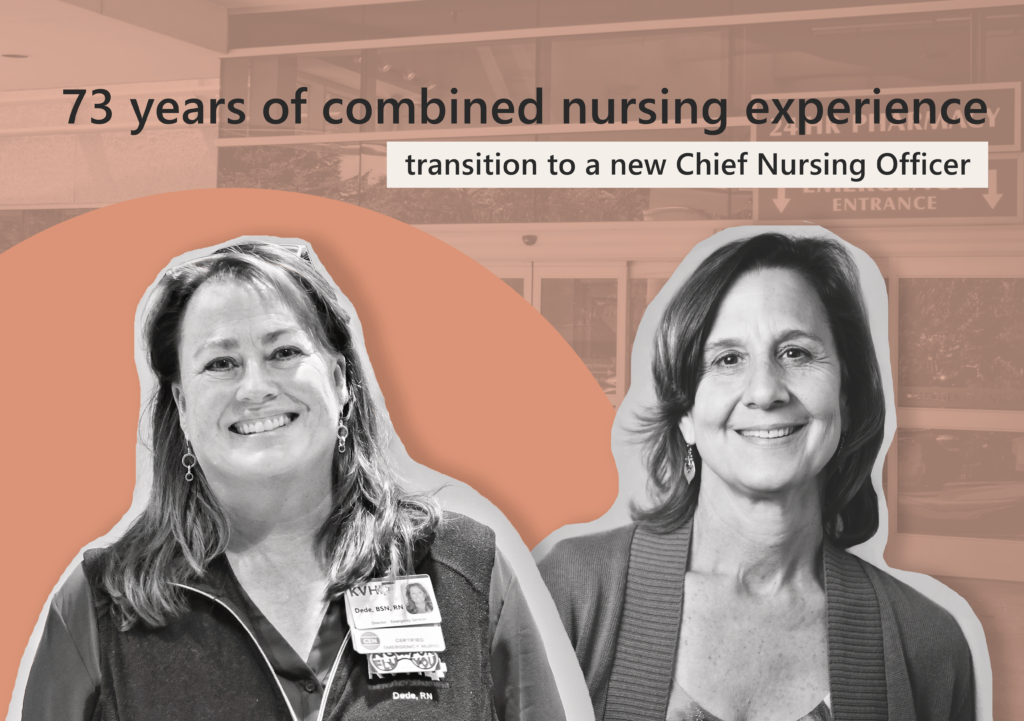
73 years of combined nursing experience will help KVH transition to a new Chief Nursing Officer

After forty six years as a nurse, KVH Chief Nursing Officer Vicky Machorro has decided that come Spring 2023, it’s time to stop setting an alarm clock and start enjoying more free time with her family.  The good news for KVH is that through an intentional succession planning strategy, there will be a smooth transition to a familiar face.  Dede Utley, BSN, RN, CEN and Nursing Director of KVH Emergency Services since 2015, will become the next KVH CNO upon Vicky’s retirement in April.

Vicky has a long and storied career at KVH.  Starting as a per diem ICU staff nurse, Vicky moved where the organization and her peers needed her most.  From House Supervisor, to ICU and MedSurg Director, to ED/Urgent Care Supervisor and then finally, Chief Nursing Officer in 2016, Vicky never hesitated to face a new challenge and support her team.  When looking back over the last forty-six years Vicky takes great pride in starting and ending her career at KVH.

While Vicky began contemplating retirement, Dede was looking for ways to advance her career.  Deeply invested in Kittitas County through her work on The Kittitas County Board of Health, Kittitas County Behavioral Health and Recovery Advisory Board, Kittitas County Health Network and Kittitas County Court Advocates for Children, Dede wanted to remain in Ellensburg and approached Vicky asking what she could do to further her growth opportunities at KVH.  Soon, Dede made the decision to return to school and pursue her Masters in Nursing Administration. Additionally, Dede participated in a mentorship through the Northwest Organization of Nurse Leaders where she was paired with a nurse leader out of Portland to work together on improving leadership skills and supporting her staff.  It became clear to KVH leadership that not only would Dede’s skills and professional goals fill the future need for a CNO, she had the same vision and goals for the organization and her staff. There was no need to look elsewhere for the next CNO.

As Vicky and Dede face the excitement and nervousness of this upcoming transition, they recognize the apprehension that staff may also be feeling and are committed to continuity and a smooth transition. “We are advocates for nursing and patient goals,” stated Vicky.  “We want to assure the staff that we have shared goals that we don’t want to interrupt, we only want to enhance.  That is why we chose to go this route.  We’ve had DNS’s (Director of nursing services) come and go and come and go. This doesn’t change how you treat that patient at the bedside.  You do what you are trained to do.  Patient care is what it is all about.”  Dede emphatically agreed.

Over the next few months the focus is on hiring the right person to fill Dede’s role as the nursing director in the emergency department.  “We want to make sure the ED staff are taken care of,” stated Dede.  We are looking for someone who loves Emergency nursing, understands rural healthcare and the importance of working with our partners, and someone who is committed to our staff and our community. Dede continued, “We need to find someone who will jump in and help at any level.  They must be invested in our staff and our community. 

The background behind Vicky’s retirement and Dede’s appointment is another example of KVH’s dedication to leadership development and succession planning.  Dede’s advancement follows several other senior leaders (in addition to her predecessor) who were hired from within. Stacy Olea, Rhonda Holden, and Mandee Olsen all had established careers with KVH prior to taking on the responsibility of an executive position.   “KVH is proud of the internal talent that we have and is dedicated to leadership development and succession planning through various goals and initiatives,” states Manda Scott, Chief Human Resources Officer. If you have been following our highlighted new leaders throughout the past year or so, you will also know that we have a large cohort of new leaders from within KVH who deserve a big congratulations for their promotions into new leadership roles including

  • Tara Preciado, Revenue Cycle
  • Jason Adler, Senior Director of Financial Operations
  • Jessie Rasmussen, Clinic Manager
  • Colin Nebeck, Clinic Manager
  • Kimmie Greenwood, Director of Imaging
  • Katy Belotti, Director of Laboratory Services
  • Trent Baker, Engineering Manager

There are many additional success stories across the organization and opportunities for continued career development. The Medical Assistant Apprenticeship program is now accepting applications we and are exploring opportunities to expand training into other specialties.

If you have questions about specific initiatives or opportunities at KVH, please contact Manda Scott, CHRO, your manager or anyone in HR.

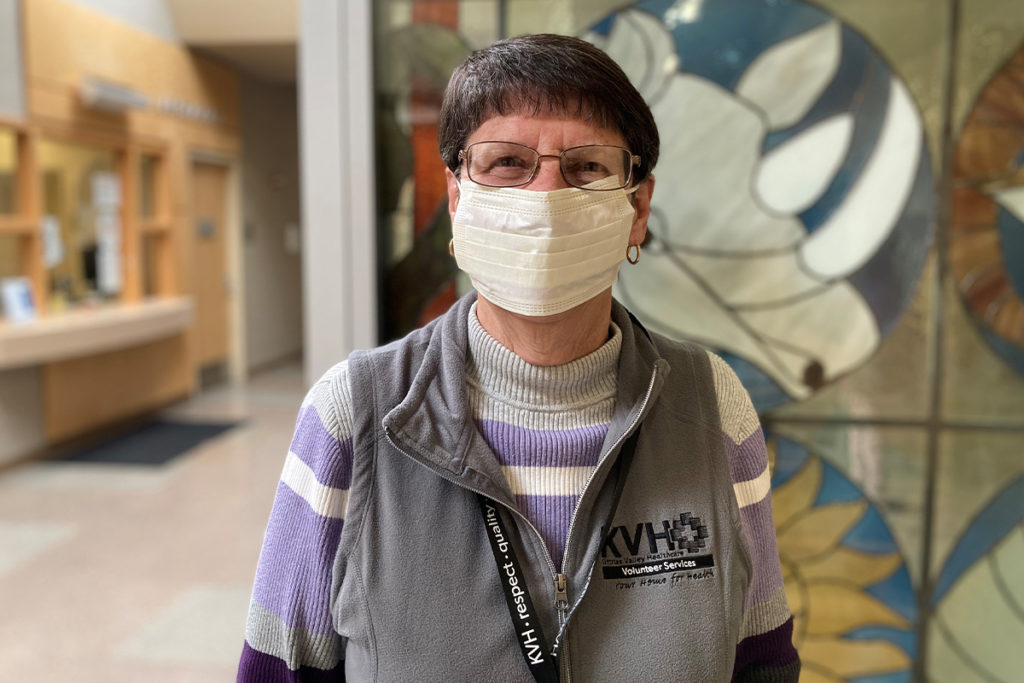
Mary Holmgren (KVH Volunteer)

HealthNews · April 19, 2022 ·

In 2022, April 17-23 is National Volunteer Week.

It was early 2002 when Doug and Mary Holmgren, freshly retired, moved east to be near to their children’s growing families. Not long after, a granddaughter was born at KVH Hospital.

“I noticed the hospital was preparing to open a gift shop,” says Mary, who had volunteered for years at the Mary Bridge hospital gift shop and knew a thing or two about retail.

When the KVH gift shop was ready to open, Mary was there to volunteer. Of course, it wasn’t all hard work. “Dolly McFadden did the coffee and I did the shop,” recalls Mary. “Wyman (Renfrow) would be here sometimes. We’d all get a bit noisy when there were no customers around. We were having a good time.”

The trio stayed flexible, shifting into new roles wherever they were most needed. Mary moved across the hall to the courtesy desk, and Wyman to the outpatient waiting area, to help patients and family members who were visiting the hospital. After their shifts, the friends would often have lunch together and catch up on family news.

Twenty years later, Mary remains a familiar face at KVH Hospital. She’s spent most of her adult life volunteering, even during a busy career as a pediatric nurse. “I enjoy meeting people,” she explains. She considers KVH “a nice place to volunteer,” adding, “Much of the time, the people you’re helping are neighbors and friends.”

That strong desire to help others unexpectedly pulled Mary out of retirement and onto the KVH payroll for several years. During a visit to her doctor at KVH Internal Medicine, one of the nurses was clearly struggling: a family emergency on the east coast was her heart’s priority, yet she was unable to travel without someone to cover her clinic shifts.

Enter Mary. Still waiting to be seen by the doctor, Mary realized there was something she could do to help. “I’m a registered nurse, you know,” she offered. “I have my license.”

The moment Mary’s exam ended, the nurse took her straight to the clinic manager. There was no hesitation. “I was signed up right then and there,” says Mary, who worked in an on-call capacity for the next half-dozen years, covering for maternity leaves, vacation, sick days, and more. She was happy to help, and did so on her own terms. “If Doug and I had a vacation planned, I let them know I wasn’t available. It worked out well for everybody.”

When COVID struck in 2020, protocols changed as the safety of patients and staff became more important than ever. With a strict visitation policy in place, volunteers were among those who were unable to enter the hospital and clinics. Mary took the next available opportunity to serve, lending a hand in late 2020 during COVID vaccination efforts at KVH Hospital and again at the mass vaccination clinics held at the Fairgrounds in 2021.

Today, Mary’s back at the courtesy desk, helping patients with her trademark smile, visible even behind a face mask. KVH staff are thrilled to see the return of volunteers, who are more like work family and were dearly missed. “We really need nurses, Mary,” one of her former Internal Medicine colleagues teased, recently.

Mary laughs. “I said, ‘I’m done.’ I retired at the end of 2013, and didn’t renew my license.”

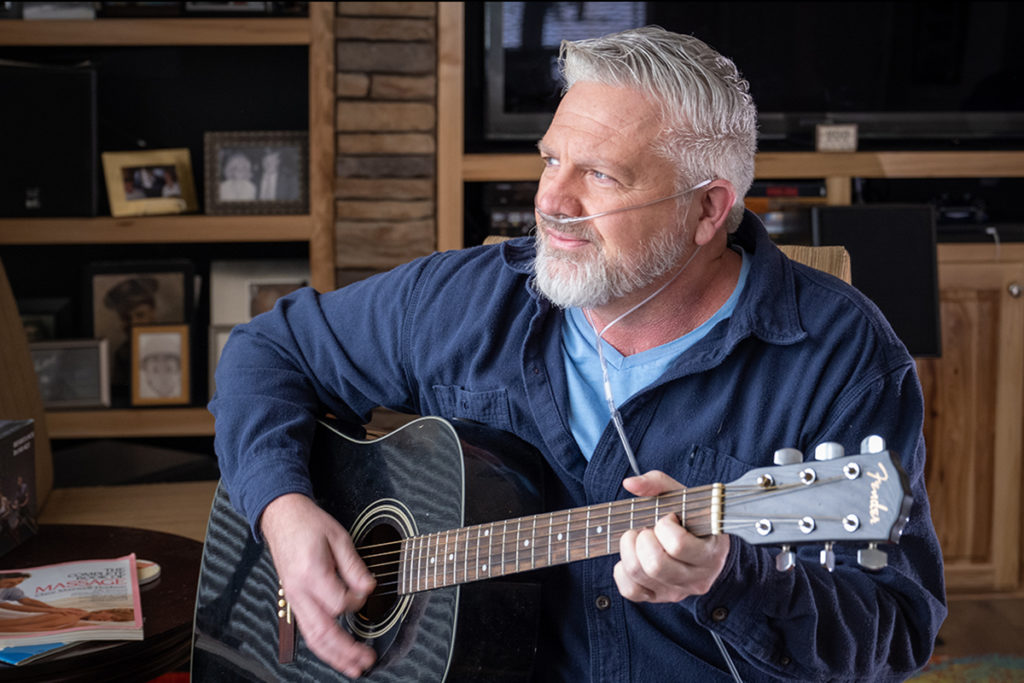
Tony Nelson (COVID-19)

HealthNews · January 31, 2022 ·

Reliable friend. Life of the party. Hardworking. People person.

That’s how Anthony Nelson’s friends and family have always described him. With a quick wit, sharp intellect and enviable social skills, Tony, 49, enjoyed a thriving dual career as a mortgage broker and realtor in Upper Kittitas County for the past 17 years. “I was helping people make the biggest purchase of their lives,” he says.

Then COVID struck.

Tony spent several days in a fever and mental fog. Concerned, his girlfriend took him to KVH Urgent Care in Cle Elum for a COVID test. While waiting at home for test results, Tony’s condition worsened. He stopped answering his phone. Tony’s mom sent an urgent text to her best friend, Marta Whalen, a nurse at KVH Hospital.

“She asked me to check in on Tony,” says Marta, who was on a trip to Colorado at the time. “She was worried that he sounded ‘not great’ on the phone.” The next day, Marta got a voicemail: Tony had COVID. Good thing Marta hadn’t been able to visit and be exposed to it.

“I’m thinking just the opposite,” says Marta, as what she jokingly calls her “nursing brain” went into high gear. “Yeah, I do probably want to go there if he has COVID and doesn’t sound good.” She returned to Washington the next day and made a beeline from the airport to Tony’s place.

Marta entered the house in mask and gloves. “I was vaccinated, but I hadn’t come face-to-face yet with a ‘full-blown’ COVID patient,” she admits. It was dark as she sat on the far corner of Tony’s bed and asked if she could turn the lights on. He agreed.

“Every breath in and out was wheezing, with difficulty,” recalls Marta, who knew she had to act quickly. She gave Tony the choice: call 9-1-1 or head to the urgent care clinic.

Tony opted for Urgent Care. It took mere minutes to assess him, and soon Tony was loaded into an ambulance. Before the rig departed, Marta made sure he had his wallet, phone and charger. “I knew Tony wasn’t coming home any time soon.”

Saving a Life

Tony has no memory of the ambulance ride or his time at KVH Hospital. He was shocked months later when scrolling through photos on his cell phone and discovering a video he’d made from his hospital bed. “I really thought I was dead,” he says, “so I made a video message for my family. ‘Mom, Dad, I love you. I wish I could have been a better son,’ – you know, just sad, very sad.”

Tony’s condition quickly deteriorated. He was airlifted to Harborview, where he spent 59 days on a ventilator, got a tracheostomy, was placed in a medically induced coma and then on ECMO (extracorporeal membrane oxygenation – a process that uses a special machine to replace the functions of the heart and lungs by externally processing and circulating a patient’s blood supply).

The gravity of Tony’s condition was clear to everyone. Without hesitation, his parents signed off on experimental treatments for their son, in hopes of saving his life.

Weeks later, Tony emerged from the induced coma. He’d been strapped to his hospital bed. “The first thing I heard was the noise of machines,” he recalls. “I heard the ventilator breathing for me and the ECMO transferring blood to and from my body. I had multiple tubes stuck in my neck and thighs. All I could do was observe. I was too shaky and weak to even write. I had a tracheotomy tube in my throat and couldn’t speak. I was just plain terrified, and couldn’t comprehend where I was or how I got there.”

For the next several weeks, Tony joined his medical team in the battle for his recovery. “We all fought like hell every day to make me live.”

A ‘New Normal’

After two months at Harborview – “Where I believe the very best doctors and nurses in the world work” – Tony was finally released. “It was time for me to see and be with the people I love.” His sister-in-law Janell drove him to his home in Cle Elum, where family was waiting. They helped him out of her car, into a wheelchair, and into his house. “I’ve been here ever since,” laughs Tony, who can count on one hand the number of times he’s been out in the past six months.

“Tony doesn’t go to the grocery store. He doesn’t go out for entertainment, shopping, or visiting friends,” says his primary care provider, Dr. Andrew Thomas. (Doctor visits are also on the list of things Tony’s been unable to do as often as he should.)

When asked to compare Tony to his pre-COVID self, Thomas replies with compassion and great respect for his patient, “Tony is the shell of the man I once knew.”

On rare ventures out, Tony returns to KVH Hospital where he works with Jim Allen, Director of Cardiopulmonary Services, to test his now-damaged lungs. It’s an important part of what Allen calls Tony’s “very long road to recovery.”

“Tony’s situation is a vivid reminder of what COVID can do,” says Allen. “It also reminds me why healthcare providers do what we do.” During a visit in early September, Tony’s lung function measured at half of what it had been in January, pre-COVID.

The Aftermath

“Nobody’s taking COVID seriously until they get it. And then it’s just too late, man.”

Tony has a message for those who have witnessed his epic struggles and yet aren’t concerned about the virus. “First of all, you could die,” he says. “And second of all, if you do happen to make it through, you get to deal with the aftermath.”

For Tony, the aftermath means being unable to work, walk, and even talk for longer periods of time. It means body pains, tremors, headaches. Loss of concentration, memory and balance. It means using aids and adaptive equipment to do the most basic activities – breathing, walking, showering, going to the bathroom. And all while dealing with overburdened government and insurance systems to get basic assistance.

“I cannot operate or function without help from others,” Tony explains. “I now have oxygen machines, in-home physical and occupational therapy. My wonderful family bought equipment for my home. All these things cost money.”

Even so, Tony counts his blessings. He worries about others in similar situations who don’t have the resources and relationships that make all the difference when the bottom falls out of life. When a Facebook page was created to keep family and friends informed, some offered financial help. That was tough for Tony to take. “Everybody’s going through a hard time right now. There are people out there worse off than me.”

Caring about others is also the reason why Tony insists on sharing his story. “If I can help one person by sharing this, it’s worth it,” he says. “People need to know. It’s not just about getting sick, it’s about how sick you get. And then if you do happen to get incredibly sick, knocking on heaven or hell – if you survive, it’s a long deal.”

Final thoughts

A few weeks ago, Tony was able to get the COVID-19 vaccine, a fact he proudly announced during one of our phone conversations. He continues to adapt to his new life of daily struggle in the pursuit of healing and wholeness.

“Getting COVID is one thing,” says Tony. “Getting severe COVID is an entirely different subset of the disease. If people don’t act with common sense and get vaccinated, they can get COVID, severe COVID, and possibly die.” He adds, “None of these things need to happen. Those without a medical history of adverse allergic reactions need to get vaccinated. People need to think not only about themselves but society in general.”

“Tony lost his self-confidence, and for a while he lost his sense of humor,” notes Dr. Thomas. “He is rebuilding his emotional strength, but his physical strength has not yet returned. And at this point, he doesn’t have confidence that it ever will.”

“It must be really, really difficult to realize that you might never have the capacity or potential that you did before,” agrees Marta. Having lost two unvaccinated friends to COVID in the past year, she pleads for others to reconsider their own decisions not to vaccinate. “Please, think of the community, and the families that you live with and love.”

Perhaps because Tony beat the odds when others in his situation didn’t survive, his closest friends and caregivers can’t help but be optimistic. That includes Marta, who Tony will forever credit with saving his life by making him get out of bed and get help.

“Tony’s got a long recovery ahead,” says Marta, a smile coming through in her voice, “but I’m confident that he can get there because he’s so stubborn and strong.”

“This has pushed my mind and body harder than anything I have ever been through,” says Tony. “It’s made the good old days of two-a-day practices when I played college football seem like an ice cream eating contest.”

While each day brings a new set of challenges, Tony’s brush with death has given him a renewed outlook on life.

“I am grateful and happy to be here in the present.”


With all the support he’s received, Tony’s list of people to thank is a mile long. Here are just a few of the people he’s very grateful for:
Tony’s parents, Ronda & Ray Thompson and Mike and Phyllis Nelson
Marta Whalen
Stacy Houle
The team of doctors at KVH Hospital, including Jim Allen
The many teams of doctors & nurses at Harborview Medical Center
Dr. Andrew Thomas
Karlee Rahm
Gina Bjorklund
Drew & Jeanell Nelson
Justine Viviano
All the friends and family members that visited Tony in the hospital and supported him virtually on the group Facebook page
Special call-out to these friends that have gone above and beyond: Chanda and Matt Daly, Tim Stime, Jamie Steele, Justin Trost, Mark Krier, Mario Aguedelo, Rob Zutter & Meke Hansen, Wendy Retacco Hatteberg – owner of Retacco Law Offices – for donating pro bono legal services

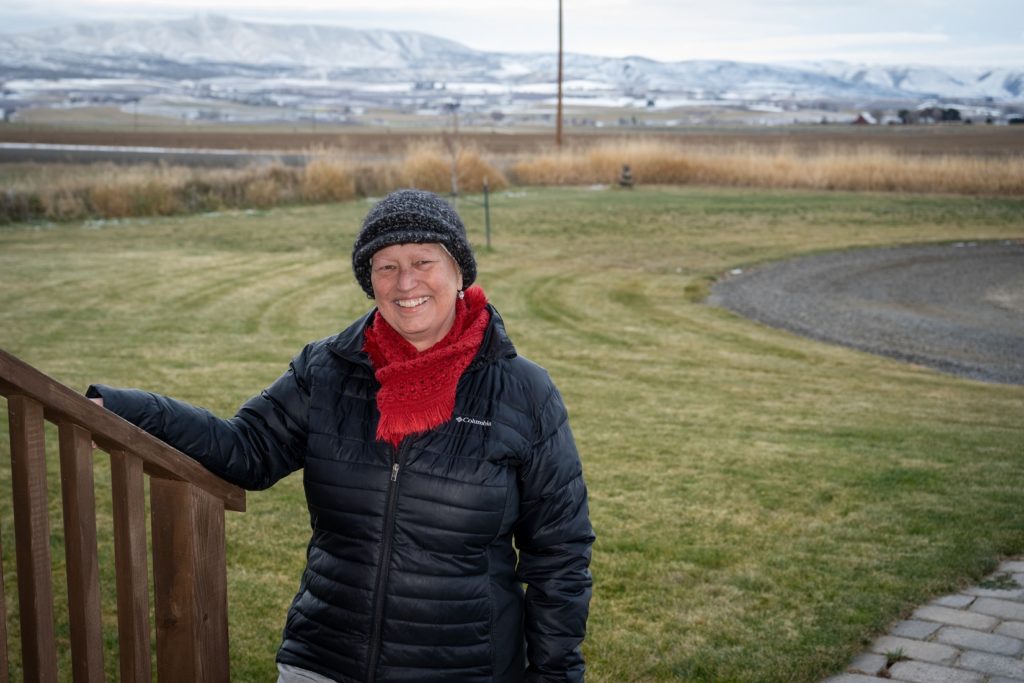
Debbie Hulbert (Inpatient Care)

HealthNews · January 7, 2022 ·

Debbie Hulbert loved to work in her garden, growing vegetables. A graphic designer by trade, she also loved to cook and paint, and had plenty of energy to do it all, until one day in late July 2021, when she found a lump.

Two weeks later, she received an official diagnosis: triple-negative breast cancer (TNBC). Aggressive treatment resulted in total hair loss, mouth and sinus trouble, digestive tract issues, and more. “The chemo is chasing after anything that replicates quickly,” Debbie explains. Which is why she needed a transfusion of platelets in November. Impacted by the hospital capacity issues that have been in recent news, KVH didn’t have room for Debbie at the time, so she was sent to a major Seattle hospital to recover.

It wasn’t long before she was dealing with neutropenia. “My white blood cells were basically non-existent,” she says, making her vulnerable to any kind of bacteria or virus. She relapsed in early December. “I was on a strong antibiotic to combat an infection, but my fever had broken through it.” She needed treatment immediately.

Her oncologist called KVH Hospital to inform them his patient was on her way in. ER staff had the Hulberts pull into the ambulance bay, where they wheeled her directly into the emergency unit, rather than having her enter through the front lobby. “They were concerned with reducing my exposure to others in the hospital,” she says.

Debbie was later transferred to the Medical/Surgical Unit, where staff followed “very careful protocols. They made sure to let me know exactly what they were doing at all times,” says Debbie. “They showed me how they were protecting me.” At one point, when the sound of harsh coughing filled the halls, staff reassured her of her safety.

“There was no COVID on the floor at the time,” she recalls, concerned after being exposed to the virus during her Seattle hospital stay. Debbie learned that Med/Surg staff at KVH were assigned to specific areas within the unit, and only certain people would be allowed to enter her room, to ensure the highest levels of safety for their vulnerable patient.

“I felt incredibly safe,” says Debbie. “Everyone that came in my room addressed me, talked to me – housekeeping, nurse’s aides, nurses, doctors – they treated me like a human being, making sure I was comfortable and had everything I needed.”

It was impossible for Hulbert not to compare her treatment with the west side experience she’d had just weeks earlier. “I stayed on the top floor in a state-of-the-art medical facility. Seattle hospital rooms don’t get better than that.” And yet, “I was a room number,” Debbie says. “I would sometimes have to wait a half an hour to get help to go to the bathroom.”

As an inpatient at KVH, “When I rang the bell, someone was there in 30 seconds,” which mattered a lot to Debbie when dealing with, among other things, intense bouts of diarrhea.

More importantly, Debbie felt seen. “The care, the compassion, the idea that everyone that talked to me, they’d come in and say, ‘How’re you doing today?” And they’d remember something we’d talked about the day before. I really mattered, you know, as a human being and not just a patient in a room,” she says. “I felt safer there, I felt seen there, I felt cared for.”

Treated with broad spectrum drug IVs, Debbie remained in the hospital until her cultures were clear and staff knew she was safe to go home, armed with two more antibiotics to cover anything that the IV medications could have missed. “I went home feeling stronger than I had in a month or more,” she said.

While Debbie has a long way to go in her battle with cancer, she’s already looking forward to resuming her creative lifestyle. She occasionally paints acrylic pieces in her bathroom when she has the energy, inspiring her husband: “He carved out a part of his shop to make me a paint studio,” she crows. “Once I’m feeling stronger, I’ll have my own studio to paint in.”

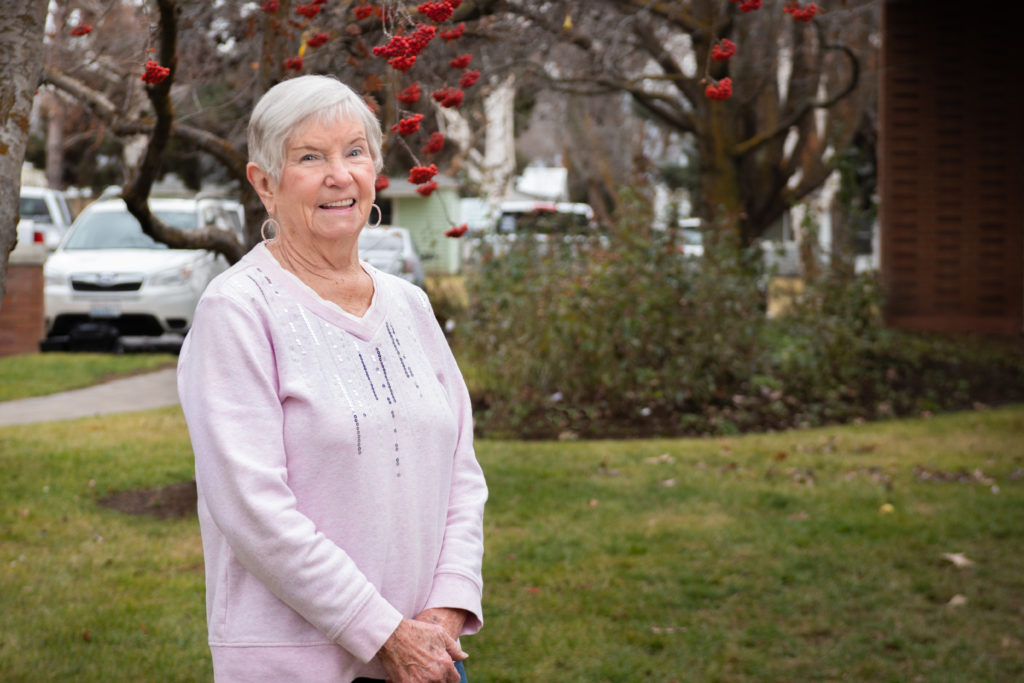
Betty Osborne (Neurology)

HealthNews · April 21, 2021 ·

“Dr. Gustavson is super nice. His voice is soft and it just makes you feel comfortable. I felt good when I left his office – knowing I was going to be okay.” – Betty Osborne

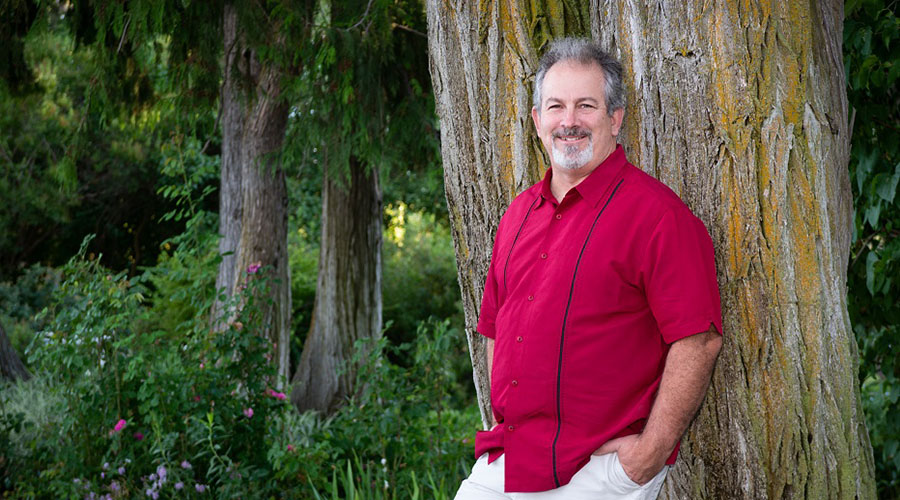
KVH has welcomed a new Neurologist to our specialty team. His name is Dr. Andrew R. Gustavson. Dr. Gustavson comes to KVH with expert training in both Neurology and Psychiatry. He has worked all over the world, but his desire was to get back to practicing Neurology here in Eastern Washington.
Dr. Gustavson desires to treat patients with compassion and he works with them to build long-lasting relationships. The patient and their family are all participants in assuring the very best care. When someone has a neurologic disease, this may require care over the course of many years. The Doctor, the patient and their family are all essential to providing the best care for an individual. Dr. Gustavson enjoys this part of his practice and loves working with family members of his patients – either remotely or here in Kittitas County.

We received some recent comments from a patient after she came to see Dr. Gustafson for the first time in late 2020:

The patient, Betty, has had Parkinson’s disease for many years. Prior to Dr. Gustavson’s arrival at KVH, Betty had to go to Seattle to be seen by a Neurologist. This would mean her Daughter would need to take an entire day off to drive her to these appointments in Seattle. Betty wasn’t a fan of going to Seattle for her care. When Betty found out a Neurologist was coming to Ellensburg – she was ready to make an appointment right away.

“When I went to see Dr. Gustavson he checked me really good. He watched me walk and had me do some exercises to hold my hands out straight and fall backwards. I didn’t think I could do it, but he reassured me saying “We are here to catch you”. He is very nice. He speaks softly and makes you feel comfortable. He was very thorough and gave me a good checkup. I told him I would be out of medicine in January, so he said – “just come back and see me in three months and I will order and manage your medication for you.
You are doing well on this medicine.”

Dr. Gustavson says that if a patient has Parkinson’s disease we usually manage their care with medications. We can use surgical approaches if the disease gets more severe. I am seeing many Parkinson’s Disease patients since we opened my practice in Ellensburg, up to 50% of my patients on some days. The care of a person with Parkinson’s disease has to be individualized because you need to set up a medication regimen that’s is built specifically to help them with the issues they are having. It’s also a disease that progresses or changes over time – so we need to teach them and their caregivers how to adjust their medications themselves based on their symptoms.

Dr. Gustavson fell in love with Neurology as a college student. He became interested in how the brain works and this remains a great mystery. This means that we rely heavily on the patient history and physical exam to find the answers. It’s a very personal type of medicine. We have to work hard, with the right diagnosis, to tailor treatment to each individual person, according to their needs.

KVH is honored to have Dr. Gustavson on our team and to be able to provide this special care in the local community. Betty and many others are happy to have expert neurology care much closer to home.

View Dr. Gustavson’s provider bio page.

Colton Harlin (Emergency Surgery)

HealthNews · August 28, 2020 ·

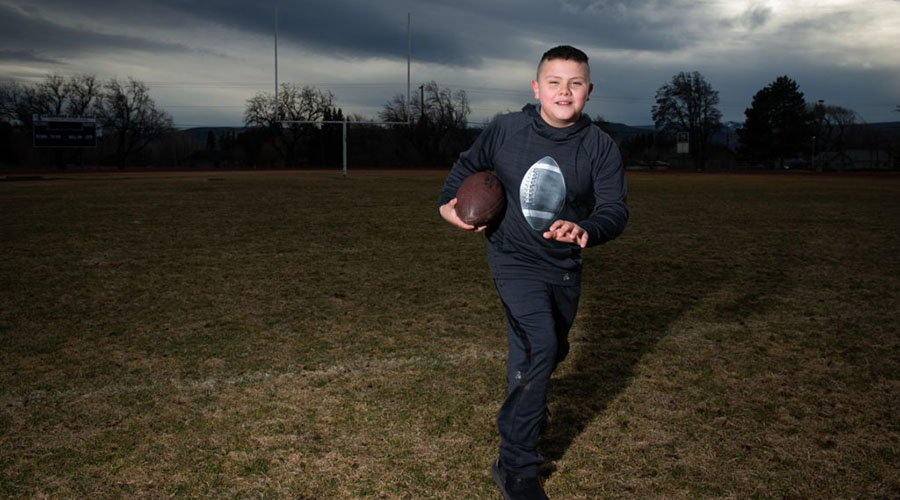
At the tender age of 10, Colton Harlin was generally used to the bruises and scrapes of pee wee football. And when the goal is a quarterback sack, a little pain for your efforts is to be expected, even during practice.

Colton was knocked down on the play. The quarterback remained unscathed. But Colton?

“My head was ringing,” he recalls. “My stomach was, like, hurting a lot.”

They returned to the sidelines, where Colton confided to his mother, Miranda. “I figured he’d be okay,” she says. “He’d cried ‘wolf’ so many times before; we thought he was just trying to get out of going to school.”

(Sound familiar, fellow parents?)

It wasn’t long before Colton was back on the field. He seemed fine.

“You know, we raised him to be a tough kid,” says his father, TJ. “We’re telling him, ‘You know what, son, you’re going to be all right. Sometimes we pull a small muscle in our tummy during practice. It’s bound to happen.'”

At the Saturday game, Colton was knocked down again. The pain came back like a flood. “I just tried to suck it up,” he recalls. “I didn’t want to cry in front of people.” Colton, telling his coach he was going to be sick, was pulled from play.

Returning home after the game, Colton went straight to bed, and to sleep. “I thought, ‘Maybe he’s just tired and needs rest,” says Miranda. The next morning unfolded like a typical family Sunday. “We’re up later, doing our normal routine, and Colton was watching TV.”

Suddenly, she saw her son bowing over the side of his chair. “I asked him what was wrong. His face was pure white. I said ‘Yeah, we’re going to go to the doctor, right now.’” She asked her daughter, Dakotah, to let TJ know, and with that, Miranda and Colton were out the door.

Colton and his family.

“We’re on our way to the hospital,” says Miranda, “and I’m on the phone with my mom. I said, ‘What if it’s appendicitis or something like that?’ But I didn’t know for sure.”

Still trying to reach TJ, the pair went straight to the ER. Labs were ordered. Miranda knew what was coming next. “Colton had never had his blood drawn with a needle,” she says. “But his nurses were able to calm him and get the needle in, and he was a champ right after that.”

Miranda and TJ finally connected by phone. “She said Colton was going right into surgery, and my heart just dropped,” he says, learning that his son would need an emergency appendectomy. “My world’s flashing before my eyes,” TJ recalls. “I played football for nine years. I’ve been hit in the stomach lots of times. And now this. Then I really started feeling like a bad parent, that he was really hurt.”

Dr. Daniel Smith would be performing the appendectomy. It was Miranda’s first time meeting the provider from KVH General Surgery. “He had the best bedside manner, ever,” she says. “He told Colton that he had a sick appendix, that we really don’t need it and don’t even really know why we have one. He reassured him and helped him understand what was happening.”

TJ and Miranda sat in the waiting room while Colton underwent surgery. “Of course I’m doing all the research I can possibly dig up on this,” says TJ. Less than an hour later, they were told Colton was in recovery, that everything had gone well. They’d been able to remove the appendix before it would have ruptured. Miranda immediately jumped up and ran in to see her boy.

Colton spent the night in the medical/surgical unit. “He got great care. The nurses were on top of anything he needed. They made sure he didn’t have a fever or any reactions to anything.”

When Colton was discharged the next morning, football was on his mind. “His team was going into the playoffs,” says Miranda. And so they carefully, slowly eased him back into practice, and before long, he was back on the field.

TJ has a message for all the ‘football fathers’ out there. “When your child says they’re hurt, really pay attention. It could be something serious. You know, we’re always pushing our sons to be greater than we were. Take into account what’s going on, and don’t shrug anything off. This could have been catastrophic.”

Miranda agrees. “Now, his toe starts aching, or whatever, we’re going to the doctor. We’re never going to not believe him again.”

As for Colton, he’s got his sights set on a career in the NFL. A linebacker for the Kansas City Chiefs, to be exact. And once he’s there? “Make it to the playoffs,” he grins. “And the Superbowl.”

Colton’s family would like to especially thank all of the staff who were involved in his care: Phyllis, Jana, Katie, Hannah, Pat, Luke, Jamie, Abigail, Ken, Kara, Anji, and Dr. Smith.

David Martin (H1N1)

HealthNews · October 29, 2019 ·

Prior to coming to the US, the flu season began this year in Australia. US drug companies learned the vaccine they had prepared for the 2019/20 season was not very effective against the strains of flu they were seeing in other areas of the world.  The drug companies responded by quickly recalling the original vaccine and reformulating a new vaccine that is more effective against the emerging flu.  This recall is what has caused the shortage in vaccines. As you can see through the story below, it is critical that you get your flu shot. While the vaccine supply is trickling in to KVH, we have not yet received our complete supply and we do not currently have enough to serve all of our clinic patients.  Everyone  is experiencing the same shortage but the most important thing is that you get your flu shot.  Give your clinic a call and we can help direct you to a KVH clinic, pharmacy or drug store in the area who currently has the most recent vaccine.

David Martin (H1N1)

It started with a nagging cough.

David Martin hadn’t felt well for several days. “You don’t go running to the doctor for the first little sniffle,” admits his wife, Jennifer. Still, she suggested he get checked out, just in case.
David went to Reno, instead.

An associate professor in Construction Management at CWU, David was part of a group traveling to Nevada for an annual student competition. The next Monday, David was back in the classroom. He felt run down, and so did several of his colleagues, who had contracted the flu. Unlike his colleagues, David hadn’t gotten a flu shot that year.

“Honestly? I just didn’t get around to it,” he says.

David called in sick on Tuesday. By Wednesday, Jennifer was worried. “He wasn’t pulling out of it quickly enough,” she recalls. After three restless nights, David went to the doctor. “I was just so tired,” he says. “I needed to sleep.”

David was given two flu tests. Both came up negative. He was diagnosed with walking pneumonia and sent home with antibiotics. Saturday, he returned to the clinic, still unwell.

“He was really not looking good,” says Jennifer, “kind of grayish in color.” Dr. Arar measured his oxygen level at 87. “You’re going to the hospital,” she said, and sent him straight to the emergency room.

“But first, we went through the drive through at Taco Bell,” laughs Jennifer. “Neither of us had had anything to eat, and he wanted some sweet tea.”

In the ER, David was put on oxygen. “They couldn’t get his levels to budge.” Jennifer, who works at KVH as a respiratory therapist (RT), called in her boss, Jim Allen, “because you don’t work on your own family.” When David was put on BiPAP, a noninvasive ventilator, Jennifer wasn’t overly concerned. “I thought, okay, he just needs to get some rest.” It had been a long week, and she went home to rest, herself.

Sunday morning, David was in the critical care unit. Jim had spent the night there. Dr. Survana, the hospitalist on duty, told Jennifer David was too sick to stay – he needed to be transferred to Yakima, and Jim would go with him. At Memorial, David was intubated, placed on a vent, and put into a medicated coma.

That night, tied to the phone, Jennifer checked in repeatedly with the RT in Yakima, who assured Jennifer that David was okay. “I went to bed feeling like he’d be on the vent four or five days down there, and we’d be all right.”

Monday was President’s Day. Jennifer was getting ready to head to Yakima, when pulmonary internist Dr. Ramachandran called to tell her David would have to be transferred, again: he needed to be put on extracorporeal membrane oxygenation (ECMO) to give him his best chance to live.

“I was like, ‘What?!’” says Jennifer.

The doctor explained there was an 80% chance that her husband wouldn’t survive if he stayed on a conventional ventilator. He would be transferred to Portland for care.

“I was freaking out,” she recalls. A friend drove Jennifer and her two sons down to Portland. They arrived not long after David, who was taken by fixed wing to Legacy Emmanuel. “I was able to go in and see him,” says Jennifer.

Normally, ECMO is used in open heart cases, bypassing the entire circulatory system. David’s ECMO removed blood from the inferior vena cava (at the thigh), oxygenating it and passing it back through the superior vena cava, which carries blood from the head and upper body, to the lungs. It’s a drastic procedure, but effective. In addition to the ECMO, David was on an oscillating ventilator.

By the time Jennifer arrived, David’s oxygen levels were improved. Doctors then performed additional tests to determine what was going on. If there was a MRSA infection present, things could be dire.

The seriousness of the situation was hitting home with Jennifer. “I was begging God for ten more years, for my kids to grow up with a father.”

Fortunately, David’s tests were negative for MRSA, but positive for influenza. David had swine flu, the H1N1 virus. “The attending physician said one flu shot would have stopped this,” recalls Jennifer. “He might have still gotten sick, but not this badly.”

“They gave him an 85% chance of survival,” she says. David remained on ECMO for nine days. Then, weaned onto a tracheostomy tube, he was put on a regular ventilator.

When David awoke, he was delirious. “I thought it was just the next day,” says David, but he’d been there three weeks. He figured he was in Seattle. He knew he was sick: he’d been having dreams about it. Vivid dreams, largely brought on by the drugs keeping him comatose while his body regained strength.

Jennifer gave it to him straight. “I told him he’d been there a month. I said, ‘You need to know, you almost died.’”

David was moved to ‘track U,’ a step-down unit where, among other things, he was able to use a speaking valve on his tracheostomy tube to finally, clearly communicate. Within days, he seemed well enough to begin inpatient physical therapy. “My legs were like spaghetti,” says David, but his Christian faith gave him encouragement and direction. “God gave me a small role to play: do what the doctors tell you, work hard, get better and get back home as soon as possible.”

Four days later, David insisted he was ready to go home. Jennifer was hesitant. “He’s about 100 pounds heavier than me,” she says. “What if he fell after we got home?”

But David was ready. “I was telling the staff, ‘I couldn’t walk on Monday. It’s Thursday, and I’ve walked around the entire hospital on my own.’” He calls his rapid recovery “miraculous” and “not supposed to happen.”

Back home, family, friends, colleagues, and even strangers were thinking about David and his struggle to live. “While I was in the hospital, I can’t say that I actually knew when somebody was praying for me, but boy, did I ever feel the effects,” he says. “For every day I was there, I experienced about three days’ worth of recovery. I recovered three times faster than anyone said I would.”

Some five weeks after arriving in Portland, it was finally time to head home, where David took it easy – doctor’s orders. After three months of rest, “I was climbing a ladder, painting the house,” he admits, thanks in part to time spent in physical therapy. By fall, he was back in the classroom.

Now that they’re on the other side of David’s health scare, the Martins want to emphasize their gratitude to those who supported their family while David was in the hospital. “People from work, the community, friends, friends of friends, people I didn’t know, people from all walks of life – everyone was reaching out to help us,” says Jennifer. “The outpouring of support was incredible.”

Among their supporters, fellow RT Heather Zech was a standout. “She took it on herself to organize meals for us. With all that was going on, it was such a relief to know there’d be something I could just take from the freezer and put in the oven – and Heather made that happen.”

There’s another message the Martins want to make loud and clear – flu shots can save lives.

“What are you getting from now on?” Jennifer prompts her husband.

He grins, “A flu shot.”

David Martin (H1N1)

HealthNews · October 14, 2019 ·

David Martin (H1N1)

It started with a nagging cough.

David Martin hadn’t felt well for several days. “You don’t go running to the doctor for the first little sniffle,” admits his wife, Jennifer. Still, she suggested he get checked out, just in case.

David went to Reno, instead.

An associate professor in Construction Management at CWU, David was part of a group traveling to Nevada for an annual student competition. The next Monday, David was back in the classroom. He felt run down, and so did several of his colleagues, who had contracted the flu. Unlike his colleagues, David hadn’t gotten a flu shot that year.

“Honestly? I just didn’t get around to it,” he says.

David called in sick on Tuesday. By Wednesday, Jennifer was worried. “He wasn’t pulling out of it quickly enough,” she recalls. After three restless nights, David went to the doctor. “I was just so tired,” he says. “I needed to sleep.”

David was given two flu tests. Both came up negative. He was diagnosed with walking pneumonia and sent home with antibiotics. Saturday, he returned to the clinic, still unwell.

“He was really not looking good,” says Jennifer, “kind of grayish in color.” Dr. Arar measured his oxygen level at 87. “You’re going to the hospital,” she said, and sent him straight to the emergency room.

“But first, we went through the drive through at Taco Bell,” laughs Jennifer. “Neither of us had had anything to eat, and he wanted some sweet tea.”

In the ER, David was put on oxygen. “They couldn’t get his levels to budge.” Jennifer, who works at KVH as a respiratory therapist (RT), called in her boss, Jim Allen, “because you don’t work on your own family.” When David was put on BiPAP, a noninvasive ventilator, Jennifer wasn’t overly concerned. “I thought, okay, he just needs to get some rest.” It had been a long week, and she went home to rest, herself.

Sunday morning, David was in the critical care unit. Jim had spent the night there. Dr. Survana, the hospitalist on duty, told Jennifer David was too sick to stay – he needed to be transferred to Yakima, and Jim would go with him. At Memorial, David was intubated, placed on a vent, and put into a medicated coma.

That night, tied to the phone, Jennifer checked in repeatedly with the RT in Yakima, who assured Jennifer that David was okay. “I went to bed feeling like he’d be on the vent four or five days down there, and we’d be all right.”

Monday was President’s Day. Jennifer was getting ready to head to Yakima, when pulmonary internist Dr. Ramachandran called to tell her David would have to be transferred, again: he needed to be put on extracorporeal membrane oxygenation (ECMO) to give him his best chance to live.

“I was like, ‘What?!'” says Jennifer.

The doctor explained there was an 80% chance that her husband wouldn’t survive if he stayed on a conventional ventilator. He would be transferred to Portland for care.

“I was freaking out,” she recalls. A friend drove Jennifer and her two sons down to Portland. They arrived not long after David, who was taken by fixed wing to Legacy Emmanuel. “I was able to go in and see him,” says Jennifer.

Normally, ECMO is used in open heart cases, bypassing the entire circulatory system. David’s ECMO removed blood from the inferior vena cava (at the thigh), oxygenating it and passing it back through the superior vena cava, which carries blood from the head and upper body, to the lungs. It’s a drastic procedure, but effective. In addition to the ECMO, David was on an oscillating ventilator.

By the time Jennifer arrived, David’s oxygen levels were improved. Doctors then performed additional tests to determine what was going on. If there was a MRSA infection present, things could be dire.

The seriousness of the situation was hitting home with Jennifer. “I was begging God for ten more years, for my kids to grow up with a father.”

Fortunately, David’s tests were negative for MRSA, but positive for influenza. David had swine flu, the H1N1 virus. “The attending physician said one flu shot would have stopped this,” recalls Jennifer. “He might have still gotten sick, but not this badly.”

“They gave him an 85% chance of survival,” she says. David remained on ECMO for nine days. Then, weaned onto a tracheostomy tube, he was put on a regular ventilator.

When David awoke, he was delirious. “I thought it was just the next day,” says David, but he’d been there three weeks. He figured he was in Seattle. He knew he was sick: he’d been having dreams about it. Vivid dreams, largely brought on by the drugs keeping him comatose while his body regained strength.

Jennifer gave it to him straight. “I told him he’d been there a month. I said, ‘You need to know, you almost died.'”

David was moved to ‘track U,’ a step-down unit where, among other things, he was able to use a speaking valve on his tracheostomy tube to finally, clearly communicate. Within days, he seemed well enough to begin inpatient physical therapy. “My legs were like spaghetti,” says David, but his Christian faith gave him encouragement and direction. “God gave me a small role to play: do what the doctors tell you, work hard, get better and get back home as soon as possible.”

Four days later, David insisted he was ready to go home. Jennifer was hesitant. “He’s about 100 pounds heavier than me,” she says. “What if he fell after we got home?”

Martin Family

But David was ready. “I was telling the staff, ‘I couldn’t walk on Monday. It’s Thursday, and I’ve walked around the entire hospital on my own.'” He calls his rapid recovery “miraculous” and “not supposed to happen.”

Back home, family, friends, colleagues, and even strangers were thinking about David and his struggle to live. “While I was in the hospital, I can’t say that I actually knew when somebody was praying for me, but boy, did I ever feel the effects,” he says. “For every day I was there, I experienced about three days’ worth of recovery. I recovered three times faster than anyone said I would.”

Some five weeks after arriving in Portland, it was finally time to head home, where David took it easy – doctor’s orders. After three months of rest, “I was climbing a ladder, painting the house,” he admits, thanks in part to time spent in physical therapy. By fall, he was back in the classroom.

Now that they’re on the other side of David’s health scare, the Martins want to emphasize their gratitude to those who supported their family while David was in the hospital. “People from work, the community, friends, friends of friends, people I didn’t know, people from all walks of life – everyone was reaching out to help us,” says Jennifer. “The outpouring of support was incredible.”

Among their supporters, fellow RT Heather Zech was a standout. “She took it on herself to organize meals for us. With all that was going on, it was such a relief to know there’d be something I could just take from the freezer and put in the oven – and Heather made that happen.”

There’s another message the Martins want to make loud and clear – flu shots can save lives.

“What are you getting from now on?” Jennifer prompts her husband.

He grins, “A flu shot.”

Martin Family photo: David and Jennifer with sons Zach, Wesley, and Josh. Zach was away at college when his father’s illness occurred.

Nigel McNeill (General Surgery)

HealthNews · September 18, 2019 ·

Nigel McNeill (General Surgery)

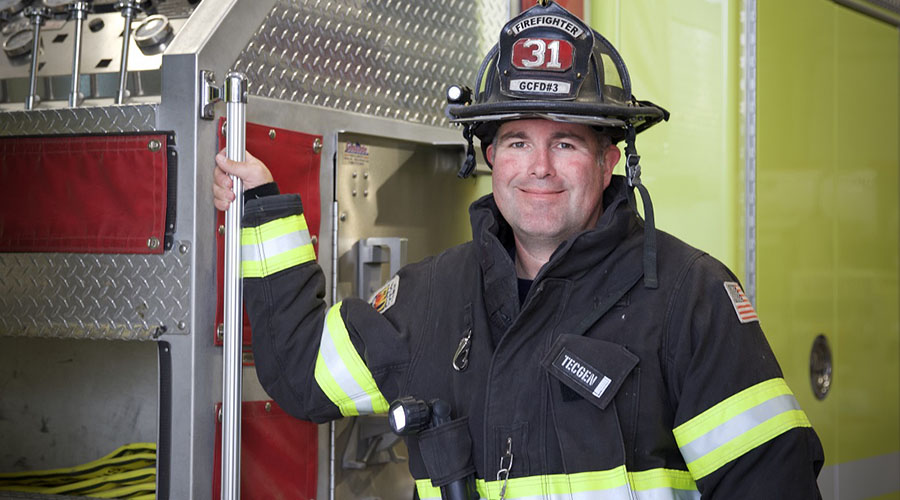
He’s a 38-year-old father of four with an active lifestyle, a passion for volunteerism, and a job he loves as a firefighter/EMT for Grant County Fire District No. 3 in Quincy.

So when a doctor told Quincy’s Nigel McNeill that an on-the-job injury suffered on May 16 would require surgery and a long recovery, McNeill was devastated.

“I was literally in tears,” he says. “This was our busy season, coming up on July and August. I needed be out there with the guys.”

In an occupation where risks are part of the job, the injury caught him by surprise.

“It wasn’t doing anything exciting,” he says. “I wasn’t saving babies or breaking glass. I was just checking the oil on an engine. When I came back out I felt a slow burning sensation in my abdomen.”

McNeill was taken to the emergency room at the hospital in Quincy where Dr. Fernando Dietsch quickly diagnosed a hernia and referred him to a facility he was familiar with in Wenatchee for further care.

The surgeon in that facility told him he needed surgery to repair his hernia but that laparoscopic surgery, which is less invasive than conventional surgery and typically has a much shorter recovery period, wasn’t the right option, McNeill says.

With surgery scheduled for June 12, recovery expected to take six to eight weeks and fire season rapidly approaching, McNeill was desperate to find a way to get back on the job sooner.

Then a friend at Kittitas Valley Healthcare in Ellensburg suggested he get a second opinion and referred him to Dr. Thomas Penoyar of KVH General Surgery.

Penoyar, who is skilled in laparoscopy, saw him immediately.

“He told me it could be done laparoscopically,” McNeill says. “He said it was pretty much a chip shot. He had a great sense of humor but was professional at the same time.”

A week later, on May 31, Penoyar performed the surgery.

At the hospital, “they took me right back. There was great communication,” McNeill says. “The last thing I remember is being wheeled into OR, then I woke up and they were right there with me.”

McNeill went home from the hospital that same day. On June 18 he was released back to full duty.

It isn’t the first time someone in his family has gotten exceptional care at KVH, McNeill says. Nine or ten years ago his mother experienced possible heart attack symptoms while traveling through Ellensburg and ended up in the KVH emergency department.

“They got her right in and treated her. It turned out to be her gallbladder,” he says. “What she told me about her experience sounds a lot like mine. Whatever you’re doing down there, you’re doing it right.”

And that’s a message he’s sharing.

“We don’t have an operating room here in Quincy. Most people, when they need care they have the mindset to go to Wenatchee,” he says. “It’s maybe 40 minutes to Wenatchee, maybe 15 or 20 minutes more to Ellensburg. For me, those extra minutes are worth it.

“I’m telling everybody I know, you probably should check out KVH for your surgical needs before you go to another facility. The word is out. I’m telling everyone.”

  • Page 1
  • Page 2
  • Page 3
  • Interim pages omitted …
  • Page 5
  • Go to Next Page »

Primary Sidebar

Categories

  • KVH Stories
    • Patient Stories
    • Provider Stories
    • Donor Stories
    • Employee Stories
    • Volunteer Stories
    • Share Your Story
    • All
  • Blog Posts
    • Behind the Scenes
    • Childbirth & Family Education
    • Community
    • Health
    • Lifestyle
    • Provider
    • Safety
    • COVID-19
    • All
  • News & Media
    • KVH News
    • Weather/Disaster Notifications
  • Press Releases

Footer Top 1

HRSA National Health Service Corps Site

Footer Top 2

603 S. Chestnut Street - Ellensburg, WA 98926
509.962.9841

  • Facebook
  • Instagram
  • LinkedIn
  • Twitter
  • YouTube

Footer Top 3

Footer Bottom 1

Download the MyPatient Portal App
Apple Store Google Play Store

Footer Bottom 2

  • About KVH
  • KVH Legal Information
  • Price Transparency
  • Careers
  • Board of Commissioners
  • Contact Us
  • Foundation

Footer Bottom 3

  • Our Locations
  • Hospital Services
  • Clinics & Specialty Services
  • Patients & Visitors
  • Patient Policies
  • Events & Education
  • Press Releases

Footer Bottom 4

Google Translate