• Skip to primary navigation
  • Skip to main content
  • Skip to primary sidebar
  • Contact Us
  • Pay My Bill
  • Patient Portal
KV Healthcare

KV Healthcare

Your Home for Health

  • Find a Provider
  • Clinics & Specialties
        • Primary Clinics

        • KVH Family Medicine – Cle Elum
        • KVH Family Medicine – Ellensburg
        • KVH Home-based Primary Care
        • KVH Internal & Adult Medicine
        • KVH Pediatrics
        • KVH Women’s Health
        • KVH Rapid Access
        • Specialty Services

        • Anticoagulation Clinic
        • Addiction Medicine
        • Specialty Clinics

        • ENT & Allergy
        • Cardiology
        • Dermatology
        • General Surgery
        • Home Health
        • Hospice
        • Neurology
        • Podiatry
        • Orthopedics
        • Urgent Care
        • Urology
        • Vascular Surgery
        • Workplace Health
        • Wound Care
        • Therapy Services

        • Physical Therapy
        • Speech Therapy
        • Occupational Therapy
        • Cle Elum Therapy Services
  • Hospital Services
        • Services

        • Cardiopulmonary
        • Emergency Department
        • Imaging
        • Laboratory
        • Nutrition
        • Pharmacy
        • Surgical
        • Family Birthing Place

        • About Family Birthing Place
        • Class/Event Calendar
        • What to Expect
        • Birth & Family Education
        • Lactation Services
        • 4th Trimester Resource Center
        • Pregnancy & Infant Loss
  • Patients & Visitors
        • Patient Tools

        • Request Medical Records
        • Checking In
        • Language Services
        • Quality of Care
        • Patient Portal
        • Patient Safety & Security
        • Patient Policies
        • Insurance & Billing

        • Accepted Insurance
        • Price Transparency & Billing Services
        • Washington Health Plan Finder
        • Financial Assistance
        • No Surprise Act - Balanced Billing
        • Insurance vs. Self Pay
        • Bills from Other Providers
        • Pay My Bill
        • Visitors

        • Visiting Information
        • Mother’s Room
        • Café
  • About KVH
        • About KVH

        • About KVH
        • Mission & Vision
        • Board of Commissioners
        • Administration
        • Quality of Care
        • DAISY Award Program
        •  

        • News & Blog
        • Events & Education
        • Contact Us
        • Locations
        • Work With Us / Careers
        • Foundation

        • About the Foundation
        • The Foundation Board of Directors
        • Programs to Support
        • Ways to Give
        • Donate Now
        • Foundation Events
  • Donate Now
  • Pay My Bill
  • Patient Portal
  • Find a Provider
  • Clinics & Specialty Services
  • Hospital Services
  • Patients & Visitors
  • About KVH
    • Mission & Vision
    • Board of Commissioners
    • Administration
    • Contact Us
    • KVH News
    • Our Locations
    • Quality of Care
  • Careers at KVH
    • Culture & Mission
    • Education
    • Providers
    • Non-Clinical
    • Volunteer
    • Nursing
    • Professional Development
    • Clinical
  • The Foundation at KVH
    • Donate Now
    • About the Foundation
    • The Foundation Board of Directors
    • Foundation Events
    • Programs to Support
    • Your Impact
    • Ways to Give

KVH News

A Message from the Board of Commissioners Regarding the Future of OB Care at KVH

HealthNews · July 14, 2023 ·

Early today, KVH received a resignation letter from KVH Women’s Health provider Holly Dawson, DO, effective October 12, 2023. In true accordance with our value of Transparency, we want to take this opportunity to be open and honest with you on the current status, and future plans of KVH Women’s Health and the KVH Family Birthing Place.

At KVH, we talk a lot about our strategies and how they shape the work we do. When you look at the KVH strategies, Access is at the top of the list. For us, Access means that KVH is intentional in providing the needed services in our community and we work to anticipate the resources needed to serve our community.

In April 2022, the Women’s Health Clinic was staffed with four OB/GYN or FPOB physicians and two advanced practice providers. These staff shared the responsibility of OB/GYN care at KVH Women’s Health and OB call and deliveries at KVH Hospital. KVH providers were supported by staff at Community Health of Central Washington (CHCW), however their call coverage has been significantly hampered due to their own staffing issues. Since then, three physicians and one advanced practice provider have left the practice for issues around work-life balance and professional burnout. We have been actively recruiting OB/GYN and FPOB candidates since the Fall of 2022 and have seen some success with the arrivals of Dr. Wageneck and Anna Phillips.

We are very proud of our Women’s Health teams in the clinic and the hospital and we want to support them. As KVH Women’s Health began to experience the provider departures felt throughout the country, leadership began exploring new options to support this service. The key to any service line offered is that it must be RELIABLE for our community and SUSTAINABLE for our providers and staff. Women’s health has faced unprecedented challenges in 2023, and we are committed to addressing them. Due to staff shortages, we have been forced to limit the number of new OB and GYN patients we can accept. We’ve had to reach into our Family Medicine providers to assist with newborn call coverage. We can no longer depend on the traditional model of single clinic physician coverage and must think deeper and broader.

Eight months ago, leadership brought forth a new model of obstetrics care for our KVH provider team to consider. This model is similar to the models we are using in MedSurg/CCU, the Emergency Department, and Anesthesia where dedicated, professional teams with significant bench strength are brought in to provide services for our patients in our facility. At that time, our providers felt they could still meet the needs of our community and asked that we continue to put our efforts into recruiting new KVH-employed providers. This has not worked. Today, our providers are leaving for opportunities to work in the very models we were bringing forward.

Across the state and throughout the country, OB programs are closing. We only expect to see this trend continue. We know that rural OB programs are fragile everywhere. KVH is committed to finding a reliable and sustainable OB program for our community and welcomes the involvement of our community partners. We will be holding a special board meeting on Thursday, July 20 at 5:00 p.m. to discuss our efforts and next steps. In the meantime, please be assured that we are committed to a full-service women’s health program at Kittitas Valley Healthcare.

Matt Altman

President, KVH Board of Commissioners

Wildfire Smoke Exposure and Children

Elise Herman , MD · July 6, 2023 ·

Contributor Dr. Elise Herman

As climate change causes a longer and more severe wildfire season, exposure to wildfire smoke in children is an increasing problem. Wildfire smoke is felt to be more dangerous than typical air pollution and kids (especially those under 5 years) are more vulnerable for multiple reasons. Children’s smaller airways are more adversely affected by swelling and inflammation from smoke. Kids also breathe more rapidly than adults, thereby taking in more of the dangerous particles. Children who have underlying lung problems including asthma are at increased risk and are more likely to need medical care.

Children typically have coughing, sneezing, and increased congestion with wildfire smoke exposure. They may also have burning or discomfort of their eyes, nose, and throat. If there is more serious exposure, a child may become lethargic or have shortness of breath. Signs of trouble breathing in kids include breathing rapidly, the ribs sticking out with each breath (“retractions”), and the abdomen moving a lot with breathing (“belly breathing”). Babies may also have head bobbing and grunting as signs of respiratory distress.

Being aware of the air quality can guide your actions. Airnow.gov is a good site to check; if the AQI (air quality index) is over 150, avoid any outdoor activity if possible. Kids 2 years and over can wear a mask to somewhat reduce smoke exposure. NIOSH N95 or KN95 masks are 80-95% effective at reducing smoke exposure (depending on the fit of the mask) but do not come in sizes for younger kids. Surgical masks are only 20% effective and therefore are not ideal. Cloth masks really do not help filter smoke.

Here are steps child you can take to protect your child if there is wildfire smoke in your area :

  • Ideally, temporarily relocate to an area free of smoke
  • If the AQI is over 150, stay inside and close windows and doors
  • If possible, use a HEPA air filter or MERV13 filter (this is a rating for a filter’s effectiveness) on your air-conditioning unit; the Environmental Protection Agency (EPA) also has information on creating a DIY air cleaner that is effective
  • Set your air conditioning to ‘recirculate’
  • If you do not have air-conditioning and the weather is very hot, consider going to a cooling center (a place with air conditioning to provide temporary respite from the heat)
  • Avoid lighting candles, vacuuming, or using a gas stove which can worsen indoor air quality
  • Rinse your child’s eyes with water if they are stinging or itchy
  • If your child has a lung condition like asthma, make sure you have enough medication, especially a rescue inhaler
  • Call your healthcare provider if your child feels short of breath, or complains of dizziness or chest pain
  • Seek emergency care if you see signs of shortness of breath as listed above or if your child seems less alert or very lethargic

Resources

  • Wildfire Smoke and Children / CDC.gov/air/wildfire-smoke/children.htmI
  • DIY Air Cleaner / https://www.epa.gov/system/files/documents/2021-09/diy-air-purifier-infographic_final.pdf

more about The contributor

Dr. Elise Herman

headshot of Dr. Elise Herman
Blog Posts
Profile

Dr. Herman is passionate about community health outreach, school programs, and child/family health and wellness. She has more than 31 years of experience as a pediatrician in Ellensburg, Washington, the last 3 with KVH Pediatrics. In 2022 Dr. Herman mostly retired from practice and continues to contribute blog posts and remain a visible advocate for kids in the community.

2023 Community Health Improvement Week

HealthNews · June 9, 2023 ·

Dr. Martin and Robin Read share how their organizations are working together to make a healthier future for our county.

This year, Community Health Improvement Week runs June 12 – 18.

Vehicular Heat Stroke in Children

Elise Herman , MD · June 6, 2023 ·

Contributor Dr. Elise Herman

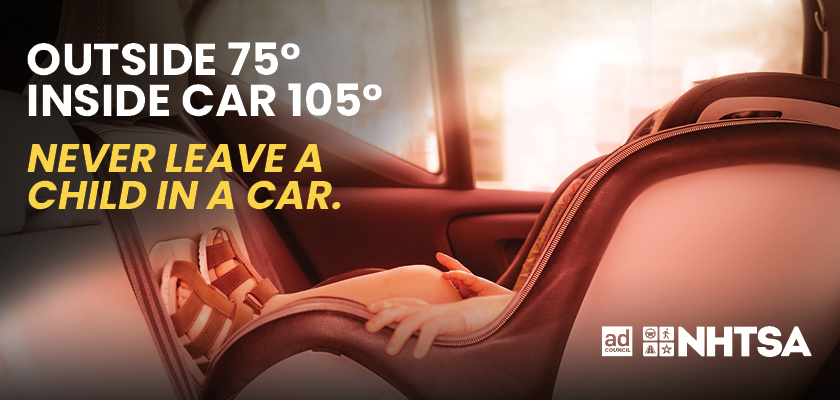
As summer approaches and the outdoor temperature increases, a danger looms for children- vehicular heatstroke (VHS), which is heat injury due to being in a hot car or other vehicle. These deaths are so preventable, and as a parent you may wonder how such a thing could happen, but vehicular heatstroke claims an average of 38 children’s lives a year in the US, with almost a thousand deaths since 1998.

Heat stroke is the most severe heat-related illness and occurs when the core body temperature is over 105.8 degrees Fahrenheit with signs of nervous system injury including confusion, seizures, and coma. Dehydration along with heat exposure can cause deadly heat stroke. Children are more at risk because they sweat less than adults and can overheat more quickly.

Vehicular heatstroke most often occurs when an adult ‘forgets’ a child in a car, often when the adult is on the way to work, intending to stop at childcare first. A change in routine such as a different parent doing the drop-off can also increase the risk. Parental stress or sleep deprivation can be contributing factors. Vehicular heat stroke can also occur if kids are playing in a car and accidentally lock themselves in.

The outside temperature does not need to be extremely high for vehicles to become dangerously hot. VHS has happened with outside temperatures as low as 57 degrees. A car can heat up 20 degrees in 10 minutes on a sunny day, and 72 degrees outside can become 117 degrees in a vehicle within 1 hour. Cracking the window or parking in the shade make little difference in term of the car heating up. Climate change also means more hot days and more extreme heat.

There are steps we can take to minimize the risk of this tragedy:

  • Never leave a child in a vehicle unattended even briefly
  • Make it a habit to open the back door of the car when you park, just to check the backseat.
  • Put some important item you need for your day- purse, iPad, employee badge, etc. in the back seat near your child.
  • Keep a stuffed animal or something similarly eye-catching in the car seat when empty and move it to the front passenger seat when the car seat is in use as a reminder.
  • Remember the phrase “Look before you lock”.
  • Instruct your childcare provider to contact a parent if a child is not dropped off as scheduled.
  • Keep car keys out of reach of kids, and teach them to never play inside cars, trunks, etc.
  • Teach your child to honk the horn if they are trapped inside a car.
  • If a child is missing, check all vehicles and trunks immediately.
  • If you ever see a child alone in a locked vehicle, call 911.

Resources

  • Prevent Child Deaths in Hot Cars / HealthyChildren.org
  • Extreme Heat: Keeping Kids Safe When Temperatures Soar / HealthyChildren.org
  • Kids in Hot Cars – Free Online Course / National Safety Council
  • Prevent Hot Car Deaths, Check the Back Seat / nhtsa.gov
  • Car Seat Safety > Heatstroke Prevention / cpsboard.org

more about The contributor

Dr. Elise Herman

headshot of Dr. Elise Herman
Blog Posts
Profile

Dr. Herman is passionate about community health outreach, school programs, and child/family health and wellness. She has more than 31 years of experience as a pediatrician in Ellensburg, Washington, the last 3 with KVH Pediatrics. In 2022 Dr. Herman mostly retired from practice and continues to contribute blog posts and remain a visible advocate for kids in the community.

Social Media & Teens

Elise Herman , MD · May 1, 2023 ·

Contributor Dr. Elise Herman

Parents of teens know that this is a tough time for their kids, and many experts point to smartphones and social media as contributing to the worsening mental health of young people. Recent research has shown that social media is not just related to depression, anxiety, and loneliness, but can cause these issues. It should be noted that no one should be on social media until age 13 (it is against the rules as well as potentially harmful), and the later a teen starts with it, the better.

When phones and social media became common around 2012, kids began spending less time with friends just ’hanging out’, which is felt to contribute to feelings of isolation. So what are kids doing instead of hanging out with their peers? They are, of course, on their phones. 95% of all American teens have smartphones and they are on their phones over 7 hours a day (excluding for academics or homework). It is well known that all that phone and social media time is interfering with sleep, and inadequate sleep is tied to anxiety and depression in teens.

The negative effects of social media include bullying, kids comparing themselves to other people’s “perfect lives”, and a sense of FOMO (Fear of Missing Out). There may also be exposure to violent or sexual content. Instagram and other social media can promote body image issues in teen girls who may already be struggling with self-esteem. Social media (including TikTok, Instagram, Snapchat, and YouTube) is engineered to be addictive, and 2/3 of teens age 13-17 years use it, 16% admitting to using social media “almost constantly”.

There are some clear positives of social media, however. Most teens say it can make them feel more connected to peers, and those with a disability or feeling marginalized may find support on a social media platform. It can provide an outlet for creativity, and most would agree on its potential for being entertaining.

Given that there are some positives, and most teens are very plugged in to their social media, what can parents do to help their kids regulate their usage? Although banning social media outright seems tempting, this is unlikely to be successful. Knowing that just decreasing the amount of social media can help kids with body image, depression, anxiety and self-esteem, it is better to make a mutually agreed upon plan with your teen to limit it.

This plan should have scheduled downtime daily without the phone and social media, including mealtimes and the hour before bed (and ideally no phones in the bedroom). Social media should be allowed only after homework is done; this can be implemented via parental controls if needed. Setting a daily time limit for social media apps is easily done on the phone; ideally your teen should do this and look at it as helpful reminder although parental controls are again an option. Encourage taking a longer break for activities like camping, traveling, and special times with friends or family. It is good to see how much more engaged we are when we don’t have our phones and social media to distract us.

Discuss with your child what on social media makes them feel better or worse; if something makes them feel worse, they should avoid it (good advice for us adults, too). Sympathize with your teen if you have a love/hate relationship with your social media and that limiting this may be difficult for you, too. Handling social media can be something you do together as a family. The American Academy of Pediatric has a new version of their free Family Media plan which can guide parents in media usage individualized for each family member (see Resources, below).

Parents should be familiar with social media platforms and know which ones their child is using. Encourage frequent conversations with your teen about relationships, social media, and emotional well-being so it will be easier for them to come to you if they have concerns. If social media is affecting your teen’s mental health, it is time to take a break and consider talking to your child’s healthcare provider and/ or a counselor.

Resources

  • American Academy of Pediatrics / Family Media Plan
  • HealthyChildren.org / How to Make a Family Media Use Plan

more about The contributor

Dr. Elise Herman

headshot of Dr. Elise Herman
Blog Posts
Profile

Dr. Herman is passionate about community health outreach, school programs, and child/family health and wellness. She has more than 31 years of experience as a pediatrician in Ellensburg, Washington, the last 3 with KVH Pediatrics. In 2022 Dr. Herman mostly retired from practice and continues to contribute blog posts and remain a visible advocate for kids in the community.

Bringing Music into Your Child’s Life

Elise Herman , MD · April 4, 2023 ·

Contributor Dr. Elise Herman

Children seem to love music right from the start, which makes sense since babies in the womb can hear sound beginning around the fourth to the fifth month of pregnancy. Research has shown the many positives of music for kids, so making music part of your child’s life will reap benefits over their lifetime. Music involvement includes listening to music, playing an instrument, singing, and dancing.

Music exposure for young children increases brain development, according to research done at the University of California at Santa Cruz in 2016. This was particularly noted in the areas of language and reading skills. Other research has shown that participation in music classes can increase IQ and standardized test scores along with achievement in English and mathematics. Involvement with music improves patience and listening skills and, therefore, school readiness for young children. Experiencing music and dance of different cultures expands a child’s world view and appreciation of other people.

Music has been shown to decrease stress hormones and anxiety, so much so that it is used in hospitals before surgeries and in dental offices. It increases positive emotions and encourages self-regulation and a sense of calm– obviously beneficial for children of all ages. Playing an instrument and dancing help develop motor skills and encourage self-expression and creativity. Being part of a music or dance class teaches kids how to participate in a group and work with others; kids learn valuable social skills in these settings.

It is never too early to bring music into your child’s life. Sing to your unborn child and continue this from infancy onward. Talent doesn’t matter, so don’t avoid this if you are not a gifted singer (few of us are). Sing lullabies to your infant, and attach certain songs to activates for your toddler, such as songs for cleaning up, nap time, and bedtime. Nursery rhymes and clapping along are delightful to young children. Preschoolers love silly songs and lots of repetition (think “The Wheels on the Bus”). Quiet background music (at times) is a great way to expose your child to music of different types.

Keep simple musical instruments in your child’s play area, like a tambourine and shakers. You can also make your own ‘instruments’, such as using a wooden spoon to beat pots and pans and putting beans in a childproof small plastic container for a shaker.

Older kids enjoy music classes in school and benefit from music and dance lessons outside of school as well. Watching dance videos with your child and trying to learn dances together is a fun musical activity. Going to concerts and dance performances connects kids with others and encourages attention and listening skills.

So, start early by filling your child’s life with music and dance of all types. Have fun, and let it awaken the child within you, too. Look online to find lots of local opportunities for music and dance, both for classes and live events. We are also fortunate to have the outstanding music department at Central Washington University, which offers many concerts which are family-friendly.

more about The contributor

Dr. Elise Herman

headshot of Dr. Elise Herman
Blog Posts
Profile

Dr. Herman is passionate about community health outreach, school programs, and child/family health and wellness. She has more than 31 years of experience as a pediatrician in Ellensburg, Washington, the last 3 with KVH Pediatrics. In 2022 Dr. Herman mostly retired from practice and continues to contribute blog posts and remain a visible advocate for kids in the community.

Parenting Your Teenager

Elise Herman , MD · March 3, 2023 ·

Contributor Dr. Elise Herman

As kids get older, the joys and challenges of parenting change. Teenagers can be wonderful people—enthusiastic, very involved with friends, and with passionate opinions and feelings. However, they can also be impulsive, take risks and feel invulnerable, creating a setup for poor decisions. In addition, teens are working on independence, which can mean pushing back against authority (i.e., us parents). It is all-natural but can create some tension in the household.

Many parenting goals now are the same as when your child was younger, such as encouraging a healthy lifestyle. This includes good nutrition, family meals, getting outside regularly, and adequate sleep. Teens generally need 8-10 hours of sleep nightly but often want to stay up late and then sleep in or have difficulty getting up for school. “Sleeping in” on the weekends should be no more than 1-2 hours later than usual, and naps should be avoided. There should be no caffeine later in the day (this includes pop). Phones or other devices should not be used within an hour of bedtime; ideally, phones are out of the bedroom at night to limit temptation. If you feel this won’t work, parental controls can also be used to manage data access.

Safety is a big topic for teens— so many new things are happening! Driving, dating, possible alcohol and drug use, mental health concerns. Find moments to chat with your teen about some of these issues in shorter conversations, possibly when the two of you are in the car or making a meal. If something is in the news, such as cyberbullying, use that as a start to a discussion (not a lecture). Acknowledge that things are more complicated and high-pressured for them than when you were a teen and that you would like to know more about their world.

Encouraging autonomy means having clear, consistent rules and expectations (ideally agreed upon by your teen) for driving, dating, curfew, etc., gradually giving them more freedom. Acknowledging their successes helps build confidence and will make you comfortable giving them more responsibility. Consequences for poor behavior should be “firm and fair” and be understood by your child beforehand. Give your child a more significant voice on decisions such as meals, activities, and family plans; weekly brief family meetings are a great time to let your teen know their input is valued.

Teens are really in training for adulthood, and you need to give them life skills to succeed. Having chores, learning to set a budget, and being able to cook and clean are crucial. A part-time job encourages responsibility and teaches your teen to balance work, school, and other activities. Learning to drive can be challenging and perhaps worrisome to parents, but it is necessary to become independent. Teens should know how to do essential home repairs, change a tire and deal with small emergencies (such as power outages or grease fires in the kitchen). Teach them essential money management, such as using a credit card responsibly and spending wisely within their means. Learning to regulate emotions is also a necessary part of growing up. Model this by trying to remain calm, talking about your feelings, or taking a break from an uncomfortable situation.

The teen years can be challenging for you and your child as they strive for more independence. Mistakes may be made, but let them know you are there to support them. Don’t be afraid to tell them you love them, even if it sometimes feels awkward. They may not always act like it, but adolescents still want to know they are loved unconditionally, so even a brief hug or high five is reassuring when life may feel stressful and confusing.

Resources

  • American Academy of Sleep Medicine
  • HealthyChildren.org / American Academy of Pediatrics
  • CDC.gov/parents/teens

more about The contributor

Dr. Elise Herman

headshot of Dr. Elise Herman
Blog Posts
Profile

Dr. Herman is passionate about community health outreach, school programs, and child/family health and wellness. She has more than 31 years of experience as a pediatrician in Ellensburg, Washington, the last 3 with KVH Pediatrics. In 2022 Dr. Herman mostly retired from practice and continues to contribute blog posts and remain a visible advocate for kids in the community.

Gun Safety and Your Child

Elise Herman , MD · February 6, 2023 ·

Contributor Dr. Elise Herman

Parents want to keep their children safe, and an increasingly important part of this relates to gun safety. The leading cause of death in the US for kids (those 18 years old and under) is now firearm-related injuries. There were 301 unintentional shootings by kids in 2022, which caused 133 deaths and 180 injuries. Regardless of opinions on gun control, we all want to prevent these tragedies, making proper storage of weapons and ammunition crucial. Whether you have guns in your home or not, there are important steps you can take to keep kids safe.

Home safety

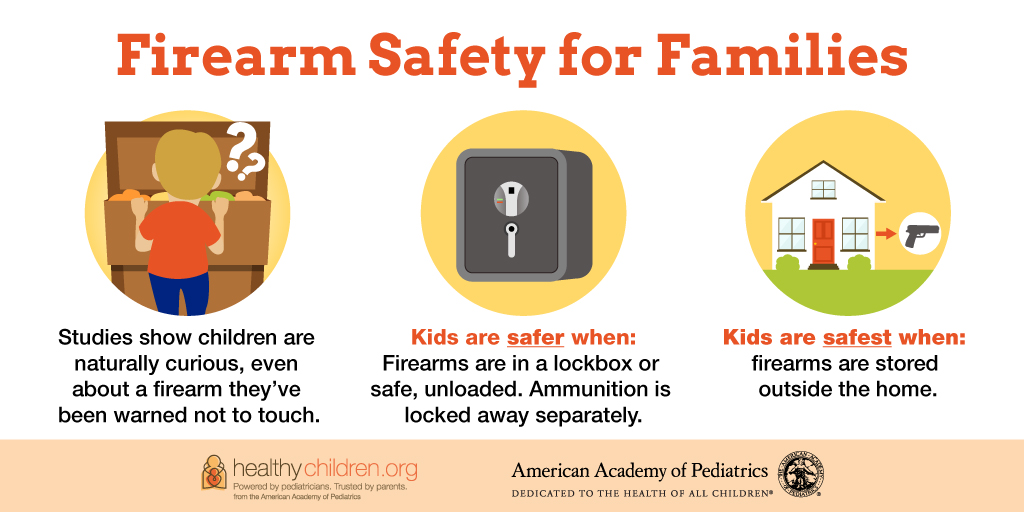
If you decide to keep a firearm in your home, make sure all guns are locked and unloaded, with ammunition stored separately and securely. Store weapons in a gun cabinet, vault, safe, or storage case. Keys and combinations for these need to be hidden. Fingerprint lock technology is another way to prevent children from gaining access to the safe. Consider a trigger lock as well to prevent the gun from firing. If firearms are in a vehicle, they should also be in a locked safe with ammunition stored and secured separately.

Studies have shown that contrary to what parents may believe, children generally do know where guns are in the home, can get access to a loaded weapon in minutes, and many have handled them without adult supervision.

Safety out of the home

Over one third of accidental shootings of children happen in other people’s homes. It is vital that you discuss gun safety with the parents of your child’s friends when arranging get togethers. Just as you would go over other safety information such as food allergies, adult supervision, or bike helmet use if appropriate, you need to ask about guns- in their home and vehicles. Without any judgement, ask if the other family has guns and if so, how the guns and ammunition are stored. You could also volunteer how you secure weapons at your house. If guns and ammunition are not stored appropriately by the other parents, you can suggest that they be secured but if the situation does not seem safe, have the playdate at your home instead. Think of how you would handle the situation if the other family had a pool without safety measures in place. Have similar discussions with family members or caregivers where your child spends time. These conversations may feel awkward at first, but it is your child’s safety on the line.

Talking to your children

Remind kids that if they see a gun that is not locked up, they should refrain from touching it, leave the area and tell an adult right away. Children should be taught to always assume a gun is loaded. Gun safety and hunter responsibility classes are recommended but are not a guarantee that a child will be safe around unsecured guns.

Mental health concerns

If someone in the home has depression or suicidal thoughts, firearms should be removed from the home while there is an active concern. Guns may be stored temporarily with local law enforcement (check on-line) or with a friend or family member living outside the household.

Resources

  • Be SMART (pdf)
  • American Academy of Pediatrics / SAFETY & PREVENTION: Guns in the Home: Keeping Kids Safe
  • Safe Gun Storage Sites / hiprc.org/firearm/firearm-storage-wa

more about The contributor

Dr. Elise Herman

headshot of Dr. Elise Herman
Blog Posts
Profile

Dr. Herman is passionate about community health outreach, school programs, and child/family health and wellness. She has more than 31 years of experience as a pediatrician in Ellensburg, Washington, the last 3 with KVH Pediatrics. In 2022 Dr. Herman mostly retired from practice and continues to contribute blog posts and remain a visible advocate for kids in the community.

Baby, It’s Cold Outside- But Get Out There Anyway!

Elise Herman , MD · January 3, 2023 ·

Contributor Dr. Elise Herman

We know how important it is for our kids to get outside regularly; all that fresh air and running around has numerous benefits. When it is cold, parents sometimes hesitate to let their kids out for fear that colder weather will make them sick. But it is actually the exposure to sick people and the viruses they carry that causes problems this time of year.

Winter play boosts physical and emotional wellness, builds muscle mass, and improves sleep. It means getting away from electronics and the temptation for unnecessary snacking. It also means avoiding crowded indoor spaces which can make it easy for viruses to spread. Vitamin D absorption is another bonus, especially if it is sunny. Exploring the outdoors in winter gives kids important exposure to nature which can lower stress. Getting outside when it is cold, blustery, snowing, etc. builds grit and toughness- in kids and parents!     

Remember your childhood and what you loved to do in winter- maybe building a snow fort or creating a silly snowman. Sledding, cross-country skiing, and just going for snowy walks are terrific activities to do with kids. A scavenger hunt in winter helps kids slow down and pay attention. Can they find a bird’s nest in a tree or animal tracks in the snow? There are lots of suggestions online for outdoor play, but often children will just make their own fun without us adults “scripting” their activity. 

To help keep kids warm out there, remember to dress them in multiple thin layers. Boots and gloves should be insulated and ideally waterproof. A hat and neck gaiter (safer than scarves, especially on younger children) really help on cold days. Infants and babies should wear one more layer than an adult would as a rule of thumb. If clothing gets wet, kids should come in quickly and change to avoid hypothermia. 

There are some recommendations in terms of when it is too cold for kids to be outside safely. Pay attention to both the temperature and even more importantly the wind chill (what the temperature ‘feels like’). If the wind chill is 32 degrees and above, outdoor play is fine. If it is 13-31 degrees, just remember to take breaks to warm up perhaps every 30-60 minutes. Below 13 degrees windchill, outdoor play may not be safe for most kids though older kids may be OK for a limited time if they are dressed appropriately. Infants and babies tend to get cold faster since they are not playing actively and may also not complain of being too cold. Watch them carefully for signs of hypothermia- shivering, red cold skin, and decreased energy level. 

Admittedly, it is easier to get outside on a beautiful spring day, but outdoor exercise in these colder months is equally important. Try to get your kids outside regularly this winter and lead by example. Your whole family will benefit by embracing winter in all its beauty and opportunities.

The local Kittitas Environmental Education Network puts out a seasonal kids’ newsletter and has some great info and ideas for wintertime fun with kids of all ages:https://www.ycic.org/_files/ugd/fbe211_0fb63dcb09744990994f0d205f32cb52.pdf

more about The contributor

Dr. Elise Herman

headshot of Dr. Elise Herman
Blog Posts
Profile

Dr. Herman is passionate about community health outreach, school programs, and child/family health and wellness. She has more than 31 years of experience as a pediatrician in Ellensburg, Washington, the last 3 with KVH Pediatrics. In 2022 Dr. Herman mostly retired from practice and continues to contribute blog posts and remain a visible advocate for kids in the community.

KVH Chief Ancillary Officer and Roslyn community member Rhonda Holden named to new Federal Advisory Committee

HealthNews · December 15, 2022 ·

On Tuesday, December 13 the Biden-Harris Administration announced that local resident Rhonda Holden, RN, BSN, MSN was one of 17 individuals throughout the country selected to join the Ground Ambulance and Patient Billing (GAPB) Advisory Committee. This new federal advisory committee was created in November of 2021 to improve the disclosure of charges and fees for ground ambulance services and to better inform consumers of insurance options for such services and protect consumers from balance billing.

Ms. Holden will provide the committee with insight into the unique needs of rural communities that rely on ground ambulance services, not only to respond to accidents and emergencies but also to transport patients long distances to a higher level of care. “I believe we can work together to revise the payment structure for ground ambulance transports which will ultimately alleviate burdensome financial challenges for consumers. Financial concerns should not be a barrier to access life-saving care for any American,” states Holden.

Rhonda’s career as a registered nurse has been spent largely serving rural communities. She is a long time resident of Roslyn with an in-depth experience in advisory roles. She currently serves as the Chief Ancillary Officer at Kittitas Valley Healthcare (KVH) and is the Director of Strategic Initiatives for Kittitas County Public Hospital District #2, which operates Medic One, the only advanced life support (ALS) ambulance service in Upper County.

“Ms. Holden is well qualified to articulate the unique challenges that rural ground ambulance consumers and providers experience and will represent the rural perspective,” stated KVH Commissioner Robert Davis in her nomination letter. Ms. Holden’s nomination was supported by Kittitas County Hospital District 1 and 2’s Boards of Commissioners, the Legislators of Washington State’s 13th District, the Washington State Hospital Association, the Washington State EMS and Trauma Steering Committee, the Washington State Emergency Cardiac and Stroke Technical Advisory Committee and the American Hospital Association’s Rural Health Services.

For more information on the Ground Ambulance and Patient Billing Advisory Committee appointments see Members of New Federal Advisory Committee Named to Help Improve Ground Ambulance Disclosure and Billing Practices for Consumers | CMS and 2022-27263.pdf (federalregister.gov).

For information on the GAPB committee and charter see Advisory Committee on Ground Ambulance and Patient Billing (GAPB) | CMS

For inquiries on the GAPB please contact press@cms.hhs.gov

  • « Go to Previous Page
  • Page 1
  • Interim pages omitted …
  • Page 6
  • Page 7
  • Page 8
  • Page 9
  • Page 10
  • Interim pages omitted …
  • Page 20
  • Go to Next Page »

Primary Sidebar

Categories

  • KVH Stories
    • Patient Stories
    • Provider Stories
    • Donor Stories
    • Employee Stories
    • Volunteer Stories
    • Share Your Story
    • All
  • Blog Posts
    • Behind the Scenes
    • Childbirth & Family Education
    • Community
    • Health
    • Lifestyle
    • Provider
    • Safety
    • COVID-19
    • All
  • News & Media
    • KVH News
    • Weather/Disaster Notifications
  • Press Releases

Footer Top 2

603 S. Chestnut Street - Ellensburg, WA 98926
509.962.9841

  • Facebook
  • Instagram
  • LinkedIn
  • YouTube

Footer Bottom 1

Download the MyPatient Portal App
Apple Store Google Play Store

Footer Bottom 2

  • About KVH
  • KVH Legal Information
  • Price Transparency
  • Careers
  • Board of Commissioners
  • Contact Us
  • The Foundation at KVH

Footer Bottom 3

  • Our Locations
  • Hospital Services
  • Clinics & Specialty Services
  • Visiting Information
  • Patient Policies
  • Events & Education
  • Press Releases

Footer Bottom 4

Google Translate