• Skip to primary navigation
  • Skip to main content
  • Skip to primary sidebar
  • Contact Us
  • Pay My Bill
  • Patient Portal
KV Healthcare

KV Healthcare

Your Home for Health

  • Find a Provider
  • Clinics & Specialties
        • Primary Clinics

        • KVH Family Medicine – Cle Elum
        • KVH Family Medicine – Ellensburg
        • KVH Home-based Primary Care
        • KVH Internal & Adult Medicine
        • KVH Pediatrics
        • KVH Women’s Health
        • KVH Rapid Access
        • Specialty Services

        • Anticoagulation Clinic
        • Addiction Medicine
        • Specialty Clinics

        • ENT & Allergy
        • Cardiology
        • Dermatology
        • General Surgery
        • Home Health
        • Hospice
        • Neurology
        • Podiatry
        • Orthopedics
        • Urgent Care
        • Urology
        • Vascular Surgery
        • Workplace Health
        • Wound Care
        • Therapy Services

        • Physical Therapy
        • Speech Therapy
        • Occupational Therapy
        • Cle Elum Therapy Services
  • Hospital Services
        • Services

        • Cardiopulmonary
        • Emergency Department
        • Imaging
        • Laboratory
        • Nutrition
        • Pharmacy
        • Surgical
        • Family Birthing Place

        • About Family Birthing Place
        • Class/Event Calendar
        • What to Expect
        • Birth & Family Education
        • Lactation Services
        • 4th Trimester Resource Center
        • Pregnancy & Infant Loss
  • Patients & Visitors
        • Patient Tools

        • Request Medical Records
        • Checking In
        • Language Services
        • Quality of Care
        • Patient Portal
        • Patient Safety & Security
        • Patient Policies
        • Insurance & Billing

        • Accepted Insurance
        • Price Transparency & Billing Services
        • Washington Health Plan Finder
        • Financial Assistance
        • No Surprise Act - Balanced Billing
        • Insurance vs. Self Pay
        • Bills from Other Providers
        • Pay My Bill
        • Visitors

        • Visiting Information
        • Mother’s Room
        • Café
  • About KVH
        • About KVH

        • About KVH
        • Mission & Vision
        • Board of Commissioners
        • Administration
        • Quality of Care
        • DAISY Award Program
        •  

        • News & Blog
        • Events & Education
        • Contact Us
        • Locations
        • Work With Us / Careers
        • Foundation

        • About the Foundation
        • The Foundation Board of Directors
        • Programs to Support
        • Ways to Give
        • Donate Now
        • Foundation Events
  • Donate Now
  • Pay My Bill
  • Patient Portal
  • Find a Provider
  • Clinics & Specialty Services
  • Hospital Services
  • Patients & Visitors
  • About KVH
    • Mission & Vision
    • Board of Commissioners
    • Administration
    • Contact Us
    • KVH News
    • Our Locations
    • Quality of Care
  • Careers at KVH
    • Culture & Mission
    • Education
    • Providers
    • Non-Clinical
    • Volunteer
    • Nursing
    • Professional Development
    • Clinical
  • The Foundation at KVH
    • Donate Now
    • About the Foundation
    • The Foundation Board of Directors
    • Foundation Events
    • Programs to Support
    • Your Impact
    • Ways to Give

KVH News

Behind the Scenes: Food & Nutrition Services

HealthNews · November 11, 2019 ·

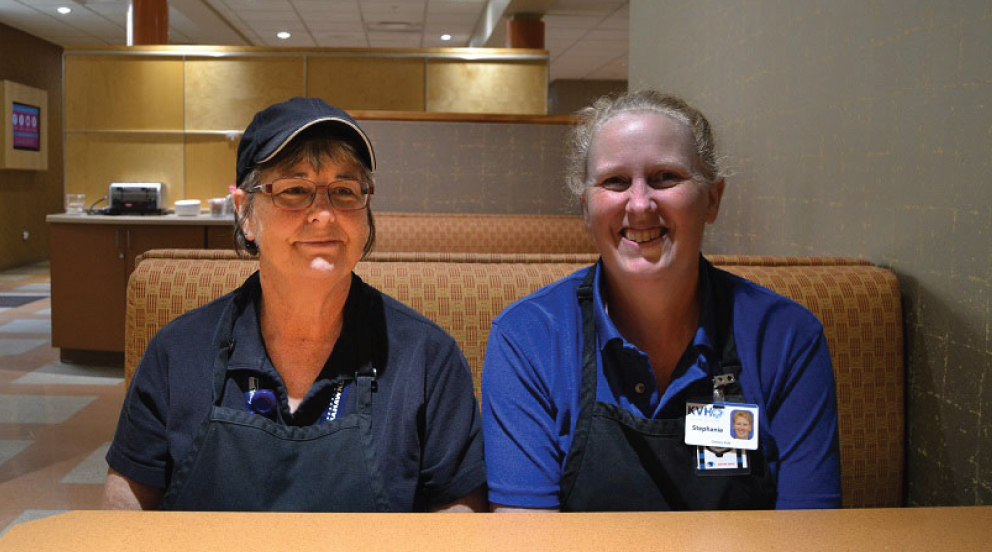
We sat down with Certified Diet Aides Diane Kirkham and Stephanie Hummel to learn more about the team that feeds hospital patients, families, staff, and even some community member “regulars” at the KVH Café.
As part of the hospital, the café’s open every day of the year. So how does that work? I’m assuming the kitchen is open quite a bit more than the café.

S: It’s open from 6:00 AM to 6:30 PM. And then we have our meal times, breakfast, lunch, dinner, and in between that we’re –

D: Getting ready for breakfast, lunch or dinner, for that day or the next day.

It’s interesting to see how when you bring new people on, even people that are still fairly new are involved in training the new employees.

S: Usually, they start out doing afternoons. Diane and I usually work mornings, but then when they get into doing patients than we do train them. That’s kind of our thing.

D: That’s why we were hired. Patient care. We didn’t have a cafeteria to speak of.

S: We did, but it was very minimal. When we started, there was no breakfast program.

D: You put out a toast tray and some oatmeal and they served themselves.

S: It has grown leaps and bounds. When I started, we had a four-foot salad bar, and maybe five toppings for the green salad.

D: It was pushed up against the wall.

S: We used to have to do the cash register and serve – we did both, and now it’s all separate.

D: That was interesting. We had meal tickets and you had to do the math in your head, whatever they bought. You were marking off the amount and then handing it back –

Sort of like a punch card.

S: Yeah, exactly. That’s how we started. So it’s come a long ways. A long, long ways.

Of all the things you do here, what do you enjoy most?

S: I love details, so I like the two jobs that I do right now. I like to problem solve.

D: She’s very good at putting our menus together.

S: I’m good at organizing. I want it just-so. Diane’s the same way, but she’s chill and laid back. She’s very good about details too, which is what you need to have when you work with patients. It’s serious work.

And you have those big old things you wheel out.

S: We have three carts. Med/Surg, CCU, and OB. We also do trays for ER, S.O.P, and we do late trays. The other day I had 11 extra trays between 8 a.m. and Noon in addition to the patients I had to feed. So it’s a lot. I think Jim said we put out about 900 trays a month.

D: And it doesn’t end. We have other things to do for the next day.

S: We make the side salads and green salads. Plus cleaning and dishes – lots of dishes.

D: So when you say, “What do you mean it’s only 1:31?” (lunch ends at 1:30), we have to get done and get out and do other things. People are pretty understanding about that.

But it does help for them to have perspective that ‘it’s not just you.’

S: It’s not just you or your department, but we have all these departments calling down for service, crackers, juice, whatever. We also supply Cle Elum and the clinics.

Serving patients and café customers, each day brings with it three meals that require planning, shopping, prepping, cooking, serving, and cleaning up after. Every FNS team member is necessary, and has an impact on the end result: tasty food, ready to eat.”

Does anything come to mind when I ask what misconceptions people might have about Food Services that you’d like to clear up?

S: Some people think we sit in the back and eat cookies all day long, which we would like to do, but, no, it’s very detail oriented and can be hectic and stressful.

D: Everybody has to do dishes. No one’s exempt. There’s no designated dishwasher.

Wow.

S: In a way, we’re the backbone of the hospital. Everybody wants to eat. When you get a good meal, then you feel like being productive.

There’ve been a lot of changes and things introduced since Jim Gallagher became the director. What kind of are you getting feedback from folks?

S: I’m getting good feedback about new menu items that we’ve had out here. He tends to go in a little healthier direction. We’ve got fish tacos now, carnitas tacos, and some other different items.

D: He’s willing to try new things.

S: And the grab-and-goes (refrigerated meal items) are his idea.

What kind of input does staff have into what kind of dishes get made or recipes get tried? Are you encouraged to get creative?

S: Oh, yes. We’re very involved. You might come up with an idea for a menu item, but it then you pass it around, you know, “What you think about this?” We bounce ideas off each other until we get to a good place – not only what the ingredients are, but how to prepare it, what to serve it in.

D: Like Vikki and her breakfast creations. “What if you put shredded hash browns in the potato bake?” Or our margarita pizza (mozzarella, basil, tomato). Vikki says to me, “Why can’t we make like a sandwich out of it?” “Well, what kind of bread?” “Let’s use the crusty bread.” “How are we going to put these together?” And Dwayne chimes in from back in the kitchen, “What if we do it like this? And should we put them on the grill or should we do it this way?”

S: It’s total collaboration. Jim encourages us to be creative. He and I make menus together, but then we bounce it off the people on the front line, because they’re the ones that it impacts.

The rest of us just see the end, where it’s put nicely on a plate.

What’s something that might surprise people about the work that you do?

S: We’re very adaptable. When we’re out of something or something isn’t exactly as we planned, we can change directions and still have a quality product.

You are food ninjas.

D: I really enjoy doing patient meals.

S: We always love the cafeteria but patients have to come first. They are our priority.

What are the challenges of working in your area?

D: There’s so much going on and so many people in the kitchen, it’s finding a space to work, to get your job done.

S: We’re doing patient meals, cafeteria, catering – they’re all intertwined, and we’re all working on our own project.

What are the rewards of working in food services?

S: Doing a good job. Making somebody happy. Having that feedback of, “Hey, you did a good job.”

The cafe has a good reputation in the community, too.

S: Especially the salad bar.

What do you need in order to have a great day at work?

S: I have to have one pun every day that makes everybody laugh. We just get along really well. It’s like a super-dysfunctional, happy family.

D: Being able to joke and laugh makes the day better. Just being with people you enjoy working with.

S: Everybody brings their own unique skills, their own personality and we all make it work.

The mission of KVH is to provide quality patient care. How does your work support that mission?

D: We make our patients happy with a good meal. It’s really cool when you get the little notes back, saying something about what a great meal it was.

Think of all the patient care staff, on a 30-minute break – being able to eat a meal on campus, that’s huge for them.

S: Bottom line, food makes people happy, and that sets the tone for the rest of the day.
KVH awarded for practice transformation activities in Kittitas County

HealthNews · October 31, 2019 ·

Kittitas Valley Healthcare (KVH) came home from the Provider Recognition Awards with four awards from the Greater Columbia Accountable Community of Health on Wednesday evening, October 30.

KVH Hospital, KVH Family Medicine – Cle Elum and KVH Family Medicine – Ellensburg were each presented with the “Fighting for Change/War Room” Award by Jenna Shelton, GCACH’s Practice Transformation Navigator. This award recognizes the collaborative work being done by KVH and the other safety net organizations in our community towards practice transformation and the implementation of a Patient-Centered Medical Home. KVH also received the “Kittitas Beginner Opioid Resource Network (ORN) Award for work being done to reduce opioid abuse throughout the county.

“KVH has a team that brings nothing but excellence and dedication,” stated Jenner Shelton. “They have committed a space labeled as their ‘War Room’ where all of the practice transformation ideas and workflows have been built. They are a highly committed group.”

The GCACH’s mission is to advance the health of our population. The GCACH region includes nine counties and over 710,000 lives. Patient-Centered Medical Home (PCMH) is the strategic foundation for Greater Columbia’s work and puts the patient in the center of care. The result is better patient care, improved population health and lower healthcare costs. The PCMH acts as an “umbrella” that incorporates the majority of the work from the four project areas below:

  • Bi-Directional Integration of Physical & Behavioral Health – The focus is to address physical and behavioral health needs through an integrated network.
  • Addressing the Opioid Public Health Crisis – The focus is to reduce opioid related morbidity and mortality through prevention, treatment and recovery supports.
  • Chronic Disease Prevention & Control – The focus is implementation of the Chronic Care Model, a cornerstone of PCMH, with the goal being planned prevention and treatment strategies for individuals with chronic illnesses.
  • Transitional Care – The focus is to reduce avoidable admissions/readmissions to intensive care settings such as hospitals, psychiatric hospitals, skilled nursing facilities and prisons or jails. The goal of transitional care is getting the right care, at the right time, and the right place.

David Martin (H1N1)

HealthNews · October 29, 2019 ·

Prior to coming to the US, the flu season began this year in Australia. US drug companies learned the vaccine they had prepared for the 2019/20 season was not very effective against the strains of flu they were seeing in other areas of the world.  The drug companies responded by quickly recalling the original vaccine and reformulating a new vaccine that is more effective against the emerging flu.  This recall is what has caused the shortage in vaccines. As you can see through the story below, it is critical that you get your flu shot. While the vaccine supply is trickling in to KVH, we have not yet received our complete supply and we do not currently have enough to serve all of our clinic patients.  Everyone  is experiencing the same shortage but the most important thing is that you get your flu shot.  Give your clinic a call and we can help direct you to a KVH clinic, pharmacy or drug store in the area who currently has the most recent vaccine.

David Martin (H1N1)

It started with a nagging cough.

David Martin hadn’t felt well for several days. “You don’t go running to the doctor for the first little sniffle,” admits his wife, Jennifer. Still, she suggested he get checked out, just in case.

David went to Reno, instead.

An associate professor in Construction Management at CWU, David was part of a group traveling to Nevada for an annual student competition. The next Monday, David was back in the classroom. He felt run down, and so did several of his colleagues, who had contracted the flu. Unlike his colleagues, David hadn’t gotten a flu shot that year.

“Honestly? I just didn’t get around to it,” he says.

David called in sick on Tuesday. By Wednesday, Jennifer was worried. “He wasn’t pulling out of it quickly enough,” she recalls. After three restless nights, David went to the doctor. “I was just so tired,” he says. “I needed to sleep.”

David was given two flu tests. Both came up negative. He was diagnosed with walking pneumonia and sent home with antibiotics. Saturday, he returned to the clinic, still unwell.

“He was really not looking good,” says Jennifer, “kind of grayish in color.” Dr. Arar measured his oxygen level at 87. “You’re going to the hospital,” she said, and sent him straight to the emergency room.

“But first, we went through the drive through at Taco Bell,” laughs Jennifer. “Neither of us had had anything to eat, and he wanted some sweet tea.”

In the ER, David was put on oxygen. “They couldn’t get his levels to budge.” Jennifer, who works at KVH as a respiratory therapist (RT), called in her boss, Jim Allen, “because you don’t work on your own family.” When David was put on BiPAP, a noninvasive ventilator, Jennifer wasn’t overly concerned. “I thought, okay, he just needs to get some rest.” It had been a long week, and she went home to rest, herself.

Sunday morning, David was in the critical care unit. Jim had spent the night there. Dr. Survana, the hospitalist on duty, told Jennifer David was too sick to stay – he needed to be transferred to Yakima, and Jim would go with him. At Memorial, David was intubated, placed on a vent, and put into a medicated coma.

That night, tied to the phone, Jennifer checked in repeatedly with the RT in Yakima, who assured Jennifer that David was okay. “I went to bed feeling like he’d be on the vent four or five days down there, and we’d be all right.”

Monday was President’s Day. Jennifer was getting ready to head to Yakima, when pulmonary internist Dr. Ramachandran called to tell her David would have to be transferred, again: he needed to be put on extracorporeal membrane oxygenation (ECMO) to give him his best chance to live.

“I was like, ‘What?!’” says Jennifer.

The doctor explained there was an 80% chance that her husband wouldn’t survive if he stayed on a conventional ventilator. He would be transferred to Portland for care.

“I was freaking out,” she recalls. A friend drove Jennifer and her two sons down to Portland. They arrived not long after David, who was taken by fixed wing to Legacy Emmanuel. “I was able to go in and see him,” says Jennifer.

Normally, ECMO is used in open heart cases, bypassing the entire circulatory system. David’s ECMO removed blood from the inferior vena cava (at the thigh), oxygenating it and passing it back through the superior vena cava, which carries blood from the head and upper body, to the lungs. It’s a drastic procedure, but effective. In addition to the ECMO, David was on an oscillating ventilator.

By the time Jennifer arrived, David’s oxygen levels were improved. Doctors then performed additional tests to determine what was going on. If there was a MRSA infection present, things could be dire.

The seriousness of the situation was hitting home with Jennifer. “I was begging God for ten more years, for my kids to grow up with a father.”

Fortunately, David’s tests were negative for MRSA, but positive for influenza. David had swine flu, the H1N1 virus. “The attending physician said one flu shot would have stopped this,” recalls Jennifer. “He might have still gotten sick, but not this badly.”

“They gave him an 85% chance of survival,” she says. David remained on ECMO for nine days. Then, weaned onto a tracheostomy tube, he was put on a regular ventilator.

When David awoke, he was delirious. “I thought it was just the next day,” says David, but he’d been there three weeks. He figured he was in Seattle. He knew he was sick: he’d been having dreams about it. Vivid dreams, largely brought on by the drugs keeping him comatose while his body regained strength.

Jennifer gave it to him straight. “I told him he’d been there a month. I said, ‘You need to know, you almost died.’”

David was moved to ‘track U,’ a step-down unit where, among other things, he was able to use a speaking valve on his tracheostomy tube to finally, clearly communicate. Within days, he seemed well enough to begin inpatient physical therapy. “My legs were like spaghetti,” says David, but his Christian faith gave him encouragement and direction. “God gave me a small role to play: do what the doctors tell you, work hard, get better and get back home as soon as possible.”

Four days later, David insisted he was ready to go home. Jennifer was hesitant. “He’s about 100 pounds heavier than me,” she says. “What if he fell after we got home?”

But David was ready. “I was telling the staff, ‘I couldn’t walk on Monday. It’s Thursday, and I’ve walked around the entire hospital on my own.’” He calls his rapid recovery “miraculous” and “not supposed to happen.”

Back home, family, friends, colleagues, and even strangers were thinking about David and his struggle to live. “While I was in the hospital, I can’t say that I actually knew when somebody was praying for me, but boy, did I ever feel the effects,” he says. “For every day I was there, I experienced about three days’ worth of recovery. I recovered three times faster than anyone said I would.”

Some five weeks after arriving in Portland, it was finally time to head home, where David took it easy – doctor’s orders. After three months of rest, “I was climbing a ladder, painting the house,” he admits, thanks in part to time spent in physical therapy. By fall, he was back in the classroom.

Now that they’re on the other side of David’s health scare, the Martins want to emphasize their gratitude to those who supported their family while David was in the hospital. “People from work, the community, friends, friends of friends, people I didn’t know, people from all walks of life – everyone was reaching out to help us,” says Jennifer. “The outpouring of support was incredible.”

Among their supporters, fellow RT Heather Zech was a standout. “She took it on herself to organize meals for us. With all that was going on, it was such a relief to know there’d be something I could just take from the freezer and put in the oven – and Heather made that happen.”

There’s another message the Martins want to make loud and clear – flu shots can save lives.

“What are you getting from now on?” Jennifer prompts her husband.

He grins, “A flu shot.”

Let’s talk about vaping

HealthNews · October 28, 2019 ·

Contributor: Chelsea Newman, PA-C, KVH Family Medicine – Cle Elum

The news has recently been inundated with stories of a mysterious illness affecting those who use vaping products. The illness has led to serious lung disease and death in several previously healthy individuals. The CDC and FDA are currently investigating these vaping-linked illnesses and as of October 8, 2019 there are more than 1,299 lung injury reports and 26 confirmed deaths in the US linked to vaping products. Many of these cases involve vaping products containing nicotine and THC, the principle psychoactive ingredient of cannabis. Symptoms of the illness include coughing, shortness of breath, chest pain, fever, nausea, vomiting and diarrhea. Currently, no specific ingredient or chemical has been identified as the cause of the lung disease but all those affected have used vaping products.

Rates of vaping have been on the rise for several years and the most rapid increase has been with teenagers. Among the current vaping associated epidemic, more than 1/3 of reported lung injuries are in those 18 and younger. The 2018 National Youth Tobacco Survey found alarming increases in e-cigarette use among middle and high school aged students and 68% of kids using e-cigarettes are using flavored vape products. Manufacturers of these devices are directly appealing to children with flavors like bubble gum, cotton candy and watermelon. Devices are also made to resemble USB drives in order to discretely use without notice and deceive parents and teachers. Most e-cigarette and vapes contain nicotine, an extremely addictive substance that only reinforces the desire to smoke or vape. Nicotine also has a host of negative health impacts in the body and can alter the development of the maturing adolescent brain.

So what can be done? How can we as healthcare providers, teachers, parents, family members and friends help discourage vaping and e-cigarette use among those that we care about?

One strategy is to talk about it. Don’t assume the sweet, 14-year-old volleyball player sitting in front of you wouldn’t do that kind of thing. Kids are impressionable and easily swayed by peer pressure. Whether you are talking with your patient, student, child or friend, don’t be afraid to ask about vaping use. Be non-judgmental and give advice out of concern. Learn about the variety of vaping products and delivery systems available so that you can recognize them.

We should also be talking with adults who vape. Vaping has been touted as a smoking cessation aid for some but there are significant health risks associated with continued use of nicotine and with so called nicotine-free vape. There are several carcinogens in the agents used to aerosolize the vapor. Also, kids with parents that vape are more likely to think it is safe or acceptable.

Another strategy to curb use is to make these products less appealing and less available. Earlier this month, the Washington State Board of Health passed emergency legislation to ban the sale of all flavored vape products. This legislation lasts only until February 2020 and will be up for renewal. While it helps to address some current safety concerns, it is also a strategy to curb adolescent use and to make these products less appealing and less available while investigators look for the cause of this vaping epidemic.

If you or someone you know is vaping and would like to quit, there are abundant resources to help. Washington also has several resources including counseling with a smoking cessation coach at 1-800-QUIT-NOW or www.quitline.com. There is also a new free app called 2Morrow cessation with a customized quit plan with lessons, daily messages and reminders and access to a live coach. Healthcare providers are on the front line of treating nicotine addiction and a great resource for behavioral and medical strategies to help abstain. Please contact your local health care provider or health department for more help on smoking cessation.

Managed by Kittitas Valley Healthcare, HealthNews does not provide medical advice. For medical advice, please see your healthcare provider.

David Martin (H1N1)

HealthNews · October 14, 2019 ·

David Martin (H1N1)

It started with a nagging cough.

David Martin hadn’t felt well for several days. “You don’t go running to the doctor for the first little sniffle,” admits his wife, Jennifer. Still, she suggested he get checked out, just in case.

David went to Reno, instead.

An associate professor in Construction Management at CWU, David was part of a group traveling to Nevada for an annual student competition. The next Monday, David was back in the classroom. He felt run down, and so did several of his colleagues, who had contracted the flu. Unlike his colleagues, David hadn’t gotten a flu shot that year.

“Honestly? I just didn’t get around to it,” he says.

David called in sick on Tuesday. By Wednesday, Jennifer was worried. “He wasn’t pulling out of it quickly enough,” she recalls. After three restless nights, David went to the doctor. “I was just so tired,” he says. “I needed to sleep.”

David was given two flu tests. Both came up negative. He was diagnosed with walking pneumonia and sent home with antibiotics. Saturday, he returned to the clinic, still unwell.

“He was really not looking good,” says Jennifer, “kind of grayish in color.” Dr. Arar measured his oxygen level at 87. “You’re going to the hospital,” she said, and sent him straight to the emergency room.

“But first, we went through the drive through at Taco Bell,” laughs Jennifer. “Neither of us had had anything to eat, and he wanted some sweet tea.”

In the ER, David was put on oxygen. “They couldn’t get his levels to budge.” Jennifer, who works at KVH as a respiratory therapist (RT), called in her boss, Jim Allen, “because you don’t work on your own family.” When David was put on BiPAP, a noninvasive ventilator, Jennifer wasn’t overly concerned. “I thought, okay, he just needs to get some rest.” It had been a long week, and she went home to rest, herself.

Sunday morning, David was in the critical care unit. Jim had spent the night there. Dr. Survana, the hospitalist on duty, told Jennifer David was too sick to stay – he needed to be transferred to Yakima, and Jim would go with him. At Memorial, David was intubated, placed on a vent, and put into a medicated coma.

That night, tied to the phone, Jennifer checked in repeatedly with the RT in Yakima, who assured Jennifer that David was okay. “I went to bed feeling like he’d be on the vent four or five days down there, and we’d be all right.”

Monday was President’s Day. Jennifer was getting ready to head to Yakima, when pulmonary internist Dr. Ramachandran called to tell her David would have to be transferred, again: he needed to be put on extracorporeal membrane oxygenation (ECMO) to give him his best chance to live.

“I was like, ‘What?!'” says Jennifer.

The doctor explained there was an 80% chance that her husband wouldn’t survive if he stayed on a conventional ventilator. He would be transferred to Portland for care.

“I was freaking out,” she recalls. A friend drove Jennifer and her two sons down to Portland. They arrived not long after David, who was taken by fixed wing to Legacy Emmanuel. “I was able to go in and see him,” says Jennifer.

Normally, ECMO is used in open heart cases, bypassing the entire circulatory system. David’s ECMO removed blood from the inferior vena cava (at the thigh), oxygenating it and passing it back through the superior vena cava, which carries blood from the head and upper body, to the lungs. It’s a drastic procedure, but effective. In addition to the ECMO, David was on an oscillating ventilator.

By the time Jennifer arrived, David’s oxygen levels were improved. Doctors then performed additional tests to determine what was going on. If there was a MRSA infection present, things could be dire.

The seriousness of the situation was hitting home with Jennifer. “I was begging God for ten more years, for my kids to grow up with a father.”

Fortunately, David’s tests were negative for MRSA, but positive for influenza. David had swine flu, the H1N1 virus. “The attending physician said one flu shot would have stopped this,” recalls Jennifer. “He might have still gotten sick, but not this badly.”

“They gave him an 85% chance of survival,” she says. David remained on ECMO for nine days. Then, weaned onto a tracheostomy tube, he was put on a regular ventilator.

When David awoke, he was delirious. “I thought it was just the next day,” says David, but he’d been there three weeks. He figured he was in Seattle. He knew he was sick: he’d been having dreams about it. Vivid dreams, largely brought on by the drugs keeping him comatose while his body regained strength.

Jennifer gave it to him straight. “I told him he’d been there a month. I said, ‘You need to know, you almost died.'”

David was moved to ‘track U,’ a step-down unit where, among other things, he was able to use a speaking valve on his tracheostomy tube to finally, clearly communicate. Within days, he seemed well enough to begin inpatient physical therapy. “My legs were like spaghetti,” says David, but his Christian faith gave him encouragement and direction. “God gave me a small role to play: do what the doctors tell you, work hard, get better and get back home as soon as possible.”

Four days later, David insisted he was ready to go home. Jennifer was hesitant. “He’s about 100 pounds heavier than me,” she says. “What if he fell after we got home?”

Martin Family

But David was ready. “I was telling the staff, ‘I couldn’t walk on Monday. It’s Thursday, and I’ve walked around the entire hospital on my own.'” He calls his rapid recovery “miraculous” and “not supposed to happen.”

Back home, family, friends, colleagues, and even strangers were thinking about David and his struggle to live. “While I was in the hospital, I can’t say that I actually knew when somebody was praying for me, but boy, did I ever feel the effects,” he says. “For every day I was there, I experienced about three days’ worth of recovery. I recovered three times faster than anyone said I would.”

Some five weeks after arriving in Portland, it was finally time to head home, where David took it easy – doctor’s orders. After three months of rest, “I was climbing a ladder, painting the house,” he admits, thanks in part to time spent in physical therapy. By fall, he was back in the classroom.

Now that they’re on the other side of David’s health scare, the Martins want to emphasize their gratitude to those who supported their family while David was in the hospital. “People from work, the community, friends, friends of friends, people I didn’t know, people from all walks of life – everyone was reaching out to help us,” says Jennifer. “The outpouring of support was incredible.”

Among their supporters, fellow RT Heather Zech was a standout. “She took it on herself to organize meals for us. With all that was going on, it was such a relief to know there’d be something I could just take from the freezer and put in the oven – and Heather made that happen.”

There’s another message the Martins want to make loud and clear – flu shots can save lives.

“What are you getting from now on?” Jennifer prompts her husband.

He grins, “A flu shot.”

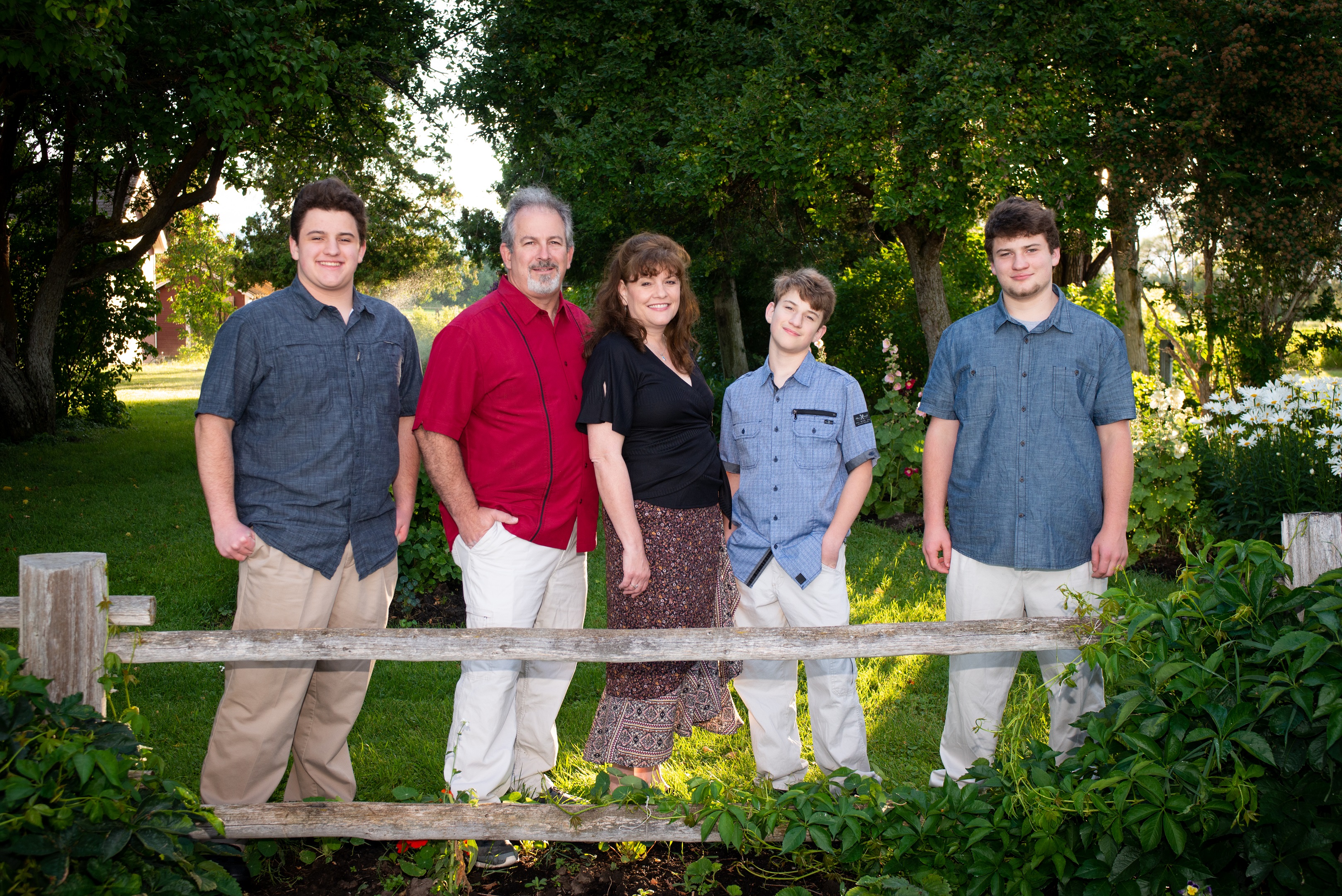
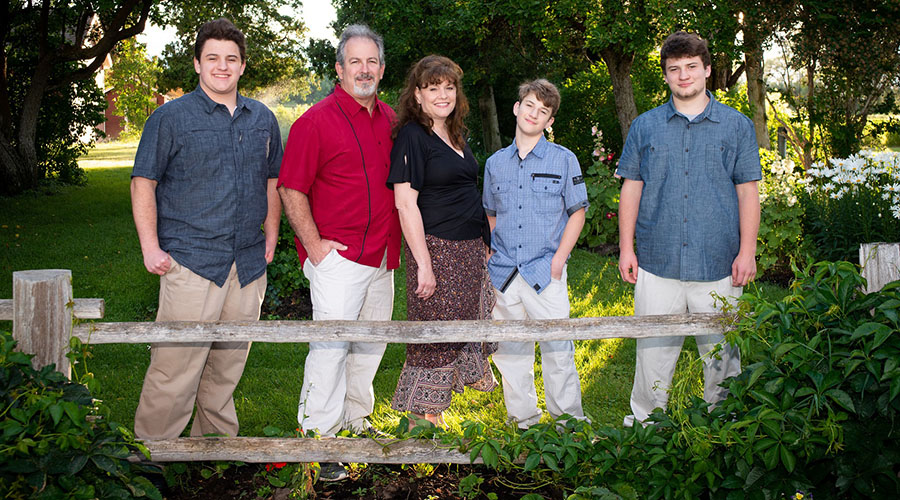
Martin Family photo: David and Jennifer with sons Zach, Wesley, and Josh. Zach was away at college when his father’s illness occurred.

Collaborative Care

HealthNews · October 7, 2019 ·

KVH Contributor*

Auren O’Connell, DNP, PMHNP
KVH Family Medicine – Cle Elum

In a medical emergency or when you are not feeling well, one word often comes to mind, “doctor”. According to Merriam-Webster, “The word doctor comes from the Latin word for ‘teacher,’ itself from docere, meaning ‘to teach.'” 

Patient education and teaching are not my first expectation when I seek medical care. “Give me something to feel better” or “make me better” is often on my mind.

Thankfully, many medical conditions are easily treatable and only require brief treatment or interventions. Other conditions are not so simple, requiring occasional follow-up and/or chronic management.

As a society we are living longer, and as we age we are more vulnerable to chronic conditions and mismanagement thereof. If managing our health condition didn’t seem like enough, then comes the cost and coordination of various visits, all of which can snowball and seem overwhelming. 

As a whole, healthcare and funding are transitioning from volume-based (fee for service) to value-based (fee for value). Within this paradigm shift, evidence-based practice models of team-based collaborative care are being deployed, most targeting chronic conditions and/or mental health problems.

There are many terms being tossed around: integrated, medical home, collaborative care, chronic care management, etc. All these terms are important, but all emphasize patient-centered, collaborative, and team-based interventions.

At the core of these models is an emphasis on teaching and collaboration by all members of the care team, including the patient, who teaches the care team about his/her own strengths, needs, and preferences.

The primary care provider is the head coach on the team and is empowered to deliver comprehensive and connected healthcare through a shared treatment plan with measurement-based targets. Nurses and/or care managers help to coordinate the treatment plan, offer self-management support, and answer questions by phone and in person visits.

All of this equates to more value and resources for both the patient and the team.

Quality and collaboration are core values of Kittitas Valley Healthcare. In my experience as a psychiatric nurse practitioner, whole health and value-based healthcare is at the core of what drives both leadership and providers within Kittitas Valley Healthcare. Fortunately, reimbursement models with payers are emerging which will allow for expansion of value-based healthcare that emphasizes quality evidence-based interventions, care coordination support, and collaboration for patients who need it most.

Your primary care provider may approach you about participation in our new chronic care management program or our collaborative behavioral healthcare program, which will be launching in the future. I plan to share more on collaborative behavioral healthcare at a later date, but these are my thoughts on value-based healthcare and collaboration as a whole. 

*Opinions expressed by KVH Contributors are their own. Managed by Kittitas Valley Healthcare, HealthNews does not provide medical advice. For medical advice, please see your healthcare provider.

Play time for children

Elise Herman , MD · September 19, 2019 ·

KVH Contributor*
Elise Herman
Dr. Elise Herman
KVH Pediatrics

Play time for children

As a pediatrician, I often tell parents that with the exception of books (which are free from the library), they have everything they need within them to raise a happy and healthy child. Reading to your child, getting outside, and playing cost nothing, are technology – free, fun and easy.

Play in particular is generating a lot of interest right now; it has been shown to promote brain development as well as social and emotional well-being. ‘Unstructured’ play (no adult control or directing) allows kids to explore their world, try on different roles and work through their fears. Kids learn how to interact in groups, lead and share, and resolve conflicts, thereby developing vital positive behavioral skills. This type of play encourages creativity and experimentation. It also helps kids work on their “executive function” which is important with decision making and controlling impulsivity. There is evidence that neural pathways in kids’ brains are enhanced through the skills that develop with unstructured play.

Of course the physical benefits of playing including running, jumping, throwing, climbing, etc., are obvious. Playing outside offers even more benefits. Kids tend to burn more calories playing outside than inside, important in our current fight against childhood obesity. Fresh air and contact with nature are helpful in reducing stress levels. Research has shown that kids who play outdoors regularly tend to stick with tasks longer, be more curious and self-directed.

Quite simply, then, play is crucial to child development and learning. Unfortunately, play is threatened on a variety of fronts. There is increasing pressure on children (even kindergartners) to perform academically, and school days can be packed with ‘orderly activities’ with less time for unstructured and especially outdoor play. Many school districts have decreased the amount of recess time as well as PE. The draw of passive entertainment (TV, computer, you tube, video games) is such that the American kids age 5 to 16 spend an average of 6 ½ hours a day in front of a screen, much of it on personal devices such as tablets and smart phones. These personal devices mean kids are usually by themselves without parental involvement—not ideal. Unstructured play is getting squeezed out by this, and our children are the worse for it.

In general, children seem to have a lot more scheduled activities in their increasingly busy days, leaving less time for unstructured play. Between sports, music, etc. parents often feel they hardly have enough time to meet for dinner with their children (but please make time for those family meals!). So how to make time for this important activity? Something may have to give for your child to have the recommended minimum 60 minutes a day of unstructured play, but keep in mind that the benefits of this type of play are many and long lasting. And although unstructured play means you won’t be directing the play, you can still be involved – just let your child lead. Good for everyone!

*Opinions expressed by KVH Contributors are their own. Managed by Kittitas Valley Healthcare, HealthNews does not provide medical advice. For medical advice, please see your healthcare provider.

Nigel McNeill (General Surgery)

HealthNews · September 18, 2019 ·

Nigel McNeill (General Surgery)

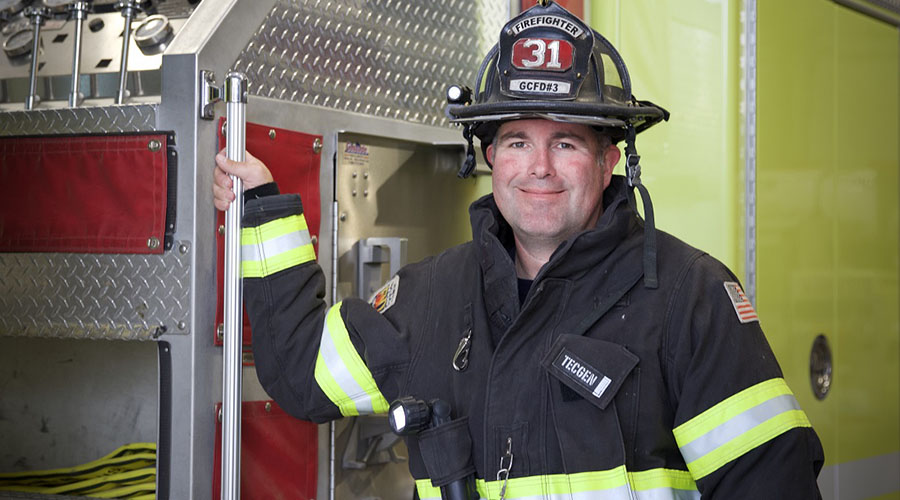
He’s a 38-year-old father of four with an active lifestyle, a passion for volunteerism, and a job he loves as a firefighter/EMT for Grant County Fire District No. 3 in Quincy.

So when a doctor told Quincy’s Nigel McNeill that an on-the-job injury suffered on May 16 would require surgery and a long recovery, McNeill was devastated.

“I was literally in tears,” he says. “This was our busy season, coming up on July and August. I needed be out there with the guys.”

In an occupation where risks are part of the job, the injury caught him by surprise.

“It wasn’t doing anything exciting,” he says. “I wasn’t saving babies or breaking glass. I was just checking the oil on an engine. When I came back out I felt a slow burning sensation in my abdomen.”

McNeill was taken to the emergency room at the hospital in Quincy where Dr. Fernando Dietsch quickly diagnosed a hernia and referred him to a facility he was familiar with in Wenatchee for further care.

The surgeon in that facility told him he needed surgery to repair his hernia but that laparoscopic surgery, which is less invasive than conventional surgery and typically has a much shorter recovery period, wasn’t the right option, McNeill says.

With surgery scheduled for June 12, recovery expected to take six to eight weeks and fire season rapidly approaching, McNeill was desperate to find a way to get back on the job sooner.

Then a friend at Kittitas Valley Healthcare in Ellensburg suggested he get a second opinion and referred him to Dr. Thomas Penoyar of KVH General Surgery.

Penoyar, who is skilled in laparoscopy, saw him immediately.

“He told me it could be done laparoscopically,” McNeill says. “He said it was pretty much a chip shot. He had a great sense of humor but was professional at the same time.”

A week later, on May 31, Penoyar performed the surgery.

At the hospital, “they took me right back. There was great communication,” McNeill says. “The last thing I remember is being wheeled into OR, then I woke up and they were right there with me.”

McNeill went home from the hospital that same day. On June 18 he was released back to full duty.

It isn’t the first time someone in his family has gotten exceptional care at KVH, McNeill says. Nine or ten years ago his mother experienced possible heart attack symptoms while traveling through Ellensburg and ended up in the KVH emergency department.

“They got her right in and treated her. It turned out to be her gallbladder,” he says. “What she told me about her experience sounds a lot like mine. Whatever you’re doing down there, you’re doing it right.”

And that’s a message he’s sharing.

“We don’t have an operating room here in Quincy. Most people, when they need care they have the mindset to go to Wenatchee,” he says. “It’s maybe 40 minutes to Wenatchee, maybe 15 or 20 minutes more to Ellensburg. For me, those extra minutes are worth it.

“I’m telling everybody I know, you probably should check out KVH for your surgical needs before you go to another facility. The word is out. I’m telling everyone.”

Behind the Scenes: Materials Management

HealthNews · September 17, 2019 ·

Materials Management

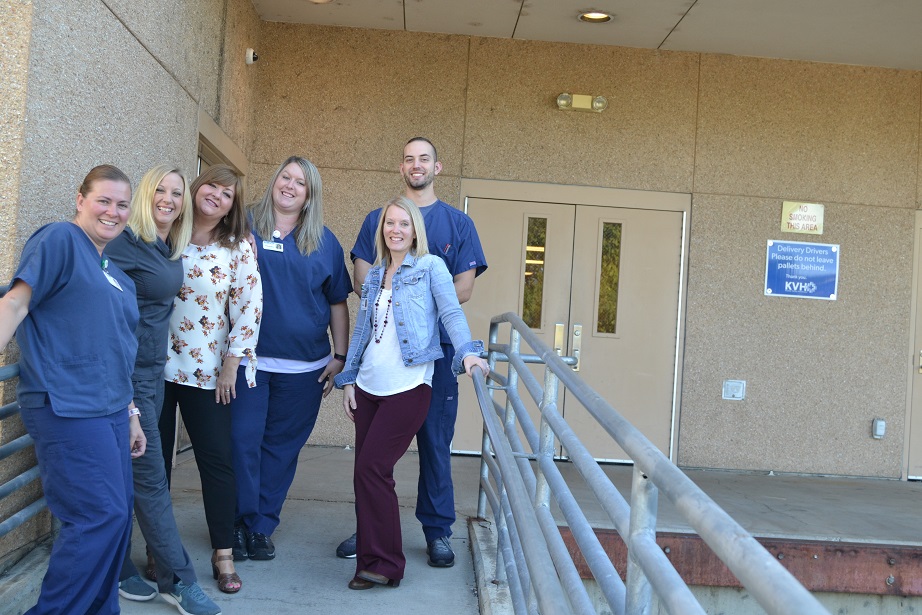
We sat down with some of the Materials crew for insights on how they make sure we have what we need, when and where we need it. (Photo: Materials poses at the hospital’s back loading dock.)

“A par level is an inventory management method through which you determine the minimum amount of stock you always need to have on hand.” – dashboardstream.com

Morgan (M)
Bonnie (B)
Michael (MB)

Materials is a generic term. What does it represent?

M: It’s basically all the supplies needed to run the organization and to support patient care.
Are there various roles on the team, or does everybody cover the same areas?

B: No, we have various roles. The techs do all the inventory control, making sure all departments are filled to the par, and also they do all the shipping and receiving.

M: There’s also the buyer role, which is Bonnie and Rhonda. Bonnie is the OR-specific buyer. And Rhonda does all the rest, and Med/Surg. And there’s my role as director. The whole team is great at supporting one another with their workload whenever possible.

The technicians go out and inventory?

M: They make sure that the departments are stocked to their par level. Each item that is stocked in their department is set at a level. So it could be that they have five of something or they have a hundred of another. Our Cerner system tells us how many of each item each department should have at the beginning of the day.

But you’re going, they’re going out to the departments?

M: Every single morning. That’s why they start so early. They do the clinics and all the departments in the morning. They go out and scan first thing, come back and pull all the product that’s needed, and then go back and stock it. Then again later if they need to delivery additional orders that have come in. The team puts on a lot of miles each day.

Does materials stock the entire organization or just the hospital? I’m assuming there’s nothing to stock up at Radio Hill.

M: Home Health sends bins and totes down every day for us to stock and send back up with the courier. We support all KVH clinics. We also provide supplies to external entities as well, so if KVFR is out of a supply and they need something, we will issue it to them. 

Are there any misconceptions about Materials people might have that we could clear up?

B: Maybe that our jobs got easier when the departments began scanning their items?

M: That would be a major misconception.

B: We still reset all the pars, when the levels get off from them not scanning, and we still have the same amount of work, filling blue bins, yellow bins, ordering product.

What would surprise somebody about the work you do here?

MB: I know when I started working here, I was surprised that this small department covers orders and supplies for all the clinics, and the hospital.

What are some of the challenges of working in materials?

B: Not getting enough information to place orders. The amount of back and forth we have to do from not getting all of the information…

MB: It’s a lot more complex than most people probably think.

M: And I think people get frustrated, too, when you ask them for more information. I’ve always told the team we’re not going to play “Bring Me a Rock,” because I don’t know if you want a big rock, a little rock a flat rock, a jagged rock. You’ve got to give us a little bit more information, because we have hundreds of people every day asking for things, and if you don’t give us a little bit more information we cannot guarantee you will get what you need.

They’re going to get the wrong thing –

M: They are, and they’re going to be upset about it or they’re going to be upset that we have to email them multiple times with questions.

Do you have particular vendors or people you’re interacting with regularly as you place orders?

B: The main distributor is Medline. We try to get all of our supplies through them, except for things that they don’t carry or various times where it’s cheaper to buy direct. Then we do have multiple vendors. We probably have 20 to 30 different vendors that we place orders with daily. We have a buying group called Intalere. We make sure that we’re getting the best value and the best rebate back from purchasing.

And then random stuff happens. Like, we need carpet for five buildings, and that lands in your world.

M: Anything that comes through the door comes through our area. We do pretty much all of it except for Pharmacy, Food & Nutrition Services, and some of IT. I chair the capital committee, so all capital requests come through us. We get quotes with buyers and have to run it through analysis, through MD Buyline, to make sure it’s cost competitive, that they’re giving us the best price, that they’re referencing our contracts, then we present it to capital. We get all of the supply requests for remodels and builds. MAC (Medical Arts Center) is huge on my plate right now.

B: Everything funnels through here first, which kind of makes it so everybody thinks everything comes back here.

M: Office Depot is the only group that actually will deliver to ancillary locations. Other than that, every single purchase order and every single purchase has to come through these doors, which is frustrating for clinics up in Cle Elum because there’s a delay while it gets here, gets checked in, and then sent up.
But if we weren’t checking things in, there’s a downstream effect for Accounting where it doesn’t show it was received in the system. We don’t have an accurate way of tracking it if it just starts going out to other locations before we have a chance to check it in, to check the quality, to make sure it’s the correct item. That’s why this has to be the central hub for all incoming products.

What are the rewards of working in Materials?

MB: Definitely the people

M: I think our team is amazing.

MB: We all get along really well, and that can make or break the job.

B: The team dynamic that we have right now makes it nice to be here, even when it is stressful. Everybody pitches in and helps one another. We look out for each other and care about each other.

M: We have a good time when we’re here. We laugh, we joke, you know, it feels like you’re spending time with your friends and your family. And you don’t always get that at work.

MB: This position goes to every department. You get to see, a little glimpse of the goings-on and to meet people from almost every department, too.

Are you expert packers? (“No!!”) Do you get cardboard cuts? (“YES!”) You ought to get hazard pay for that. So what does it take to have a great day at work?

M: No backorders.

B: That’s another thing I think people don’t realize, is how much time we spend navigating backorders, substitutions, and trying to make good decisions cost wise; that it’s going to work for the facility, just how much time we really have to spend on each order, and making sure it comes in correctly.
How does this team’s work support the patient care mission of KVH?

B: Getting supplies in a timely manner at the best cost possible, making sure that everybody has what they need to provide patient care, and that we’re also providing a service that is cost effective.

Imagine if we took Materials out of the equation and clinic staff had to run over here and try and find something or place an order when a provider runs out of supplies. I guess, in a good way, you’re taken for granted because everything is where we need it when we need it for the most part.

B: I think the surgeons would realize pretty quickly if they were short on supplies.

M: Bonnie’s great about looking at the OR schedule ahead of time. Two weeks out, she’ll look to make sure what’s on there. She’ll know what supplies are needed based on their preference cards. She’ll make sure that they have enough on the shelf.

That’s amazing. That’s a direct impact on patient care. Thanks for the work you do to keep us equipped and ready to provide quality care. Clearly, we couldn’t do it without you.

Pediatric food allergies

Elise Herman , MD · September 12, 2019 ·

KVH Contributor*
Elise Herman
Dr. Elise Herman
KVH Pediatrics

Pediatric Food Allergies

We seem to hear a lot more about food allergy lately – and for good reason. Food allergy is more common in kids than adults, the prevalence of it is increasing, and 8% of all kids under the age of 6 have food allergies. Understanding food allergy and the newest recommendations about peanut allergy is important for parents and anyone interacting with children.

A food allergy is an abnormal immune response of the body to a particular food. You must be exposed to a certain food at least once (either by eating directly or via breast milk) in order to have an allergic reaction. An allergic reaction occurs when the immune system’s IgE antibodies react with the food, which releases histamines. These histamines cause the signs and symptoms of food allergy that range from mild to life threatening.

90% of all food allergies are caused by the following foods: milk, eggs, wheat, soy, tree nuts (walnuts, almonds, etc.), peanuts, fish, and shellfish. In children, eggs, milk and peanuts are the most common causes of food allergy. Severe reactions are usually caused by peanuts, tree nuts and seafood. Children often outgrow their allergies; 80-90% of milk, egg, wheat and soy allergies resolve by age 5 years. Allergies to peanuts, tree nuts and seafood are more likely to persist. Approximately only 1 in 5 children will outgrow their peanut allergy.

An allergic reaction to a food usually occurs within minutes to hours of eating it. In addition to hives and wheezing, a child may also have itching, swelling of lips/ tongue, shortness of breath, stomach pain, lowered blood pressure, vomiting, diarrhea and/or anaphylaxis (a severe shock-like reaction). Testing for food allergy is only done if there is a strong suspicion of allergy; an abnormal test does not always mean the child is truly allergic. Testing may include blood tests or a skin prick test.

Treatment for food allergies most importantly means avoiding that food (and similar foods) – not easy in today’s world of processed foods that may contain many ingredients. Even a tiny amount of the offending food can trigger a reaction. Epinephrine is the only treatment for severe allergic reactions and comes in the form of an auto-injector called Epi-Pen. Allergy specialists typically do allergy testing and decide if a child should have an Epi-Pen. It is crucial that anyone who will have contact with a child who has a severe food allergy is aware of this and has access to (and knows how to use) an Epi-Pen.

There has recently been exciting news about peanut allergy, which affects 2% of all children. Previously the recommendation was to wait until at least age 1 year for peanut products but it has been shown that earlier introduction actually decreases a child’s risk of peanut allergy. New guidelines from the National Institute of Allergy and Infectious Diseases state that for those children at highest risk – those with severe eczema and/or egg allergy – blood testing should be done by age 4-6 months, and if abnormal the child should see an allergist.

For children who have mild to moderate eczema, peanut products may be introduced and given regularly starting at age 6 months. If the infant has no eczema or food allergy, peanut products may be introduced “freely” into the diet and given regularly with other foods at age 4-6 months (ideally solids are begun at 6 months for breast-fed infants). It is important to remember that peanut products may be a choking hazard. A small amount of smooth peanut butter blended into other foods such as applesauce or oatmeal is ideal. If a rash or any sign of allergy occurs, a doctor should be contacted.

*Opinions expressed by KVH Contributors are their own. Managed by Kittitas Valley Healthcare, HealthNews does not provide medical advice. For medical advice, please see your healthcare provider.

  • « Go to Previous Page
  • Page 1
  • Interim pages omitted …
  • Page 11
  • Page 12
  • Page 13
  • Page 14
  • Page 15
  • Interim pages omitted …
  • Page 20
  • Go to Next Page »

Primary Sidebar

Categories

  • KVH Stories
    • Patient Stories
    • Provider Stories
    • Donor Stories
    • Employee Stories
    • Volunteer Stories
    • Share Your Story
    • All
  • Blog Posts
    • Behind the Scenes
    • Childbirth & Family Education
    • Community
    • Health
    • Lifestyle
    • Provider
    • Safety
    • COVID-19
    • All
  • News & Media
    • KVH News
    • Weather/Disaster Notifications
  • Press Releases

Footer Top 2

603 S. Chestnut Street - Ellensburg, WA 98926
509.962.9841

  • Facebook
  • Instagram
  • LinkedIn
  • YouTube

Footer Bottom 1

Download the MyPatient Portal App
Apple Store Google Play Store

Footer Bottom 2

  • About KVH
  • KVH Legal Information
  • Price Transparency
  • Careers
  • Board of Commissioners
  • Contact Us
  • The Foundation at KVH

Footer Bottom 3

  • Our Locations
  • Hospital Services
  • Clinics & Specialty Services
  • Visiting Information
  • Patient Policies
  • Events & Education
  • Press Releases

Footer Bottom 4

Google Translate