• Skip to primary navigation
  • Skip to main content
  • Skip to primary sidebar
  • Contact Us
  • Pay My Bill
  • Patient Portal
KV Healthcare

KV Healthcare

Your Home for Health

  • Find a Provider
  • Clinics & Specialties
        • Primary Clinics

        • KVH Family Medicine – Cle Elum
        • KVH Family Medicine – Ellensburg
        • KVH Home-based Primary Care
        • KVH Internal & Adult Medicine
        • KVH Pediatrics
        • KVH Women’s Health
        • KVH Rapid Access
        • Specialty Services

        • Anticoagulation Clinic
        • Addiction Medicine
        • Specialty Clinics

        • ENT & Allergy
        • Cardiology
        • Dermatology
        • General Surgery
        • Home Health
        • Hospice
        • Neurology
        • Podiatry
        • Orthopedics
        • Urgent Care
        • Urology
        • Vascular Surgery
        • Workplace Health
        • Wound Care
        • Therapy Services

        • Physical Therapy
        • Speech Therapy
        • Occupational Therapy
        • Cle Elum Therapy Services
  • Hospital Services
        • Services

        • Cardiopulmonary
        • Emergency Department
        • Imaging
        • Laboratory
        • Nutrition
        • Pharmacy
        • Surgical
        • Family Birthing Place

        • About Family Birthing Place
        • Class/Event Calendar
        • What to Expect
        • Birth & Family Education
        • Lactation Services
        • 4th Trimester Resource Center
        • Pregnancy & Infant Loss
  • Patients & Visitors
        • Patient Tools

        • Request Medical Records
        • Checking In
        • Language Services
        • Quality of Care
        • Patient Portal
        • Patient Safety & Security
        • Patient Policies
        • Insurance & Billing

        • Accepted Insurance
        • Price Transparency & Billing Services
        • Washington Health Plan Finder
        • Financial Assistance
        • No Surprise Act - Balanced Billing
        • Insurance vs. Self Pay
        • Bills from Other Providers
        • Pay My Bill
        • Visitors

        • Visiting Information
        • Mother’s Room
        • Café
  • About KVH
        • About KVH

        • About KVH
        • Mission & Vision
        • Board of Commissioners
        • Administration
        • Quality of Care
        • DAISY Award Program
        •  

        • News & Blog
        • Events & Education
        • Contact Us
        • Locations
        • Work With Us / Careers
        • Foundation

        • About the Foundation
        • The Foundation Board of Directors
        • Programs to Support
        • Ways to Give
        • Donate Now
        • Foundation Events
  • Donate Now
  • Pay My Bill
  • Patient Portal
  • Find a Provider
  • Clinics & Specialty Services
  • Hospital Services
  • Patients & Visitors
  • About KVH
    • Mission & Vision
    • Board of Commissioners
    • Administration
    • Contact Us
    • KVH News
    • Our Locations
    • Quality of Care
  • Careers at KVH
    • Culture & Mission
    • Education
    • Providers
    • Non-Clinical
    • Volunteer
    • Nursing
    • Professional Development
    • Clinical
  • The Foundation at KVH
    • Donate Now
    • About the Foundation
    • The Foundation Board of Directors
    • Foundation Events
    • Programs to Support
    • Your Impact
    • Ways to Give

KVH News

Talking about racism to children

Elise Herman , MD · June 22, 2020 ·

Contributor: Dr. Elise Herman, KVH Pediatrics

Racism is front and center now, and parents may wonder how to have important conversations with their child about diversity, equality, and discrimination. It helps to keep your discussion age-appropriate, share your feelings and listen to your child.

Under age 5 years – Studies have revealed that even infants notice different skin tones and preschool kids have been shown to view those who look like themselves more positively, so addressing racism early is important. Kids relate easily to the concept of fairness so it can simply be explained as treating someone unfairly based on how they look. Young kids may ask about why people’s skin colors are different. Explain simply that darker skin has more of the pigment melanin in it and that no skin color is ‘better’ than another. Celebrate human diversity by noting that “we are all human but can have lots of differences, too, making everyone special!”. Encourage your young child’s appreciation for diversity by reading books and playing with toys featuring people of different races.

6-11 years old – At this age, children are more aware of current events based on what they have heard and seen from adults, other kids and on the news or in social media. Ask your child about what they know and what questions they have. Kids this age understand empathy so discussing how it would feel to be judged unfairly can be helpful. Children of all ethnicities can be assured that people world-wide are upset about racism and are working to make things better.

12 and older – Kids this age are often very informed and have developed their own opinions about issues such as racism and protests. Discussing the news and current events and how it affects them opens the door to a deeper conversation. The same concepts of fairness and empathy apply, but now taking action may be a logical next step. It may be sharing something on social media, reading more about the history of oppressed peoples or attending an event.

All kids benefit from social experiences with a variety of people. Cooking food and listening to music of different cultures broadens our horizons. It is alright to let your child know that you are upset or sad about what is happening, but you also need to assure your child that they are safe in what can be a frightening time. This conversation will look different for families of color where the issue hits a lot closer to home than for whites.

As always, what we do and say speaks volumes to our children. It is vital that as parents we confront our own prejudices and biases and work to be more open and understanding. Let your kids see you speaking out against racism, embracing diversity and calling for justice for all people.

Racism is a Healthcare Crisis

HealthNews · June 10, 2020 ·

Kittitas Valley Healthcare joins other hospitals and healthcare systems across America in condemning racism, bigotry, discrimination, and violence. We have witnessed senseless acts of violence against people of color and we know that it must stop.

We are a place of healing and, as such, we have a special role to play in ensuring equality for all our neighbors. We must address racial, ethnic, and cultural disparities, including disparities in healthcare. Data is clear that there is implicit bias within the healthcare delivery system. People of color suffer more from preexisting conditions, and they have worse healthcare outcomes overall.

We the KVH Governing Board and Administration have a duty as an employer, community leader, and healthcare provider to do better.

  • As an employer, we will have the courage to listen to our employees and to recruit professionals with a diversity of perspectives.
  • As a community leader, we will listen to the experiences of the people we serve and collaborate with others who are on this same journey to do better.
  • As your healthcare provider, we will dedicate ourselves to closing the gaps in access and health outcomes so that we can all do better.

It is imperative that we work together to build and sustain an increasingly diverse community that values and cares for all of our co-workers, neighbors, and patients.

Sincerely,

Board of Commissioners
– Bob Davis, President
– Erica Libenow, Vice President
– Matt Altman, Secretary
– Terry Clark, Commissioner
– Jon Ward, Commissioner
Julie Petersen, CEO
Kevin Martin, MD, Chief Medical Officer

KVH Commissioner appointed to AHA Committee on Governance

HealthNews · February 25, 2020 ·

Kittitas County Public Hospital District #1 (KVH) Commissioner Matthew Altman, Ph.D., has been appointed to the American Hospital Association’s Committee on Governance (COG).

An advisory committee of the American Hospital Association (AHA) Board of Trustees, the 26-member COG represents AHA’s trustee members and participates in the association’s advocacy, policy and resource development, with a particular focus on strategic opportunities. The committee meets three times per year and is composed of the chair-elect, chair and immediate past chair; nine regional members, and up to 16 at-large members. Commissioner Altman will represent the 9th District, composed of Alaska, California, Hawaii, Nevada, Oregon and Washington.

Appointment to the COG is the result of a competitive process. Individuals must first be nominated, interviewed by the COG’s Leadership Development Committee and subsequently appointed by the AHA Board of Trustees. Dr. Altman will serve a three year term.

“It’s no surprise that Matt was appointed to AHA”, states Bob Davis, Chairman of the KVH Board of Commissioners. “Matt did a great job as past board president and is a fully engaged commissioner. He will be influential on the national level for AHA.”

Founded in 1989, the American Hospital Association is a national organization that provides education for health care leaders and is a source of information on health care issues and trends. The AHA represents and serves all types of hospitals, health care networks, and their patients and communities. Nearly 5,000 hospitals, health care systems, networks, other providers of care and 43,000 individual members come together to form the AHA.

Through representation and advocacy activities, AHA ensures that members’ perspectives and needs are heard and addressed in national health policy development, legislative and regulatory debates, and judicial matters. Their advocacy efforts include the legislative and executive branches and include the legislative and regulatory arenas. Dr. Altman is one of the few members of the Committee on Governance who is representing a rural hospital.

Traditional vs. Electronic Books and Your Child

Elise Herman , MD · February 20, 2020 ·

Contributor: Dr. Elise Herman, KVH Pediatrics

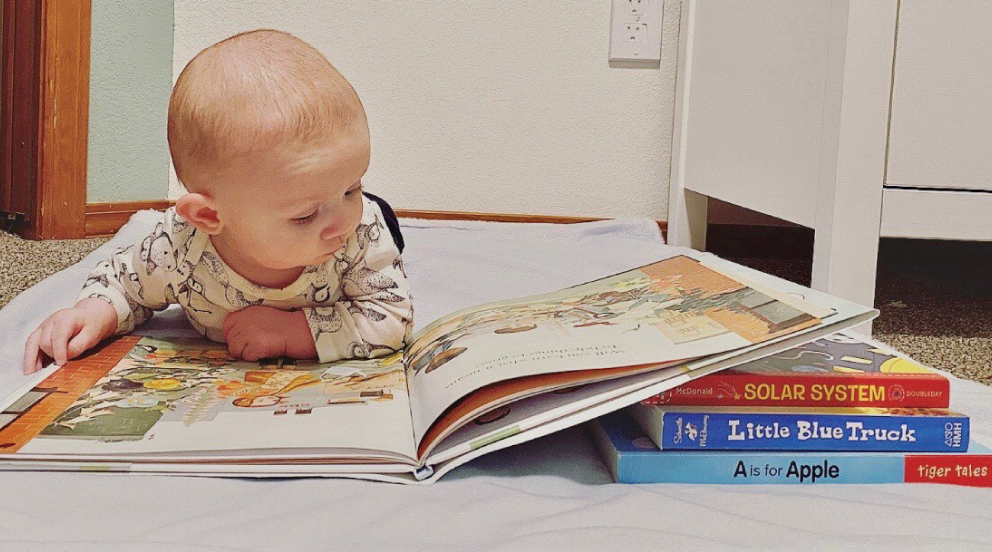
Simply put, reading to your child daily is one of the best things you can do as a parent. But does it need to be a traditional (paper) book or is an electronic book pretty much the same experience for your child? There have been studies that suggest reading a traditional book does have some advantages.

The Journal of the American Medical Association published a study in September 2019 that showed fewer ‘back and forth’ interactions between parents and toddlers when using an electronic tablet. This type of interplay is important as it builds connections in the brain and helps develop communication and social skills in children.

A recent study from the University of Michigan found that parents and kids interact more when reading a paper book and that communicating this way helped encourage healthy child development. Parents often asked how the story related to the child’s experiences or about the story and its characters. They also posed more open-ended questions, such as asking what the child liked about the story, which created more opportunities for a conversation between the two.

When parents and children are reading from a device, be it a table, computer or smart phone, interactions tend to be more focused on the technology itself. Comments about the device, instructions to not push buttons, how to set the volume if applicable, etc., can dominate the conversation. There has been research showing that “enhanced” digital books that have sound and animation can be distracting and therefore children do not remember the content as well.

So how best to read with your child? Although there seem to be real advantages to traditional books, reading from electronic books is still fine in addition to paper books. Here are some tips to make reading to your child the best experience:

– Read daily including at bedtime – and try not to rush
– Let your child choose the book at least some of the time (going to the library together also builds excitement for reading)
– Let your child hold the book and turn the pages
– Avoid electronic books that are “enhanced” with sound and animation
– During reading, ask questions about the story (“What do you think will happen next?”) and relate the story to your child’s life (“Remember when we went to the park and played like that?”)
– Encourage your child to point to things in the book (“Where is the rainbow?”)
– Read books with simple rhymes and repetition; your child will be more likely to ‘read’ along with you
– Make it fun! Silly voices and acting out the story makes reading very engaging to kids of all ages
– It is also good to encourage your child to look at books independently regardless of whether they can actually read yet

Be a good role model to your child, and read a lot at home. Since we don’t want our kids to see us always looking at electronic devices or a computer, make it a habit to read from traditional books, magazines and newspapers. And remember that whether it is a traditional book or at times an electronic book, it is wonderful that you are sharing reading with your child. Well done, Mom and Dad!

Managed by Kittitas Valley Healthcare, HealthNews does not provide medical advice. For medical advice, please see your healthcare provider.

Positional Plagiocephaly Prevention and Treatment

Elise Herman , MD · January 30, 2020 ·

“‘Tummy time’ while awake should start right away…”

Contributor: Dr. Elise Herman, KVH Pediatrics

When your infant is seen for a Well Child Exam, checking growth and development are the top concerns. Additionally, careful attention should be paid to your young child’s head shape. We are now in the middle of an ‘epidemic’ of head flattening, medically known as positional plagiocephaly, meaning a change in head shape due to positioning of the baby. Typically this is flattening of either side of the back of the head or symmetric flattening of the entire back of the head. This is not just a cosmetic concern as significant health issues can result from the altered head shape.

The flattening that can develop is related to a baby’s skull being relatively soft until about age 5-6 months. Babies spend a lot of time on their backs between sleeping (the recommended sleep position is on their back to decrease the risk of SIDS) and while awake until they are old enough to be rolling, sitting up,etc. If the head is turned to one side when sleeping (for example if the baby is turning to look towards a parent), this can result in localized flattening of one side of the back of the head. With this flattening on one side, it is then harder for the baby to turn their head to the opposite side. Over time the neck muscle on the flatter side can become tighter and shorter, causing the neck to stay in a twisted position (this is called torticollis). This may affect the shape of the face with jaw asymmetry and other changes. In some cases it can be related to problems with development if left untreated.

It is important to be pro-active to minimize the risk of infant head flattening. Your baby should absolutely sleep on their back, but otherwise should be up and off the back of their head a lot. ‘Tummy time’ while awake should start right away and not only helps head shape but increases the strength in your baby’s neck, chest and arms. Options for tummy time include having baby lay with their face/ chest on your chest or baby laying down over your lap. You can also have baby lay on the floor with a rolled small blanket to prop up their chest only until they are strong enough to push up on their arms. Begin with 5-10 minutes 3 times a day with a goal of about 60-90 minutes total a day by age 4 months. Babies often don’t like tummy time at first (it’s a lot of work for your little one!) but it gets easier as they get stronger.

If a baby has flattening on one side of the head, the baby can be laid down to sleep alternating their head in opposite ends of their crib or bassinet each night. This means they will have to turn their head the opposite way to continue to look at their parent and can improve head shape. Parents should alternate which arm they hold the baby in for feeding as well. Upright chairs like the Bumbo for babies not sitting yet are recommended at age 3-4 months. Front packs also help your baby be upright during the day.

If a baby has significant head turning with neck twisting (torticollis), physical therapy is usually started and can be very helpful to restore normal movement of the neck. If by 4-5 months there is significant flattening despite increasing tummy time, etc., a referral may be made for helmet therapy. Wearing a custom soft helmet with a foam liner that is adjusted over time, the head shape becomes more rounded. Helmet therapy is most effective between 4 and 12 months of age, and babies usually accept the wearing of the helmet very well. Most babies are treated with helmet therapy for 1-4 months.

Having some degree of head flattening even with lots of tummy time and upright positioning is fairly common and is not a problem if it is mild. Talk with your health care provider if you have concerns about your baby’s head shape; they can help determine if any specific treatment is needed.

Managed by Kittitas Valley Healthcare, HealthNews does not provide medical advice. For medical advice, please see your healthcare provider.

Behind the Scenes: Quality Management

HealthNews · December 18, 2019 ·

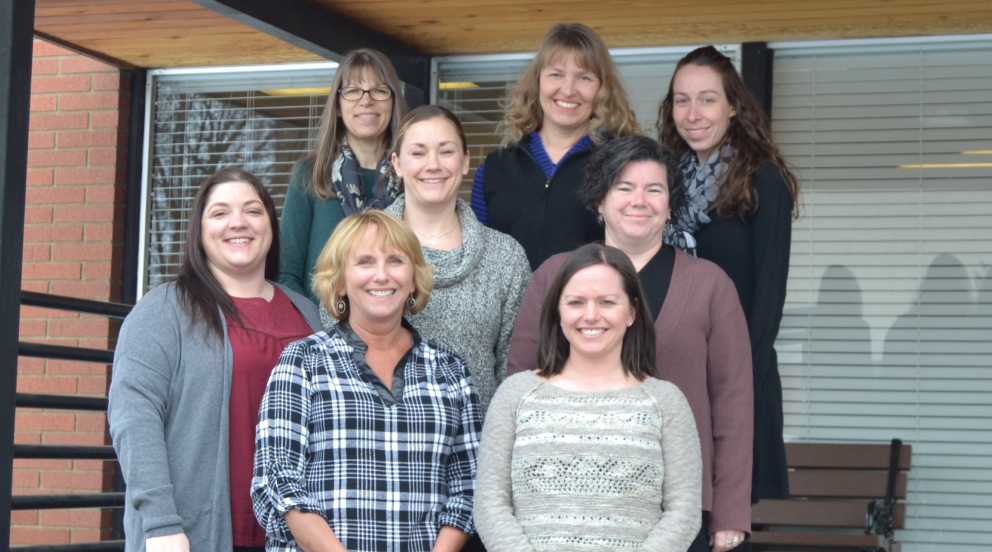
For the final installment of the series, we sat down with some of the Quality team to learn about what they do. Unlike other ‘Behind-the-Scenes’ interviews, this one had only one guiding question: “How does your work support the mission of KVH to provide quality patient care?”

It seems like you don’t have any redundancies in your staffing, right? Everybody has a different role.

Mandee: Carissa and Kimber are both process improvement facilitators. That is one thing that is very similar for all of us – we all facilitate improvement, whether it’s a surgical site infection, or a needle stick, or sepsis care – figuring out what’s going on with the process and how we could improve it.

How does the work that you do impact patient care?

Julie: One example is the lack of surgical site infections. We work hard to maintain a standard, so that there’s less of a chance for surgical site infections.

How does that happen?

M: Julie doesn’t directly go and clean all the rooms and check all the labs. But what she’s doing every day is looking at our stats, our data, and seeing how we’re doing and where we need to improve, working with departments like housekeeping, sterile processing, surgery, med/surg, all the different areas. She talks with Home Health, too, helping them understand best practices for protecting the environment, keeping it clean, and also for patients, and for protecting themselves. We support the rest of the organization, helping address any barriers to providing reliable care or processes, even in billing, removing those barriers and identifying ways to make the work more effective.

The most basic example would be employee flu shots, right? So, yes, it’s caring for the staff, but it’s also helping ensure that when the patient and the community come into the facilities –

J: It’s mostly caring for the patients.

That may be something people don’t realize, that KVH staff are vaccinated against the flu primarily for the patients’ protection. They don’t necessarily know all the work that’s going on to make it happen, but that kind of thing has a direct impact.

M: It’s when things haven’t gone well that it gets to Brandee and Linda, when we’re seeing incidents in the incident reporting system. It’s looking at that and saying, “Is this a one-off, or is this something bigger that we need to do improvement with teams and help them make sure this doesn’t happen again?”

Brandee works on the falls team, too. They do root cause analysis on every fall and say, “What could we do differently?” So the parking lot repairs are the work of the falls team saying, “These curbs, this isn’t working. We’ve had this many falls. The pothole in the middle there, that’s a problem, we need to address it.”

And in some sense you are getting, even if it’s in writing, direct communication from patients and the community, as well.

Brandee: Another piece of that is the service recovery program. I tell staff “It’s a way that you can make it right, right now.” It’s an opportunity to show a patient that you care, that you’re not just going to blow it off to somebody else, that you’re trying to do the best you can to make it right for them.

Because quality patient care is mostly about the actual physical care, but it also involves satisfaction, and feeling that you’ve been heard, and that kind of thing.

M: A huge part of what we do is empower employees to speak up, try and make it right. Incident reporting is a huge part of it, as are SAFE boards, or Linda as a compliance officer hearing concerns.

I was just looking at some of Amy’s work. We do measure a ton of things in here, but we even measure what we measure. Amy had 99 different report requests this year that she’s worked on and that has helped staff from, for example, the clinics, with a list of their patients who were recently in the emergency department, so they can follow up with those patients and make sure they’re getting appropriate care. That’s made a huge difference for them because they didn’t have a system to notify them. A lot of what Amy does is build reports for people that make their job easier every day.

You can boil a year’s worth of data down into a report that you can wrap your brain around. It makes a difference.

M: We report a lot of data externally because it’s either the law or we won’t get paid if we don’t do it – things like surgical site infections, sepsis and stroke data. We don’t get our stroke designation if we don’t have data reported to Get with the Guidelines. We do this so that our staff can take care of patients. I don’t want the ER nurse having to worry about abstracting charts and putting that into Get with the Guidelines so that we can have that stroke designation or get paid from CMS.

Linda: Part of the process with patients, when it actually becomes a grievance and they’re voicing what it felt like to them, their perception of that care experience – that information gets shared with the department leaders and then with staff, who are not always aware until that patient voice speaks up that the patient doesn’t know you’re doing all these other things in the background supporting their care at the time. You know, at the time they can only see what’s within their own vision.

Staff are the ones who can really look at their processes to care for a patient and if there’s anything that they could do differently that would better have met the needs of that patient at that time. And maybe everything was done, and met the standard of care. But maybe it was just more communication that needed to occur to help the patient be aware, “This is why we’re doing this. This is why we may be waiting for a while.”

M: We try to bring that patient perspective back to staff. For KVH employees, it’s our job, every day, and we get very used to it. It’s very routine to us. But for a patient it could be the worst day of their life. And so it’s bringing that perspective back to folks that they may have lost touch with.

B: Another thing Linda does is family meetings. In certain cases, grievances that we get, we actually will bring the patient and their family in and we’ll do timelines and everything, and they have the opportunity to just really see how everything was over the period of time during their stay. And then they can really have a good conversation about why decisions were made, and it’s just a different perspective.

L: Some of the patients actually participate in process improvements, like updating educational materials or evaluating processes and things like that.

M: We, especially Linda, also help support our staff and the organization when someone is behaving inappropriately by being abusive, seeking help to stop that, legally if we have to. We also have resources to help with lawsuits, even the ones that aren’t against KVH, such as when emergency and surgical staff are subpoenaed to testify in cases, which can be scary.

We help support strategic initiatives too, like the work we’re doing with chronic care management in the clinics. If we just ask staff to pile on this work, and figure out how to navigate all these requirements and milestones that these new programs are asking us to do, I think that would be overwhelming. I don’t think we’d be able to do it. But process improvement helps break the whole thing down, makes the work manageable, and ensures the right people are involved.

That’s a huge part of what Carissa and Kimber do. It means we’ve been able to implement chronic care management for our patients. That’s a real thing that’s happening with patients in the clinics. They’re improving upon the piece of behavioral health that we have up in Cle Elum, expanding that program, seeing where we could take it further, getting patients in for annual wellness visits, asking how can we make sure we’re good at doing more of that preventative work.

I’m excited about a lot of the work we’ve been able to achieve. We’re not the ones providing care, but we’re helping so those who are can get that work done.

What ways do you celebrate your hard work and help each other out when things are tough? Why do you keep coming back to work every day, besides the paycheck?

Anna: Because we like each other. We’re a close knit group, like a family.

B: I’ve worked in a lot of different departments. This one is unique in the relationships we have with each other and the way we work.

M: One of the ways we recognize each other is in our daily huddle meetings. I also meet one-on-one with each of them every week. Part of that is to acknowledge the good work they’re doing. Everyone functions pretty independently. They really are the experts. Recognizing that every week, and having the autonomy to be the expert in your area, helps us feel like it’s not drudgery.

L: And sometimes we’re just pulling everyone who has available time to shift to supporting whatever things are going on.

A: Everybody just jumps in and helps.

B: I know if I am swamped with care and service, I have people that can help me with that.

To me that’s a sign of a healthy department. I know sometimes I’ll be too proud, “I’ll get all this done if it kills me,” and then it’s not done well.

M: Well, that’s taken work. We have given each other crap repeatedly about asking for help.

It seems like you guys are getting there. That’s great.

B: We’re holding each other accountable, too.

M: You were asking about how we celebrate the work. The SAFE Catch awards is my favorite part of my job. Brandee has a big part in organizing that, and everybody’s nominated somebody at some point. Just sharing those stories is really inspiring to me.

Those people are part of your team that you’re celebrating. They had that ‘Quality’ mindset and did something that you’re now publicly recognizing.

M: Brandee went to Materials Management yesterday to talk to them about their award and they invited her to their holiday gathering. We have a great team here, but the relationships we have with people outside of our department are really rewarding, too. The really smart, funny, caring people that we get to interact with every day.

It’s a great place to work in general.

B: And I think to like people are more and more comfortable coming to us with questions, even if it’s just for our 2 cents, like it’s not even our monkeys, but they’re saying, “Okay, I’ve got this thing. I’m not really sure how to deal with it.” They know we may have some good advice. People know we’re a resource for them.

KVH Board Represents the Community

HealthNews · December 17, 2019 ·

Four years ago, I was elected to serve on the Board of Commissioners for Hospital District 1. As KVH’s governing body, the Board sets the organization’s strategic direction, ensures that it offers high-quality services, and maintains its financial viability. As President of the Board, part of my job is to make people aware of what we have been doing.

In 2016, the Board hired a CEO that shares our vision for KVH. Instead of cutting services to protect the bottom line, we have developed new services to meet the demand in the community and keep care local. As a result of priorities set by the Board, KVH now has an outpatient pharmacy, Workplace Health, expanded physical therapy, integrated behavioral health, dermatology, wound care, an “ouchless” ER, and digital mammography. For the first time in many years, KVH clinics are accepting new patients, and for the first time ever, we are offering pediatric services.

KVH has expanded its footprint to include the Radio Hill Annex and the Medical Arts Center (MAC). For several years, KVH planned to build a new medical office building. After the election in 2016, the new Board changed direction. Our decision to purchase the MAC gives us more space at a cheaper cost, and without disrupting the existing neighborhood south of the hospital. Renovations are incorporating design ideas that were developed during brainstorming sessions for the original building. The MAC will open in early 2020, and it will be a state-of-the-art facility in which we can deliver excellent patient care and form partnerships to offer even more services to Kittitas County. It will also help us to recruit providers so that we can better meet the needs of the community in the future.

When I was elected to the Board, one of my priorities was to open lines of communication with the community. We regularly have Coffee with a Commissioner, where people can tell Board members what’s on their minds. Community members now serve on the Quality Improvement Council, the Finance Committee, and, of course, the KVH Foundation Board. We have also recently created a Patient & Family Advisory Council, where several county residents will have input on hospital operations.

There are other notable achievements behind the scenes, including the implementation of a new electronic health records system, several successful state audits, and award-winning quality improvement. All these efforts are guided by the strategic plan, which we developed in 2017 and which defines our work in terms of four key strategies: access, community engagement, partnership & collaboration, and financial sustainability. We will be revisiting the strategic plan in 2020.

Earlier this year, I attended the American Hospital Association annual meeting, and people there were concerned about the challenges facing healthcare providers, especially in rural areas. Many independent hospitals throughout the country are either closing or being absorbed into larger systems. Despite these national trends, KVH has maintained its independence and its financial stability. Even though District 1 has the lowest levy rate of any public hospital district in the state, we are the envy of many other Washington hospitals, some of which are struggling.

Ultimately, KVH’s success is due to the dedication of its many employees: the doctors, nurses, pharmacists, technicians, dieticians, housekeepers, receptionists, and administrators who do amazing work every day. From the patient perspective, the Board is probably invisible, and it should be. Rest assured that the other Board members and I are doing our best to represent the community, to make sure that KVH is a great place to work for its employees and your first choice for high-quality healthcare.

Matt Altman is President of the KVH Board of Commissioners and a professor at Central Washington University.

Healthy Holiday Eating

HealthNews · November 25, 2019 ·

KVH Contributor*
Nicole Norton, MDA, RDN, CDE
KVH Diabetes Education

The holidays are upon us and many of us are preparing for gatherings with friends and family. Although it can be a joyful time of the year to celebrate, a common worry revolves around overindulging on holiday favorites, and the potential for weight gain and elevated blood sugars. While it isn’t necessary to deprive yourself during the holidays or feel guilty about eating sweets, there are several things you can keep in mind to make it through the holidays without going overboard.

One trick to prevent overeating is having a pre-snack before heading to a holiday party. Going on an empty stomach may leave you famished and overeating large quantities of less than ideal foods. Try a combination of complex carbohydrates with protein and healthy fats for a satisfying snack you can feel good about. Examples include an apple with almonds or whole wheat pita chips with hummus.

To avoid excess calories from mindless eating at parties, distance yourself from the food table. It may be easy to continuously eat with the temptation of appetizing food within arm’s reach, so dish up a plate and hold a conversation away from the food. If you find yourself tempted to return to the table often, chew a piece of gum to keep yourself from reaching for the snacks.

While alcohol is common for people to consume during the holidays, it can add several hundred calories on top of the calorie dense foods you may already be eating. Alcoholic beverages can range from 100 to 300 calories, depending on the alcohol and mixers. To reduce your calories, drink a glass of water or flavored seltzer water between drinks.

When it comes time for the big meal, be smart about your choices. Resist the urge to put everything on your plate. Scan the buffet first to check out all of your options so you can decide which items you are most interested in. And remember to pile on the veggies. A general rule for someone with diabetes to follow is to fill half the plate with vegetables. If you aren’t sure what foods will be available at the party, bring a vegetable dish so you know you’ll be able to include vegetables at the meal. Try parmesan mashed cauliflower or garlic roasted green beans.

Even with those additional vegetables, your overall calorie intake may still be higher than usual. Eating your meal slowly and stopping to take a break after finishing can help you allow time for the signal to get to your brain that you are full. Recheck your appetite before continuing to eat.

Continuing to stay active can help as well. Suggest a family walk after the big meal and before bringing out the dessert. Taking a 30 minute walk can burn about 109 calories for a 150 pound person, or 145 calories at 200 pounds; about the amount of calories in a scoop of ice cream or a cookie.

And in the end, remember to focus on more than food during the holidays. Focus on what matters most; spending quality time with friends and family, laughing, sharing stories and creating memories together. Cheers and happy holidays!

Resources: Harvard Health Publishing

Find healthy holiday recipes at diabetesforecast.org

*Opinions expressed by KVH Contributors are their own. Managed by Kittitas Valley Healthcare, HealthNews does not provide medical advice. For medical advice, please see your healthcare provider.

Behind the Scenes: The Foundation at KVH

HealthNews · November 22, 2019 ·

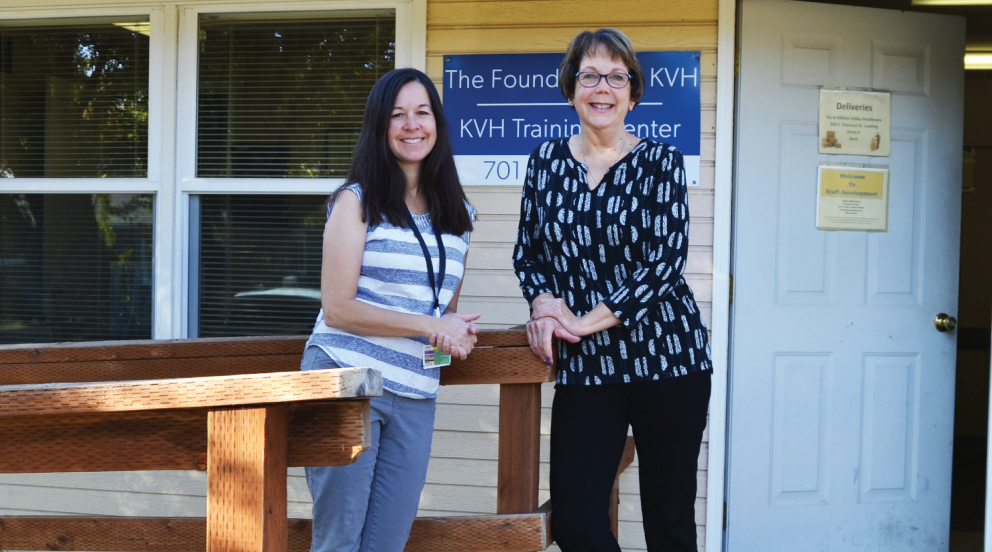
We sat down with Laura Bobovski, Foundation Assistant, and Donna Walker, Foundation Board of Directors, to learn more about the work of the Foundation in supporting Kittitas Valley Healthcare.

What’s the purpose of the Foundation?

L: We’re a charitable organization that works to support KVH and its role in providing healthcare in the community.

How does the Foundation interact with the community?

D: Well, I’m fairly new, but as people realize that I’m on the Foundation board, I get questions. So we have one-on-one in the community, where people have questions about what’s going on at the hospital.

L: We engage the community through various fundraising events such as the Gobble Wobble 5K for Wellness, the Tough Enough to Wear Pink campaign for breast cancer services, our annual Gala which targets a specific need at KVH to fund, and our annual appeal mailing each fall. A lot of the interaction is through ambassadors, our board members, who do outreach to community groups and citizens about the benefits of supporting healthcare in the valley.

What is your role within the Foundation?

L: I act as a liaison between the board of the Foundation and the hospital. I’m here to assist the board with their goals of fundraising, donations, and events in support of KVH.

D: I’m still figuring my role. But right now, Tough Enough to Wear Pink is my event. I volunteered for several years prior to being on the Foundation board. It’s a year round commitment by the time we do all the planning and find merchandise that we’re going to sell.

Who’s going to be driving the spring gala?

L: There’s a committee overseeing the planning of the gala, but it takes all of the board members to successfully carry out such a large event.

What’s the structure of the Foundation board?

L: Jim Daly is president. Bill Boyum is vice president. Jerry Grebb is finance officer and Cindy Smith is secretary. They’re the executives. It’s a 2-year appointment.

What are the challenges working with/in the Foundation?

L: Educating the community as to what the Foundation is and that we are separate from KVH. Our board of directors oversee the nonprofit charity side of the Foundation and the Board of Commissioners oversee the hospital. I think some people get them confused. There’s a clear and separate division of the hospital and the Foundation with two separate managing arms.

Any challenges that you can think of? You keep saying you’re new. So there’s probably a bit of a learning curve challenge.

D: Laura’s position has changed. It’s been redefined. I think it’s a challenge for us to realize there is more on our shoulders, more of a responsibility to get things done. And for me as a new member, understanding the finances has been difficult.

L: And there is a big responsibility by the Foundation to honor the donations given, exactly…

Apply them in the spirit they were intended.

L: Yes. And to make sure, if somebody gives to hospice, it’s got to go to hospice. We need to honor the intentions of the donor as best as we can. People trust us with their wishes. Often, they donate in memory of a loved one.

Seems like these gifts have their own emotion and history and passion. It’s not just a donation.

L: Exactly. We get a lot coming through hospice in honor of a loved one. This afternoon, I’ve got to return a call from a lady who wants to give in honor of her recently departed friends. So there’s a lot of weight behind that to make sure it’s being used properly.

This work can be very emotional. You know, somebody passes and you get phone calls from the community members wanting to give on their behalf. It’s very touching.

It gives you a good view of the community.

L: I think that’s why a lot of our board members step up and work tirelessly throughout the year, particularly in the case of Tough Enough to Wear Pink. I mean, you’re dealing with breast cancer survivors. A lot of them have lost people in the community, and they’re all stepping forward. When we were selling things at Rodeo, people were coming up and saying, “I lost my sister…” People are coming through the doors in the rodeo spirit, but they’re also sharing their losses with you and it’s just – it’s gut wrenching, sometimes. One man gave us $100 out of his pocket in honor of somebody. It was powerful.

It wasn’t about the tax deduction. He was just giving.

L: No, he didn’t want a T shirt. He didn’t want a hat. He just saw that it was Tough Enough to Wear Pink and gave $100 on his way in, in honor of somebody that he loved, and that – that takes a lot on his behalf. To be standing there receiving that gift is very, very touching.

D: I think for me personally, I’ve done a lot of volunteering locally in different capacities, but then I thought carefully about how I could best serve the larger community. That’s why I’ve landed at KVH.

What are the rewards? Why are you serving in this role?

L: I think a lot of the board members would say they’ve had personal experience, they’ve had personal loss, and that a hospital is very important to the entire community. We have one in this county and we’re very lucky to have it.

Anything surprising or unexpected that you’ve learned while you’ve been serving the Foundation?

D: In my first couple of meetings, I was intrigued by the people on the Foundation board with an extremely wide variety of expertise. They bring a lot to the board and take it very seriously.

L: I was surprised by how knowledgeable the board is. Some of our board members go way back and personally know a lot of community members and their histories. “They’ve moved and aren’t at this address.” “Their spouse died. We need to reach out to them.” It’s the personal connections that the board has with the community that has really blown me away.

How does the Foundation support the KVH mission to provide quality patient care?

D: I know how seriously the Foundation members weigh the options for using funds raised. I mean, there are lively discussions about how to best use those funds to provide better healthcare for patients at KVH.

L: We take a lot of input from the hospital itself in terms of what they need. What we can do to support KVH. So, there’s a lot of input, not just from administration but from department heads. We like to hear from them and know what they are doing, and what can we do to support them.

If someone wants to make a donation, but they want to know more about the options as far as where money could go or what it would do, what would you recommend?

L: Call the Foundation office so that we can discuss their intentions or talk with a board member. More information can be found online at the KVH website.

Over $14,700 raised in the fight against breast cancer

HealthNews · November 22, 2019 ·

The Foundation at Kittitas Valley Healthcare (KVH) and the Ellensburg Rodeo Association celebrated another successful Tough Enough to Wear Pink (TETWP) campaign in 2019. Money was raised through selling pink merchandise and accepting general donations on the Sunday of Ellensburg Rodeo. This year, $7,179 was raised on rodeo Sunday. In addition to the funds raised at the rodeo, TETWP volunteers generated over $6,500 through pick-your-prize raffle and merchandise sales at Kittitas Valley Healthcare. Gard Vintners also donated proceeds from their annual Gard Against Cancer. In total, over $14,700 was raised to help prevent and fight breast cancer in Kittitas County.

Ellensburg Rodeo President Jerry Doolin presents a check to The Foundation at KVH for the 2019 Tough Enough To Wear Pink campaign. L to R: Laura Bobovski, Donna Walker, Mary Seubert, Jerry Doolin, Connie Dunnington, Karen Schock, Julie Petersen

The Foundation at KVH uses the TETWP funds to provide free mammography screenings at Kittitas Valley Healthcare for patients in need and to support breast cancer education materials in our community. Early detection is key in the fight against breast cancer and The Foundation appreciates the support of the TETWP committee, the Ellensburg Rodeo, Gard Vintners and the community as a whole in continuing to ensure no patient goes without breast screenings in our community, regardless of financial ability.

Tough Enough to Wear Pink is a national campaign sponsored by Wrangler. The Foundation at KVH and the Ellensburg Rodeo Association partner each year to raise funds to support breast cancer awareness and prevention services in Kittitas County.

For more information on The Foundation at KVH TETWP Fund please visit www.kvhealthcare.org/foundation or contact the Foundation Office at 509-933-8669.

  • « Go to Previous Page
  • Page 1
  • Interim pages omitted …
  • Page 10
  • Page 11
  • Page 12
  • Page 13
  • Page 14
  • Interim pages omitted …
  • Page 20
  • Go to Next Page »

Primary Sidebar

Categories

  • KVH Stories
    • Patient Stories
    • Provider Stories
    • Donor Stories
    • Employee Stories
    • Volunteer Stories
    • Share Your Story
    • All
  • Blog Posts
    • Behind the Scenes
    • Childbirth & Family Education
    • Community
    • Health
    • Lifestyle
    • Provider
    • Safety
    • COVID-19
    • All
  • News & Media
    • KVH News
    • Weather/Disaster Notifications
  • Press Releases

Footer Top 2

603 S. Chestnut Street - Ellensburg, WA 98926
509.962.9841

  • Facebook
  • Instagram
  • LinkedIn
  • YouTube

Footer Bottom 1

Download the MyPatient Portal App
Apple Store Google Play Store

Footer Bottom 2

  • About KVH
  • KVH Legal Information
  • Price Transparency
  • Careers
  • Board of Commissioners
  • Contact Us
  • The Foundation at KVH

Footer Bottom 3

  • Our Locations
  • Hospital Services
  • Clinics & Specialty Services
  • Visiting Information
  • Patient Policies
  • Events & Education
  • Press Releases

Footer Bottom 4

Google Translate