• Skip to primary navigation
  • Skip to main content
  • Skip to primary sidebar
  • Contact Us
  • Pay My Bill
  • Patient Portal
KV Healthcare

KV Healthcare

Your Home for Health

  • Find a Provider
  • Clinics & Specialties
        • Primary Clinics

        • KVH Family Medicine – Cle Elum
        • KVH Family Medicine – Ellensburg
        • KVH Home-based Primary Care
        • KVH Internal & Adult Medicine
        • KVH Pediatrics
        • KVH Women’s Health
        • KVH Rapid Access
        • Specialty Services

        • Anticoagulation Clinic
        • Addiction Medicine
        • Specialty Clinics

        • ENT & Allergy
        • Cardiology
        • Dermatology
        • General Surgery
        • Home Health
        • Hospice
        • Neurology
        • Podiatry
        • Orthopedics
        • Urgent Care
        • Urology
        • Vascular Surgery
        • Workplace Health
        • Wound Care
        • Therapy Services

        • Physical Therapy
        • Speech Therapy
        • Occupational Therapy
        • Cle Elum Therapy Services
  • Hospital Services
        • Services

        • Cardiopulmonary
        • Emergency Department
        • Imaging
        • Laboratory
        • Nutrition
        • Pharmacy
        • Surgical
        • Family Birthing Place

        • About Family Birthing Place
        • Class/Event Calendar
        • What to Expect
        • Birth & Family Education
        • Lactation Services
        • 4th Trimester Resource Center
        • Pregnancy & Infant Loss
  • Patients & Visitors
        • Patient Tools

        • Request Medical Records
        • Checking In
        • Language Services
        • Quality of Care
        • Patient Portal
        • Patient Safety & Security
        • Patient Policies
        • Insurance & Billing

        • Accepted Insurance
        • Price Transparency & Billing Services
        • Washington Health Plan Finder
        • Financial Assistance
        • No Surprise Act - Balanced Billing
        • Insurance vs. Self Pay
        • Bills from Other Providers
        • Pay My Bill
        • Visitors

        • Visiting Information
        • Mother’s Room
        • Café
  • About KVH
        • About KVH

        • About KVH
        • Mission & Vision
        • Board of Commissioners
        • Administration
        • Quality of Care
        • DAISY Award Program
        •  

        • News & Blog
        • Events & Education
        • Contact Us
        • Locations
        • Work With Us / Careers
        • Foundation

        • About the Foundation
        • The Foundation Board of Directors
        • Programs to Support
        • Ways to Give
        • Donate Now
        • Foundation Events
  • Donate Now
  • Pay My Bill
  • Patient Portal
  • Find a Provider
  • Clinics & Specialty Services
  • Hospital Services
  • Patients & Visitors
  • About KVH
    • Mission & Vision
    • Board of Commissioners
    • Administration
    • Contact Us
    • KVH News
    • Our Locations
    • Quality of Care
  • Careers at KVH
    • Culture & Mission
    • Education
    • Providers
    • Non-Clinical
    • Volunteer
    • Nursing
    • Professional Development
    • Clinical
  • The Foundation at KVH
    • Donate Now
    • About the Foundation
    • The Foundation Board of Directors
    • Foundation Events
    • Programs to Support
    • Your Impact
    • Ways to Give

Blog Posts

KVH Childbirth & Family Education offers free webinar series

HealthNews · July 29, 2021 ·

Julie Harwell, RN, BSN is hosting a free webinar series through our Childbirth & Family Education Program at Kittitas Valley Healthcare. The most recent webinar titled “Creating Meaningful Learning Communities: How Covid has helped us to Reimagine Possibilities in Education” details how one local school adapted to the COVID-19 restrictions and found opportunities for resilience and growth in the classroom and our community.

“The Covid-19 Pandemic brought about many changes in the way we as a society approach school. In addition to the challenges, the past year brought many opportunities for us to reflect on education and how we can best support engagement in learning for children. We found great value in more outdoor education, multi-age groups, parent partnerships in learning, and extending the walls of the classroom to include more community places and partners. This year illustrated the great potential we have to provide meaningful learning experiences for our children when families, children, schools and community members work together.”

Webinar presenter Natalia Parker, a founder of and the current Director at Discovery Lab of Ellensburg, has worked with children and families in varying capacities for the past 20 years. After graduating with degrees in Psychology and Infant Mental Health, Natalia worked in various roles educating and supporting caregivers, children and students in grades Kindergarten through Post-Secondary. Currently, in her role at Discovery Lab she works to support meaningful and engaging teaching and learning practices that best support healthy child development. When she isn’t at work she loves to be outside exploring the beautiful area we live in.

Check out our website to learn more about the KVH Childbirth & Family Education Program.

Beat the heat: Diabetic safety

HealthNews · July 1, 2021 ·

Photo: Even in summer, foot protection is a priority for people living with diabetes. Skip the sandals and barefoot walks. Keep them covered!

Wear sunscreen. Stay hydrated. Wear light, loose clothing. Anyone who’s lived in Kittitas County for more than a year knows these basics for survival in the summer heat. If you’re diabetic, there’s another concern to add to the list: extreme temperatures can spike your blood sugar levels, and wreak havoc on testing equipment and medication.

Recent findings show that the summer heat drives more people with diabetes to the ER, and more diabetics are hospitalized due to heat illness.

“First of all, be aware of your environment. Watch the forecast. When we’re in for a hot spell, there are some things you can do to prepare for diabetic safety,” advises Nicole Norton, Diabetes & Nutrition Education Coordinator at KVH.

Careful planning of your diet is always important, but even more so in extreme temperatures. Think through any adjustments you need to make. And be diligent in avoiding added sugars. “A lot of folks reach for sugared sodas, sweet teas, and juices when they’re thirsty,” warns Norton. “For someone with diabetes, it’s safest to stick with water.”

Another common mistake is skipping meals. Norton explains, “We’re more active in the summer, and we get distracted, forgetting to eat when we should.” That’s not good in normal conditions, but in the heat of summer, it’s even more dangerous. Be familiar with the early symptoms of low blood sugar, and keep some carbohydrates with you to eat if you need to raise your blood sugar.

Once you put the steps into practice, diabetic safety becomes just another automatic healthy habit.

Medication storage is another concern. While unopened insulin should always be kept in the fridge, storing any medications in the heat can degrade them. “Don’t keep medications in your car,” advises Norton. “In a high temp situation, use an ice pack in an insulated lunch pail.”

More frequent testing is also a good idea. Your diabetes educator can help you with guidelines for an appropriate testing schedule.

It’s easy to forget, but foot problems are common for people with diabetes, and summer is all about bare feet, sandals, and open toed shoes. “Keep your feet covered in well-fitting shoes,” says Norton, “even in warm weather. Check your feet every day, and get treatment right away for any injuries.”

It’s a lot to consider, but, like using sunscreen and staying hydrated, once you put the steps into practice, diabetic safety becomes just another automatic healthy habit. “We all have health limitations of some kind,” says Norton. “With a little preplanning and awareness of their surroundings, people living with diabetes can enjoy themselves in the summer like anyone else.”

Article updated 7/2021. Original post 8/2017.

Managed by Kittitas Valley Healthcare, HealthNews does not provide medical advice. For medical advice, please see your healthcare provider.

Tick bites in children

Elise Herman , MD · May 5, 2021 ·

Contributor: Dr. Elise Herman, MD, KVH Pediatrics

Ahhh, summer! As that much anticipated warmer weather comes, it brings with it the risk of tick bites and the diseases they can cause. Knowing how to prevent tick bites, what to watch for if your child is bitten and how to remove ticks can make us feel more ready for outdoor adventures with our kids.

Ticks have 8 legs, flat oval bodies, and vary in size from the tiny deer tick (size of a poppy seed) to the wood/dog tick (size of an apple seed). They can swell to two or three times their usual size when they have had a blood meal. After sucking blood for 3-6 days, ticks fall off on their own, often leaving a small red bump. As it feeds on the blood, some of the tick’s spit gets transmitted to the host’s body and can cause infection. Ticks must be attached for at least 36 hours to spread infection.

Washington has fewer tick-borne diseases compared to other parts of the country, but we do have cases of Lyme Disease, babesiosis, tick paralysis, and tularemia. Lyme Disease is the most common tick-borne disease in our state and the US. It is most prevalent in the Northeast, mid-Atlantic, upper Midwest, and to a lesser extent on the West Coast. It is spread by the very small deer tick. 80% of Lyme Disease starts as a circular or oval red bull’s eye rash called erythema migrans at the tick bite location within 3-30 days of a bite. It can expand to up to 12 inches and lasts 2-3 weeks. Other signs of early Lyme Disease are fever, body aches, headache, chills, and neck stiffness. If Lyme disease is diagnosed early and treated with antibiotics, progressing to later stages of the disease is very unlikely. The later stages can involve bull’s eye rashes elsewhere on the body, joint pain, temporary facial paralysis, and limb weakness.

There are steps you can take to help prevent tick bites. Avoid dense, grassy or wooded areas, and stay to the center of the trail. Ideally, everyone should wear hats, light colored clothing, long sleeves, and long pants tucked into socks. You can spray permethrin on clothing (not the skin) to decrease tick attachment. Insect repellent containing 20-30% DEET is safe for children but you should minimize its use on very young children and infants. Do not use products that combine DEET and sunscreen since sunscreen needs to be applied more frequently than DEET. Do not apply DEET to the hands of young kids or near their eyes or mouth.

Do a tick check of your child right after being outdoors where there might have been tick exposure. Look at the clothing first, then the skin and scalp. Don’t forget behind the ears, in the armpits and groin area. Showering may help prevent attachment. If you do find a tick, use tweezers to grasp it close to the skin; pull gently and slowly to remove. Try not to crush it when doing this and wash the area well afterwards.

It is important to remember that the chance of a tick bite causing any disease is extremely low. Only 2% of deer tick bites will cause Lyme Disease even in high-risk areas and here in Washington state we are at low risk of any tick disease. So, wherever your outdoor adventures take you and your kids this summer, a bit of planning to prevent tick bites and knowing how to handle them if they happen will help you to all enjoy those long summer days!

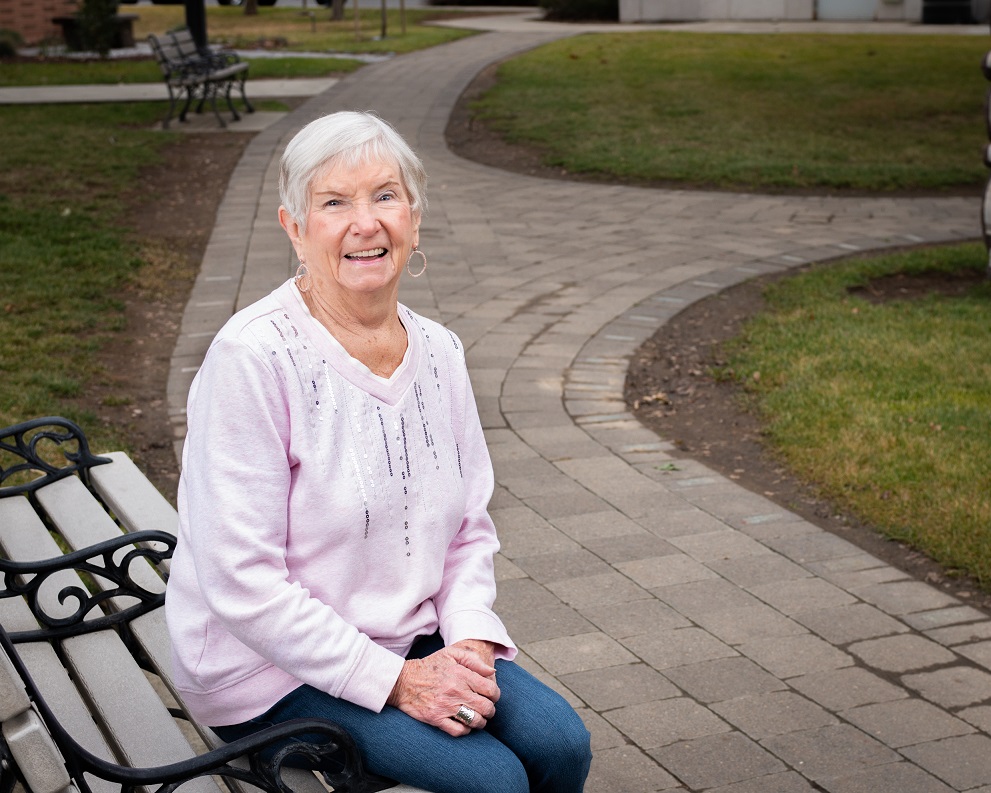
Betty Osborne (Neurology)

HealthNews · April 21, 2021 ·

“Dr. Gustavson is super nice. His voice is soft and it just makes you feel comfortable. I felt good when I left his office – knowing I was going to be okay.” – Betty Osborne

KVH has welcomed a new Neurologist to our specialty team. His name is Dr. Andrew R. Gustavson. Dr. Gustavson comes to KVH with expert training in both Neurology and Psychiatry. He has worked all over the world, but his desire was to get back to practicing Neurology here in Eastern Washington.

Dr. Gustavson desires to treat patients with compassion and he works with them to build long-lasting relationships. The patient and their family are all participants in assuring the very best care. When someone has a neurologic disease, this may require care over the course of many years. The Doctor, the patient and their family are all essential to providing the best care for an individual. Dr. Gustavson enjoys this part of his practice and loves working with family members of his patients – either remotely or here in Kittitas County.

We received some recent comments from a patient after she came to see Dr. Gustafson for the first time in late 2020:

The patient, Betty, has had Parkinson’s disease for many years. Prior to Dr. Gustavson’s arrival at KVH, Betty had to go to Seattle to be seen by a Neurologist. This would mean her Daughter would need to take an entire day off to drive her to these appointments in Seattle. Betty wasn’t a fan of going to Seattle for her care. When Betty found out a Neurologist was coming to Ellensburg – she was ready to make an appointment right away.

“When I went to see Dr. Gustavson he checked me really good. He watched me walk and had me do some exercises to hold my hands out straight and fall backwards. I didn’t think I could do it, but he reassured me saying “We are here to catch you”. He is very nice. He speaks softly and makes you feel comfortable. He was very thorough and gave me a good checkup. I told him I would be out of medicine in January, so he said – “just come back and see me in three months and I will order and manage your medication for you.
You are doing well on this medicine.”

Dr. Gustavson says that if a patient has Parkinson’s disease we usually manage their care with medications. We can use surgical approaches if the disease gets more severe. I am seeing many Parkinson’s Disease patients since we opened my practice in Ellensburg, up to 50% of my patients on some days. The care of a person with Parkinson’s disease has to be individualized because you need to set up a medication regimen that’s is built specifically to help them with the issues they are having. It’s also a disease that progresses or changes over time – so we need to teach them and their caregivers how to adjust their medications themselves based on their symptoms.

Dr. Gustavson fell in love with Neurology as a college student. He became interested in how the brain works and this remains a great mystery. This means that we rely heavily on the patient history and physical exam to find the answers. It’s a very personal type of medicine. We have to work hard, with the right diagnosis, to tailor treatment to each individual person, according to their needs.

KVH is honored to have Dr. Gustavson on our team and to be able to provide this special care in the local community. Betty and many others are happy to have expert neurology care much closer to home.

View Dr. Gustavson’s provider bio page.

Colton Harlin (Emergency Surgery)

HealthNews · August 28, 2020 ·

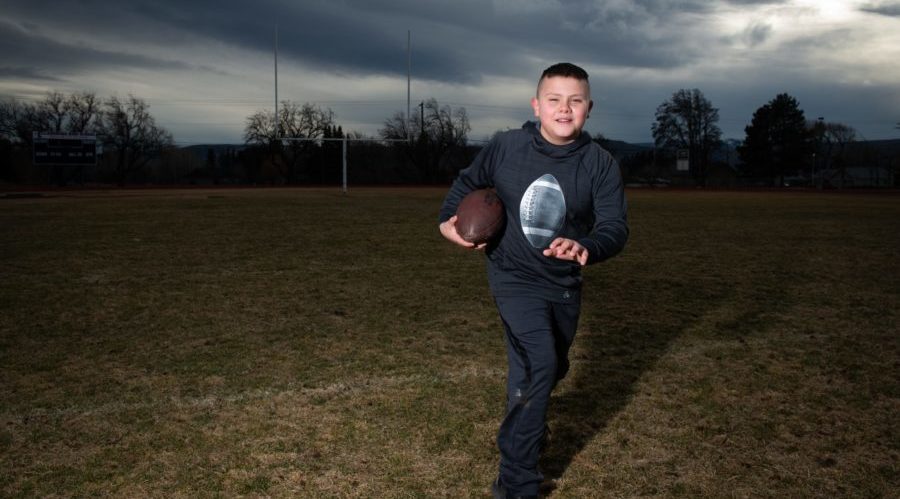
At the tender age of 10, Colton Harlin was generally used to the bruises and scrapes of pee wee football. And when the goal is a quarterback sack, a little pain for your efforts is to be expected, even during practice.

Colton was knocked down on the play. The quarterback remained unscathed. But Colton?

“My head was ringing,” he recalls. “My stomach was, like, hurting a lot.”

They returned to the sidelines, where Colton confided to his mother, Miranda. “I figured he’d be okay,” she says. “He’d cried ‘wolf’ so many times before; we thought he was just trying to get out of going to school.”

(Sound familiar, fellow parents?)

It wasn’t long before Colton was back on the field. He seemed fine.

“You know, we raised him to be a tough kid,” says his father, TJ. “We’re telling him, ‘You know what, son, you’re going to be all right. Sometimes we pull a small muscle in our tummy during practice. It’s bound to happen.'”

At the Saturday game, Colton was knocked down again. The pain came back like a flood. “I just tried to suck it up,” he recalls. “I didn’t want to cry in front of people.” Colton, telling his coach he was going to be sick, was pulled from play.

Returning home after the game, Colton went straight to bed, and to sleep. “I thought, ‘Maybe he’s just tired and needs rest,” says Miranda. The next morning unfolded like a typical family Sunday. “We’re up later, doing our normal routine, and Colton was watching TV.”

Suddenly, she saw her son bowing over the side of his chair. “I asked him what was wrong. His face was pure white. I said ‘Yeah, we’re going to go to the doctor, right now.’” She asked her daughter, Dakotah, to let TJ know, and with that, Miranda and Colton were out the door.

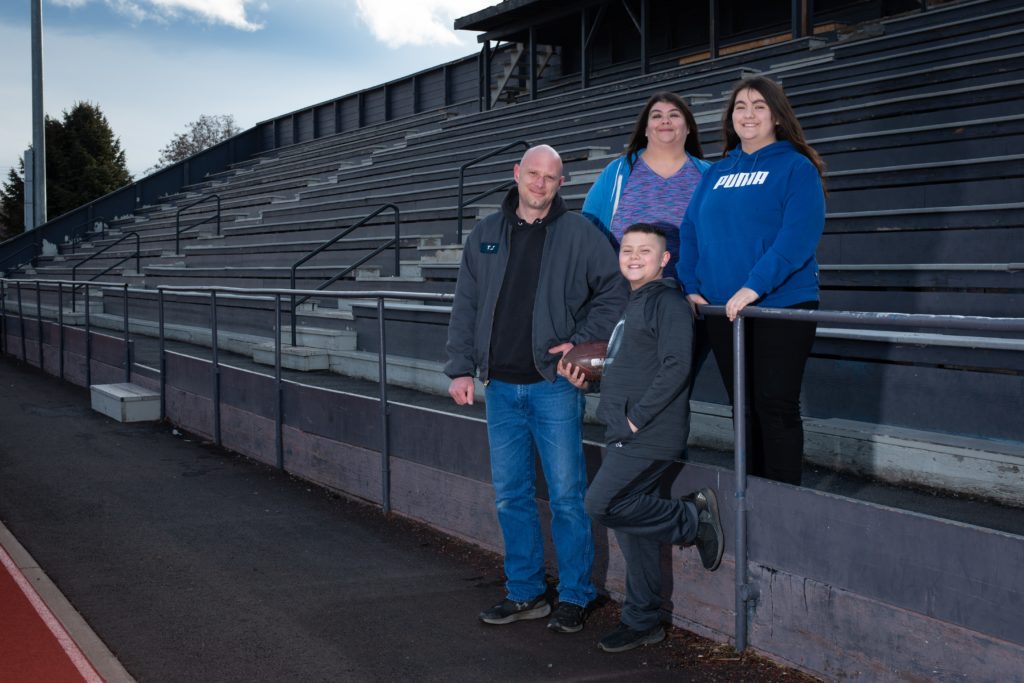
Colton and his family.

“We’re on our way to the hospital,” says Miranda, “and I’m on the phone with my mom. I said, ‘What if it’s appendicitis or something like that?’ But I didn’t know for sure.”

Still trying to reach TJ, the pair went straight to the ER. Labs were ordered. Miranda knew what was coming next. “Colton had never had his blood drawn with a needle,” she says. “But his nurses were able to calm him and get the needle in, and he was a champ right after that.”

Miranda and TJ finally connected by phone. “She said Colton was going right into surgery, and my heart just dropped,” he says, learning that his son would need an emergency appendectomy. “My world’s flashing before my eyes,” TJ recalls. “I played football for nine years. I’ve been hit in the stomach lots of times. And now this. Then I really started feeling like a bad parent, that he was really hurt.”

Dr. Daniel Smith would be performing the appendectomy. It was Miranda’s first time meeting the provider from KVH General Surgery. “He had the best bedside manner, ever,” she says. “He told Colton that he had a sick appendix, that we really don’t need it and don’t even really know why we have one. He reassured him and helped him understand what was happening.”

TJ and Miranda sat in the waiting room while Colton underwent surgery. “Of course I’m doing all the research I can possibly dig up on this,” says TJ. Less than an hour later, they were told Colton was in recovery, that everything had gone well. They’d been able to remove the appendix before it would have ruptured. Miranda immediately jumped up and ran in to see her boy.

Colton spent the night in the medical/surgical unit. “He got great care. The nurses were on top of anything he needed. They made sure he didn’t have a fever or any reactions to anything.”

When Colton was discharged the next morning, football was on his mind. “His team was going into the playoffs,” says Miranda. And so they carefully, slowly eased him back into practice, and before long, he was back on the field.

TJ has a message for all the ‘football fathers’ out there. “When your child says they’re hurt, really pay attention. It could be something serious. You know, we’re always pushing our sons to be greater than we were. Take into account what’s going on, and don’t shrug anything off. This could have been catastrophic.”

Miranda agrees. “Now, his toe starts aching, or whatever, we’re going to the doctor. We’re never going to not believe him again.”

As for Colton, he’s got his sights set on a career in the NFL. A linebacker for the Kansas City Chiefs, to be exact. And once he’s there? “Make it to the playoffs,” he grins. “And the Superbowl.”

Colton’s family would like to especially thank all of the staff who were involved in his care: Phyllis, Jana, Katie, Hannah, Pat, Luke, Jamie, Abigail, Ken, Kara, Anji, and Dr. Smith.

Talking about racism to children

Elise Herman , MD · June 22, 2020 ·

Contributor: Dr. Elise Herman, KVH Pediatrics

Racism is front and center now, and parents may wonder how to have important conversations with their child about diversity, equality, and discrimination. It helps to keep your discussion age-appropriate, share your feelings and listen to your child.

Under age 5 years – Studies have revealed that even infants notice different skin tones and preschool kids have been shown to view those who look like themselves more positively, so addressing racism early is important. Kids relate easily to the concept of fairness so it can simply be explained as treating someone unfairly based on how they look. Young kids may ask about why people’s skin colors are different. Explain simply that darker skin has more of the pigment melanin in it and that no skin color is ‘better’ than another. Celebrate human diversity by noting that “we are all human but can have lots of differences, too, making everyone special!”. Encourage your young child’s appreciation for diversity by reading books and playing with toys featuring people of different races.

6-11 years old – At this age, children are more aware of current events based on what they have heard and seen from adults, other kids and on the news or in social media. Ask your child about what they know and what questions they have. Kids this age understand empathy so discussing how it would feel to be judged unfairly can be helpful. Children of all ethnicities can be assured that people world-wide are upset about racism and are working to make things better.

12 and older – Kids this age are often very informed and have developed their own opinions about issues such as racism and protests. Discussing the news and current events and how it affects them opens the door to a deeper conversation. The same concepts of fairness and empathy apply, but now taking action may be a logical next step. It may be sharing something on social media, reading more about the history of oppressed peoples or attending an event.

All kids benefit from social experiences with a variety of people. Cooking food and listening to music of different cultures broadens our horizons. It is alright to let your child know that you are upset or sad about what is happening, but you also need to assure your child that they are safe in what can be a frightening time. This conversation will look different for families of color where the issue hits a lot closer to home than for whites.

As always, what we do and say speaks volumes to our children. It is vital that as parents we confront our own prejudices and biases and work to be more open and understanding. Let your kids see you speaking out against racism, embracing diversity and calling for justice for all people.

Traditional vs. Electronic Books and Your Child

Elise Herman , MD · February 20, 2020 ·

Contributor: Dr. Elise Herman, KVH Pediatrics

Simply put, reading to your child daily is one of the best things you can do as a parent. But does it need to be a traditional (paper) book or is an electronic book pretty much the same experience for your child? There have been studies that suggest reading a traditional book does have some advantages.

The Journal of the American Medical Association published a study in September 2019 that showed fewer ‘back and forth’ interactions between parents and toddlers when using an electronic tablet. This type of interplay is important as it builds connections in the brain and helps develop communication and social skills in children.

A recent study from the University of Michigan found that parents and kids interact more when reading a paper book and that communicating this way helped encourage healthy child development. Parents often asked how the story related to the child’s experiences or about the story and its characters. They also posed more open-ended questions, such as asking what the child liked about the story, which created more opportunities for a conversation between the two.

When parents and children are reading from a device, be it a table, computer or smart phone, interactions tend to be more focused on the technology itself. Comments about the device, instructions to not push buttons, how to set the volume if applicable, etc., can dominate the conversation. There has been research showing that “enhanced” digital books that have sound and animation can be distracting and therefore children do not remember the content as well.

So how best to read with your child? Although there seem to be real advantages to traditional books, reading from electronic books is still fine in addition to paper books. Here are some tips to make reading to your child the best experience:

– Read daily including at bedtime – and try not to rush
– Let your child choose the book at least some of the time (going to the library together also builds excitement for reading)
– Let your child hold the book and turn the pages
– Avoid electronic books that are “enhanced” with sound and animation
– During reading, ask questions about the story (“What do you think will happen next?”) and relate the story to your child’s life (“Remember when we went to the park and played like that?”)
– Encourage your child to point to things in the book (“Where is the rainbow?”)
– Read books with simple rhymes and repetition; your child will be more likely to ‘read’ along with you
– Make it fun! Silly voices and acting out the story makes reading very engaging to kids of all ages
– It is also good to encourage your child to look at books independently regardless of whether they can actually read yet

Be a good role model to your child, and read a lot at home. Since we don’t want our kids to see us always looking at electronic devices or a computer, make it a habit to read from traditional books, magazines and newspapers. And remember that whether it is a traditional book or at times an electronic book, it is wonderful that you are sharing reading with your child. Well done, Mom and Dad!

Managed by Kittitas Valley Healthcare, HealthNews does not provide medical advice. For medical advice, please see your healthcare provider.

Positional Plagiocephaly Prevention and Treatment

Elise Herman , MD · January 30, 2020 ·

“‘Tummy time’ while awake should start right away…”

Contributor: Dr. Elise Herman, KVH Pediatrics

When your infant is seen for a Well Child Exam, checking growth and development are the top concerns. Additionally, careful attention should be paid to your young child’s head shape. We are now in the middle of an ‘epidemic’ of head flattening, medically known as positional plagiocephaly, meaning a change in head shape due to positioning of the baby. Typically this is flattening of either side of the back of the head or symmetric flattening of the entire back of the head. This is not just a cosmetic concern as significant health issues can result from the altered head shape.

The flattening that can develop is related to a baby’s skull being relatively soft until about age 5-6 months. Babies spend a lot of time on their backs between sleeping (the recommended sleep position is on their back to decrease the risk of SIDS) and while awake until they are old enough to be rolling, sitting up,etc. If the head is turned to one side when sleeping (for example if the baby is turning to look towards a parent), this can result in localized flattening of one side of the back of the head. With this flattening on one side, it is then harder for the baby to turn their head to the opposite side. Over time the neck muscle on the flatter side can become tighter and shorter, causing the neck to stay in a twisted position (this is called torticollis). This may affect the shape of the face with jaw asymmetry and other changes. In some cases it can be related to problems with development if left untreated.

It is important to be pro-active to minimize the risk of infant head flattening. Your baby should absolutely sleep on their back, but otherwise should be up and off the back of their head a lot. ‘Tummy time’ while awake should start right away and not only helps head shape but increases the strength in your baby’s neck, chest and arms. Options for tummy time include having baby lay with their face/ chest on your chest or baby laying down over your lap. You can also have baby lay on the floor with a rolled small blanket to prop up their chest only until they are strong enough to push up on their arms. Begin with 5-10 minutes 3 times a day with a goal of about 60-90 minutes total a day by age 4 months. Babies often don’t like tummy time at first (it’s a lot of work for your little one!) but it gets easier as they get stronger.

If a baby has flattening on one side of the head, the baby can be laid down to sleep alternating their head in opposite ends of their crib or bassinet each night. This means they will have to turn their head the opposite way to continue to look at their parent and can improve head shape. Parents should alternate which arm they hold the baby in for feeding as well. Upright chairs like the Bumbo for babies not sitting yet are recommended at age 3-4 months. Front packs also help your baby be upright during the day.

If a baby has significant head turning with neck twisting (torticollis), physical therapy is usually started and can be very helpful to restore normal movement of the neck. If by 4-5 months there is significant flattening despite increasing tummy time, etc., a referral may be made for helmet therapy. Wearing a custom soft helmet with a foam liner that is adjusted over time, the head shape becomes more rounded. Helmet therapy is most effective between 4 and 12 months of age, and babies usually accept the wearing of the helmet very well. Most babies are treated with helmet therapy for 1-4 months.

Having some degree of head flattening even with lots of tummy time and upright positioning is fairly common and is not a problem if it is mild. Talk with your health care provider if you have concerns about your baby’s head shape; they can help determine if any specific treatment is needed.

Managed by Kittitas Valley Healthcare, HealthNews does not provide medical advice. For medical advice, please see your healthcare provider.

Behind the Scenes: Quality Management

HealthNews · December 18, 2019 ·

For the final installment of the series, we sat down with some of the Quality team to learn about what they do. Unlike other ‘Behind-the-Scenes’ interviews, this one had only one guiding question: “How does your work support the mission of KVH to provide quality patient care?”

It seems like you don’t have any redundancies in your staffing, right? Everybody has a different role.

Mandee: Carissa and Kimber are both process improvement facilitators. That is one thing that is very similar for all of us – we all facilitate improvement, whether it’s a surgical site infection, or a needle stick, or sepsis care – figuring out what’s going on with the process and how we could improve it.

How does the work that you do impact patient care?

Julie: One example is the lack of surgical site infections. We work hard to maintain a standard, so that there’s less of a chance for surgical site infections.

How does that happen?

M: Julie doesn’t directly go and clean all the rooms and check all the labs. But what she’s doing every day is looking at our stats, our data, and seeing how we’re doing and where we need to improve, working with departments like housekeeping, sterile processing, surgery, med/surg, all the different areas. She talks with Home Health, too, helping them understand best practices for protecting the environment, keeping it clean, and also for patients, and for protecting themselves. We support the rest of the organization, helping address any barriers to providing reliable care or processes, even in billing, removing those barriers and identifying ways to make the work more effective.

The most basic example would be employee flu shots, right? So, yes, it’s caring for the staff, but it’s also helping ensure that when the patient and the community come into the facilities –

J: It’s mostly caring for the patients.

That may be something people don’t realize, that KVH staff are vaccinated against the flu primarily for the patients’ protection. They don’t necessarily know all the work that’s going on to make it happen, but that kind of thing has a direct impact.

M: It’s when things haven’t gone well that it gets to Brandee and Linda, when we’re seeing incidents in the incident reporting system. It’s looking at that and saying, “Is this a one-off, or is this something bigger that we need to do improvement with teams and help them make sure this doesn’t happen again?”

Brandee works on the falls team, too. They do root cause analysis on every fall and say, “What could we do differently?” So the parking lot repairs are the work of the falls team saying, “These curbs, this isn’t working. We’ve had this many falls. The pothole in the middle there, that’s a problem, we need to address it.”

And in some sense you are getting, even if it’s in writing, direct communication from patients and the community, as well.

Brandee: Another piece of that is the service recovery program. I tell staff “It’s a way that you can make it right, right now.” It’s an opportunity to show a patient that you care, that you’re not just going to blow it off to somebody else, that you’re trying to do the best you can to make it right for them.

Because quality patient care is mostly about the actual physical care, but it also involves satisfaction, and feeling that you’ve been heard, and that kind of thing.

M: A huge part of what we do is empower employees to speak up, try and make it right. Incident reporting is a huge part of it, as are SAFE boards, or Linda as a compliance officer hearing concerns.

I was just looking at some of Amy’s work. We do measure a ton of things in here, but we even measure what we measure. Amy had 99 different report requests this year that she’s worked on and that has helped staff from, for example, the clinics, with a list of their patients who were recently in the emergency department, so they can follow up with those patients and make sure they’re getting appropriate care. That’s made a huge difference for them because they didn’t have a system to notify them. A lot of what Amy does is build reports for people that make their job easier every day.

You can boil a year’s worth of data down into a report that you can wrap your brain around. It makes a difference.

M: We report a lot of data externally because it’s either the law or we won’t get paid if we don’t do it – things like surgical site infections, sepsis and stroke data. We don’t get our stroke designation if we don’t have data reported to Get with the Guidelines. We do this so that our staff can take care of patients. I don’t want the ER nurse having to worry about abstracting charts and putting that into Get with the Guidelines so that we can have that stroke designation or get paid from CMS.

Linda: Part of the process with patients, when it actually becomes a grievance and they’re voicing what it felt like to them, their perception of that care experience – that information gets shared with the department leaders and then with staff, who are not always aware until that patient voice speaks up that the patient doesn’t know you’re doing all these other things in the background supporting their care at the time. You know, at the time they can only see what’s within their own vision.

Staff are the ones who can really look at their processes to care for a patient and if there’s anything that they could do differently that would better have met the needs of that patient at that time. And maybe everything was done, and met the standard of care. But maybe it was just more communication that needed to occur to help the patient be aware, “This is why we’re doing this. This is why we may be waiting for a while.”

M: We try to bring that patient perspective back to staff. For KVH employees, it’s our job, every day, and we get very used to it. It’s very routine to us. But for a patient it could be the worst day of their life. And so it’s bringing that perspective back to folks that they may have lost touch with.

B: Another thing Linda does is family meetings. In certain cases, grievances that we get, we actually will bring the patient and their family in and we’ll do timelines and everything, and they have the opportunity to just really see how everything was over the period of time during their stay. And then they can really have a good conversation about why decisions were made, and it’s just a different perspective.

L: Some of the patients actually participate in process improvements, like updating educational materials or evaluating processes and things like that.

M: We, especially Linda, also help support our staff and the organization when someone is behaving inappropriately by being abusive, seeking help to stop that, legally if we have to. We also have resources to help with lawsuits, even the ones that aren’t against KVH, such as when emergency and surgical staff are subpoenaed to testify in cases, which can be scary.

We help support strategic initiatives too, like the work we’re doing with chronic care management in the clinics. If we just ask staff to pile on this work, and figure out how to navigate all these requirements and milestones that these new programs are asking us to do, I think that would be overwhelming. I don’t think we’d be able to do it. But process improvement helps break the whole thing down, makes the work manageable, and ensures the right people are involved.

That’s a huge part of what Carissa and Kimber do. It means we’ve been able to implement chronic care management for our patients. That’s a real thing that’s happening with patients in the clinics. They’re improving upon the piece of behavioral health that we have up in Cle Elum, expanding that program, seeing where we could take it further, getting patients in for annual wellness visits, asking how can we make sure we’re good at doing more of that preventative work.

I’m excited about a lot of the work we’ve been able to achieve. We’re not the ones providing care, but we’re helping so those who are can get that work done.

What ways do you celebrate your hard work and help each other out when things are tough? Why do you keep coming back to work every day, besides the paycheck?

Anna: Because we like each other. We’re a close knit group, like a family.

B: I’ve worked in a lot of different departments. This one is unique in the relationships we have with each other and the way we work.

M: One of the ways we recognize each other is in our daily huddle meetings. I also meet one-on-one with each of them every week. Part of that is to acknowledge the good work they’re doing. Everyone functions pretty independently. They really are the experts. Recognizing that every week, and having the autonomy to be the expert in your area, helps us feel like it’s not drudgery.

L: And sometimes we’re just pulling everyone who has available time to shift to supporting whatever things are going on.

A: Everybody just jumps in and helps.

B: I know if I am swamped with care and service, I have people that can help me with that.

To me that’s a sign of a healthy department. I know sometimes I’ll be too proud, “I’ll get all this done if it kills me,” and then it’s not done well.

M: Well, that’s taken work. We have given each other crap repeatedly about asking for help.

It seems like you guys are getting there. That’s great.

B: We’re holding each other accountable, too.

M: You were asking about how we celebrate the work. The SAFE Catch awards is my favorite part of my job. Brandee has a big part in organizing that, and everybody’s nominated somebody at some point. Just sharing those stories is really inspiring to me.

Those people are part of your team that you’re celebrating. They had that ‘Quality’ mindset and did something that you’re now publicly recognizing.

M: Brandee went to Materials Management yesterday to talk to them about their award and they invited her to their holiday gathering. We have a great team here, but the relationships we have with people outside of our department are really rewarding, too. The really smart, funny, caring people that we get to interact with every day.

It’s a great place to work in general.

B: And I think to like people are more and more comfortable coming to us with questions, even if it’s just for our 2 cents, like it’s not even our monkeys, but they’re saying, “Okay, I’ve got this thing. I’m not really sure how to deal with it.” They know we may have some good advice. People know we’re a resource for them.

KVH Board Represents the Community

HealthNews · December 17, 2019 ·

Four years ago, I was elected to serve on the Board of Commissioners for Hospital District 1. As KVH’s governing body, the Board sets the organization’s strategic direction, ensures that it offers high-quality services, and maintains its financial viability. As President of the Board, part of my job is to make people aware of what we have been doing.

In 2016, the Board hired a CEO that shares our vision for KVH. Instead of cutting services to protect the bottom line, we have developed new services to meet the demand in the community and keep care local. As a result of priorities set by the Board, KVH now has an outpatient pharmacy, Workplace Health, expanded physical therapy, integrated behavioral health, dermatology, wound care, an “ouchless” ER, and digital mammography. For the first time in many years, KVH clinics are accepting new patients, and for the first time ever, we are offering pediatric services.

KVH has expanded its footprint to include the Radio Hill Annex and the Medical Arts Center (MAC). For several years, KVH planned to build a new medical office building. After the election in 2016, the new Board changed direction. Our decision to purchase the MAC gives us more space at a cheaper cost, and without disrupting the existing neighborhood south of the hospital. Renovations are incorporating design ideas that were developed during brainstorming sessions for the original building. The MAC will open in early 2020, and it will be a state-of-the-art facility in which we can deliver excellent patient care and form partnerships to offer even more services to Kittitas County. It will also help us to recruit providers so that we can better meet the needs of the community in the future.

When I was elected to the Board, one of my priorities was to open lines of communication with the community. We regularly have Coffee with a Commissioner, where people can tell Board members what’s on their minds. Community members now serve on the Quality Improvement Council, the Finance Committee, and, of course, the KVH Foundation Board. We have also recently created a Patient & Family Advisory Council, where several county residents will have input on hospital operations.

There are other notable achievements behind the scenes, including the implementation of a new electronic health records system, several successful state audits, and award-winning quality improvement. All these efforts are guided by the strategic plan, which we developed in 2017 and which defines our work in terms of four key strategies: access, community engagement, partnership & collaboration, and financial sustainability. We will be revisiting the strategic plan in 2020.

Earlier this year, I attended the American Hospital Association annual meeting, and people there were concerned about the challenges facing healthcare providers, especially in rural areas. Many independent hospitals throughout the country are either closing or being absorbed into larger systems. Despite these national trends, KVH has maintained its independence and its financial stability. Even though District 1 has the lowest levy rate of any public hospital district in the state, we are the envy of many other Washington hospitals, some of which are struggling.

Ultimately, KVH’s success is due to the dedication of its many employees: the doctors, nurses, pharmacists, technicians, dieticians, housekeepers, receptionists, and administrators who do amazing work every day. From the patient perspective, the Board is probably invisible, and it should be. Rest assured that the other Board members and I are doing our best to represent the community, to make sure that KVH is a great place to work for its employees and your first choice for high-quality healthcare.

Matt Altman is President of the KVH Board of Commissioners and a professor at Central Washington University.

  • « Go to Previous Page
  • Page 1
  • Interim pages omitted …
  • Page 7
  • Page 8
  • Page 9
  • Page 10
  • Page 11
  • Interim pages omitted …
  • Page 13
  • Go to Next Page »

Primary Sidebar

Categories

  • KVH Stories
    • Patient Stories
    • Provider Stories
    • Donor Stories
    • Employee Stories
    • Volunteer Stories
    • Share Your Story
    • All
  • Blog Posts
    • Behind the Scenes
    • Childbirth & Family Education
    • Community
    • Health
    • Lifestyle
    • Provider
    • Safety
    • COVID-19
    • All
  • News & Media
    • KVH News
    • Weather/Disaster Notifications
  • Press Releases

Footer Top 2

603 S. Chestnut Street - Ellensburg, WA 98926
509.962.9841

  • Facebook
  • Instagram
  • LinkedIn
  • YouTube

Footer Bottom 1

Download the MyPatient Portal App
Apple Store Google Play Store

Footer Bottom 2

  • About KVH
  • KVH Legal Information
  • Price Transparency
  • Careers
  • Board of Commissioners
  • Contact Us
  • The Foundation at KVH

Footer Bottom 3

  • Our Locations
  • Hospital Services
  • Clinics & Specialty Services
  • Visiting Information
  • Patient Policies
  • Events & Education
  • Press Releases

Footer Bottom 4

Google Translate