• Skip to primary navigation
  • Skip to main content
  • Skip to primary sidebar
  • Contact Us
  • Pay My Bill
  • Patient Portal
KV Healthcare

KV Healthcare

Your Home for Health

  • Find a Provider
  • Clinics & Specialties
        • Primary Clinics

        • KVH Family Medicine – Cle Elum
        • KVH Family Medicine – Ellensburg
        • KVH Home-based Primary Care
        • KVH Internal & Adult Medicine
        • KVH Pediatrics
        • KVH Women’s Health
        • KVH Rapid Access
        • Specialty Services

        • Anticoagulation Clinic
        • Addiction Medicine
        • Specialty Clinics

        • ENT & Allergy
        • Cardiology
        • Dermatology
        • General Surgery
        • Home Health
        • Hospice
        • Neurology
        • Podiatry
        • Orthopedics
        • Urgent Care
        • Urology
        • Vascular Surgery
        • Workplace Health
        • Wound Care
        • Therapy Services

        • Physical Therapy
        • Speech Therapy
        • Occupational Therapy
        • Cle Elum Therapy Services
  • Hospital Services
        • Services

        • Cardiopulmonary
        • Emergency Department
        • Imaging
        • Laboratory
        • Nutrition
        • Pharmacy
        • Surgical
        • Family Birthing Place

        • About Family Birthing Place
        • Class/Event Calendar
        • What to Expect
        • Birth & Family Education
        • Lactation Services
        • 4th Trimester Resource Center
        • Pregnancy & Infant Loss
  • Patients & Visitors
        • Patient Tools

        • Request Medical Records
        • Checking In
        • Language Services
        • Quality of Care
        • Patient Portal
        • Patient Safety & Security
        • Patient Policies
        • Insurance & Billing

        • Accepted Insurance
        • Price Transparency & Billing Services
        • Washington Health Plan Finder
        • Financial Assistance
        • No Surprise Act - Balanced Billing
        • Insurance vs. Self Pay
        • Bills from Other Providers
        • Pay My Bill
        • Visitors

        • Visiting Information
        • Mother’s Room
        • Café
  • About KVH
        • About KVH

        • About KVH
        • Mission & Vision
        • Board of Commissioners
        • Administration
        • Quality of Care
        • DAISY Award Program
        •  

        • News & Blog
        • Events & Education
        • Contact Us
        • Locations
        • Work With Us / Careers
        • Foundation

        • About the Foundation
        • The Foundation Board of Directors
        • Programs to Support
        • Ways to Give
        • Donate Now
        • Foundation Events
  • Donate Now
  • Pay My Bill
  • Patient Portal
  • Find a Provider
  • Clinics & Specialty Services
  • Hospital Services
  • Patients & Visitors
  • About KVH
    • Mission & Vision
    • Board of Commissioners
    • Administration
    • Contact Us
    • KVH News
    • Our Locations
    • Quality of Care
  • Careers at KVH
    • Culture & Mission
    • Education
    • Providers
    • Non-Clinical
    • Volunteer
    • Nursing
    • Professional Development
    • Clinical
  • The Foundation at KVH
    • Donate Now
    • About the Foundation
    • The Foundation Board of Directors
    • Foundation Events
    • Programs to Support
    • Your Impact
    • Ways to Give

Pediatrics

Measles Cases Rising 2024

Elise Herman , MD · April 5, 2024 ·

Contributor Dr. Elise Herman

Measles cases are on the rise, and although numbers in the US are small right now, there is cause for concern. Measles is one the most contagious human viruses, with a 90% chance of someone who is not immune getting infected if they are near someone with measles. People with measles can infect others for 4 days before they have any signs of being sick, and for 4 days after the rash appears. The virus stays in the air and is infectious for 2 hours after the infected person has left. There is no treatment for the measles virus, however there is life-long immunity (protection) after vaccination as well as infection.

This recent rise in measles in the US is in part due to a mild drop in kids’ vaccination rates, often related to children missing routine health care visits during the pandemic. Although the current rate of kindergarteners fully vaccinated against measles is good at 92%, the previous rate of 95% was better particularly because that level gives ‘herd immunity’, meaning protection of those that were not or could not be vaccinated (due to young age, cancer treatment, or other immune system problems) by those who are vaccinated.

The number of measles infections world-wide has increased dramatically, up almost 80% in the last year to 306,000 cases. As people travel more, they can bring the infection home if they are not immune, potentially exposing many people before they know they are sick.

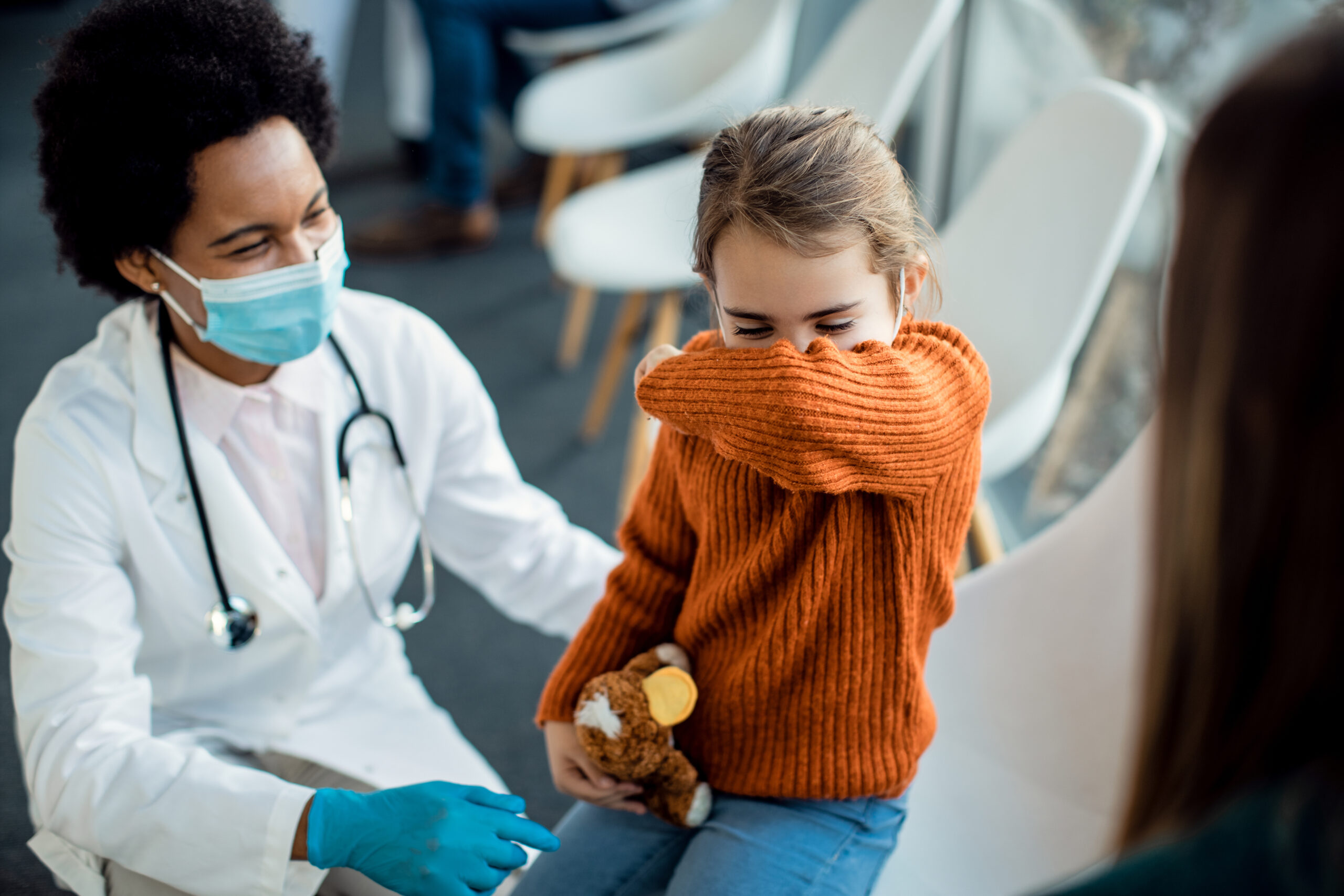
Measles spreads easily through airborne secretions from coughing or sneezing. Infection is also caused by direct contact with droplets from the mouth, nose, or throat. Symptoms develop 7-14 days later and start with profuse runny nose, cough, and red, swollen, watery eyes. Fever is often up to 104 degrees. The rash develops 3-5 days after cold symptoms begin and starts as flat red spots on the forehead, spreading downwards to the trunk and extremities. Some spots may become raised and join to from larger blotches. It is not usually itchy.

Measles itself is miserable, but the biggest concern is regarding complications. Serious complications include pneumonia in 1 out of 20 of those infected, encephalitis (brain inflammation and swelling) in 1 out of 1000 infected, and rarely, temporary or permanent blindness (more common in developing countries). One out of 5 unvaccinated people in the US with measles will be hospitalized, and 1-3 out of 1000 will die. Children under 5 and adults over 20 are most at risk of serious complications. Also at increased risk are pregnant women and those with immune system problems.

Measles vaccination is safe and effective and gives life-long immunity. Prior concern of a connection between the MMR (measles, mumps, and rubella) vaccine and possible autism was based on fake ‘research’ and has been disproven by multiple studies by the American Academy of Pediatrics, the World Health Organization, and the Institute of Medicine.
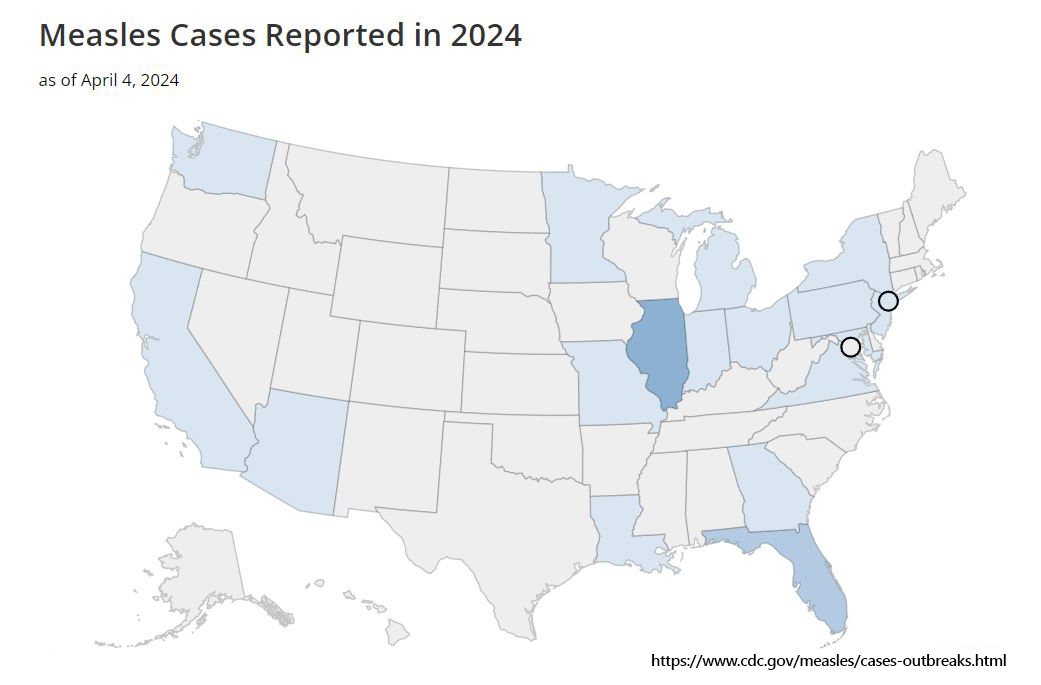
There has been a 99% decrease in measles cases since the vaccine came out in 1963. Prior to the vaccine, there were 3-4 million cases annually in the US and about 48,000 people hospitalized, most of which were children. Add approximately 500 deaths and 1,000 cases of encephalitis each year, and it is easy to see how miraculous vaccination has been.

The best way to protect ourselves, as well as the approximately 9 million people in the US who cannot get the vaccine due to an immune system problem, is to be vaccinated. Measles vaccine is recommended for kids aged 12 months and again between 4 and 6 years. It is also approved for adults who did not receive it as children. There are 2 types of measles vaccines- the MMR (as above) and the MMRV (also protects against varicella/chickenpox). Your child’s health care provider can provide additional information on measles vaccination.

Recursos en español

more about The contributor

Dr. Elise Herman

headshot of Dr. Elise Herman
Blog Posts
Profile

Dr. Herman is passionate about community health outreach, school programs, and child/family health and wellness. She has more than 31 years of experience as a pediatrician in Ellensburg, Washington, the last 3 with KVH Pediatrics. In 2022 Dr. Herman mostly retired from practice and continues to contribute blog posts and remain a visible advocate for kids in the community.

Preventing Respiratory Syncytial Virus Infections

Elise Herman , MD · December 7, 2023 ·

Contributor Dr. Elise Herman

As the winter weather approaches, so does the ‘sick season’, including illness due to RSV (Respiratory Syncytial Virus). RSV typically starts in fall, peaks in winter, and causes cold symptoms including runny nose, cough, and fever in children and adults. Most kids have had RSV by age 2. Although usually mild, RSV can cause more serious problems like wheezing, pneumonia, and trouble breathing. These problems are more likely in premature babies or in kids with heart disease, lung issues like asthma, and immune system problems. Between 58,000 and 80,000 kids under age 5 are hospitalized due to RSV each year. Adults aged 60 and above are also at higher risk of more severe RSV illness. Reinfections with RSV are common.

Like other colds viruses, RSV spreads by the droplets released by coughing or sneezing. You can also get it by direct contact (for example kissing) or touching a contaminated surface like a counter or cup and then touching your eyes, nose, or mouth.

There is no effective treatment for RSV and since it is a virus, antibiotics do not help. There are, however, two new good ways to prevent RSV—vaccines for adults and antibody treatment for young children. Vaccines stimulate the formation of antibodies to help fight infection (active immunity). Antibody treatments give antibodies directly to the body (passive immunity).

RSV vaccines are available for those 32-36 weeks pregnant during RSV season and if given at least 2 weeks before delivery, will help protect the baby from severe RSV. RSV vaccine is also recommended for those 60 years and older.

Antibody therapy (Nirsevimab) is approved for babies less than 8 months during RSV season (if mom did not get vaccine at least 2 weeks before delivery). Nirsevimab is also appropriate for some infants aged 8-19 months with severe health issues including extreme prematurity, immune system problems, cystic fibrosis, and heart disease. Nirsevimab is an injection and lasts 5 months, so helps protect for the entire RSV season. There is another antibody treatment called Palivizumab that has been used for years, but this is only approved for very high-risk children under age 2 and requires a monthly injection.

Side effects of Nirsevimab are uncommon and include temporary discomfort, redness or mild swelling at the injection site, and a rash. Nirsevimab can be given with routine childhood vaccines and may be given if a child has mild cold symptoms. Children who have had RSV should still receive the antibody therapy due to the risk of getting infected again later in the sick season.

There may be some difficulty having enough Nirsevimab for all kids who are eligible this year; contact your child’s provider about this. Supplies of RSV vaccine for those who are pregnant or 60 and over seem adequate; check with your provider or local pharmacy.

Remember the routine ways we can all help prevent the spread of RSV and other viruses, such as frequent hand-washing, avoiding touching one’s face, staying home if sick, and wearing a mask when appropriate. Also, cover sneezes and coughs, do not share cups or utensils, and keep countertops and other frequently touched surfaces clean. Don’t forget your child’s other important vaccines including Influenza and COVID vaccines as these are also important to help keep your child healthy this winter season.

more about The contributor

Dr. Elise Herman

headshot of Dr. Elise Herman
Blog Posts
Profile

Dr. Herman is passionate about community health outreach, school programs, and child/family health and wellness. She has more than 31 years of experience as a pediatrician in Ellensburg, Washington, the last 3 with KVH Pediatrics. In 2022 Dr. Herman mostly retired from practice and continues to contribute blog posts and remain a visible advocate for kids in the community.
Vegetarian and Vegan Diets in Teens

Elise Herman , MD · November 13, 2023 ·

Contributor Dr. Elise Herman

Although still a minority, more people are exploring plant-based diets, including teens. If your teen has expressed interest in this, you may wonder if being a vegetarian or vegan is nutritionally sound and how to handle this change at home. In some families, a diet different than the rest of the household can be a source of conflict, but it need not be so.

Understanding the reason behind a change in diet is important. Some choose vegetarianism or veganism for health reasons (in adults, these diets are associated with lower risk of some diseases including heart disease, high blood pressure, Type 2 diabetes, and some cancers). The American Academy of Nutrition and Dietetics along with the American Academy of Pediatrics have stated that vegan and vegetarian diets can be “nutritionally adequate during infancy, childhood and adolescence”, but emphasize the need to make sure kids are getting enough nutrition to maintain good health and grow properly. Other reasons for choosing to be vegetarian or vegan may have to do with the larger carbon footprint of animal-based foods and animal cruelty concerns. If your teen is doing this to lose weight, make sure there is not an underlying eating disorder, and touch base with your provider if this is a concern.

There are different types of plant-based diets. Lacto-ovo vegetarians eat no meat but do eat dairy and eggs. Lacto-vegetarians eat no meat or eggs but do consume dairy products. Pescatarians don’t eat meat but do eat fish (and usually dairy and eggs). Vegans eat no food products that come from animals including dairy, eggs and for some, honey.

Vegetarianism and veganism are not just about what is not eaten, but also about what is eaten to be fully healthy. It is important to be mindful of certain key nutrients that may be harder for vegetarians and vegans to get enough of:

  • Vitamin B12: important for brain and heart function; found in animal sources (meat, fish, dairy, eggs) and some plants (bananas, potatoes, etc.) but hard to get adequately from plants alone. Supplemental sources include fortified soy milk, cereals.
  • Calcium: creates strong bones and teeth; naturally found in dairy products. Vegans should eat lots of dark green veggies and look for foods fortified with calcium (juices, cereals, soy milk). Tofu is an excellent source of calcium.
  • Iron: essential for preventing anemia and keeping the immune system strong; found in meat and fish. Plant based sources include beans, peas, dark leafy veggies, and dried fruit. It is harder to absorb iron from plant-based foods, so one needs to eat more of these to avoid having low iron.
  • Protein: builds muscle and is found throughout the body. Protein is in meat, fish, eggs, and dairy. Vegans need to eat adequate plant-based protein sources like nuts, soy, whole grains, and legumes (lentils, peas, and peanuts).
  • Omega 3 fatty acids: very important for cognitive development and assuring adequate energy; most easily found in fish, but also canola oil, soy products and walnuts.

In general, those following a vegetarian or vegan diet should take a multivitamin that has B vitamins, calcium, vitamin D, zinc, and other nutrients. Look for foods that are fortified with vitamin B-12, calcium, omega-3 fatty acids, iron, and vitamin D. Discussing healthy nutrition with your teen is important regardless of their preferences, but especially if they are interested in following a vegetarian or vegan diet. And since plant-based foods are important for all of us, this could be an opportunity for the whole family to learn more about healthy eating.

more about The contributor

Dr. Elise Herman

headshot of Dr. Elise Herman
Blog Posts
Profile

Dr. Herman is passionate about community health outreach, school programs, and child/family health and wellness. She has more than 31 years of experience as a pediatrician in Ellensburg, Washington, the last 3 with KVH Pediatrics. In 2022 Dr. Herman mostly retired from practice and continues to contribute blog posts and remain a visible advocate for kids in the community.
The Benefits of Awe-Inspiring Experiences for Kids

Elise Herman , MD · September 7, 2023 ·

Contributor Dr. Elise Herman

We have all known the sensation of wonder and amazement when we experience something “awesome” like a spectacular rainbow. It turns out that ‘awe’- the overwhelming feeling of respect and amazement, often created by something vast and mysterious- is an important emotion with lots of benefits. Sources of awe might be nature, art, music, spirituality, or a demonstration of courage.

Experiencing awe has been well studied in kids and adults and has been shown to increase creativity and curiosity, which fuel learning. Awe increases positive feelings, decreases negative feelings, and helps with emotional regulation and the ability to handle stress. Awe inspiring moments give children stronger feelings of connection and cooperation, especially if shared with others. Family bonds are strengthened by family members witnessing something ‘awesome’ together.  Prosocial behavior (behavior that benefits others) has been shown to be more likely after experiencing awe.

In the face of something vast like a starry sky or beautiful ocean, we may feel more humble, understanding how small we really are in the world. This feeling of humility can put our own issues and struggles in perspective and encourage us to think beyond ourselves. This is particularly important now given social media use with its constant attention on us as individuals and how we appear to others.

When nature is the source of wonder, kids tend to feel more comfortable and confident in the outdoors. Nature-inspired awe also can decrease PTSD and overall stress. Feeling awe after doing something brave or challenging can increase a child’s resiliency and ‘grit’.  

The benefits of awe have a biologic basis.  Research shows that feelings of awe decrease cytokines, chemicals in the body which are related to inflammation, illness, and depression. Awe can also cause the release of oxytocin, a hormone associated with love and empathy.

There are relatively simple ways to encourage more awe, terrific for both our kids and ourselves:

  • Slow down and take time to notice the little things such as birds in flight, changing leaves, or a butterfly
  • Have more unstructured time, less rushed time and put away the phones and devices
  • Expose your child to art (such as galleries and museums), dance, and music; there are many local opportunities for this
  • Look for science activities that inspire wonder, such as going to a planetarium or a science museum
  • Get out in nature more, taking the time to comment on and express curiosity about what you see and hear
  • Notice and discuss courageous and kind behavior
  • Read books about brave and pioneering individuals
  • Create experiences at unusual times such as an early walk at sunrise or stargazing late at night (yes, after bedtime!); these can be very impactful
  • Consider doing journaling or artwork about awe-inspiring experiences
  • Although in-person is best, watching nature documentaries can also create feelings of awe
  • Express awe yourself- get excited about wondrous things and share those feelings with your child

more about The contributor

Dr. Elise Herman

headshot of Dr. Elise Herman
Blog Posts
Profile

Dr. Herman is passionate about community health outreach, school programs, and child/family health and wellness. She has more than 31 years of experience as a pediatrician in Ellensburg, Washington, the last 3 with KVH Pediatrics. In 2022 Dr. Herman mostly retired from practice and continues to contribute blog posts and remain a visible advocate for kids in the community.

Pedestrian – Vehicle Accidents

Elise Herman , MD · August 8, 2023 ·

Contributor Dr. Elise Herman

Walking is a great way to exercise for adults and kids alike, but there is a concerning 11% increase in child and adolescent pedestrian fatalities in the US in the last 10 years, resulting in about 600 deaths per year. In response to this, the American Academy of Pediatrics (AAP) released a new policy statement in June 2023. It discusses not only what we can all do to keep our kids safe while walking near cars but addresses how communities can change roads and driving to help prevent pedestrian injuries.

There may be multiple reasons for this spike in pedestrian accidents involving children and youth. Both drivers and walkers tend to be more distracted than in the past, mostly by cell phones. Wearing earbuds makes walkers less aware of their environment. More kids are also walking to school (a good thing) but need to do so safely.

The risk of being hit by a car or other vehicle is greatest in rural areas, according to the AAP, and boys are more likely than girls to be victims. Vehicle speed is the most important factor. In general, the faster the vehicle is going, the greater the risk of a collision with a pedestrian and the more severe the injury. For this reason, it is recommended by the American Academy of Pediatrics that communities change policies and planning regarding roads. Speed bumps, roundabouts, and lower speed limits all work well to slow vehicles down. Photo speed limit enforcement, particularly in school zones, is very effective. Simply extending curbs is an easy way to help protect pedestrians.

There are steps we can all take to help kids be safe when around cars, both in advising our children and being safer drivers ourselves.

  • Pedestrians should be on a path or sidewalk if at all possible; if walking on the shoulder, walk facing oncoming traffic
  • Hold your younger child’s hand when crossing the street, cross at designated intersections or crosswalks, and always observe traffic safety laws. You are a role model– no jaywalking!
  • Teach your child to cross the street: look left, right, and left again, and keep looking around while crossing
  • Kids should not play in driveways or areas next to driveways
  • Children 10 and under should have adult supervision when walking near traffic
  • Pedestrians should not wear earbuds or look at smartphones
  • Increased visibility is important; brightly colored clothing, hats, and backpacks help anytime, and a flashlight or headlamp is crucial at night
  • Drivers should not be distracted by smartphones or interacting with the touchscreen on the dashboard
  • It is the law to allow walkers to cross a crosswalk completely before beginning to drive
  • Use the rear-view camera in addition to car mirrors when backing up and keep the camera clean and ice-free

Resources

  • Back to School Tips / healthychildren.org
  • Practice safe habits while biking, walking to school By Steve Schering (Staff Writer, AAP News)
  • Child Pedestrian Safety: Helpful Signals for Parents and Health Care Providers by Beth Dworetzky, MS (AAP Journals Blog)

more about The contributor

Dr. Elise Herman

headshot of Dr. Elise Herman
Blog Posts
Profile

Dr. Herman is passionate about community health outreach, school programs, and child/family health and wellness. She has more than 31 years of experience as a pediatrician in Ellensburg, Washington, the last 3 with KVH Pediatrics. In 2022 Dr. Herman mostly retired from practice and continues to contribute blog posts and remain a visible advocate for kids in the community.

Wildfire Smoke Exposure and Children

Elise Herman , MD · July 6, 2023 ·

Contributor Dr. Elise Herman

As climate change causes a longer and more severe wildfire season, exposure to wildfire smoke in children is an increasing problem. Wildfire smoke is felt to be more dangerous than typical air pollution and kids (especially those under 5 years) are more vulnerable for multiple reasons. Children’s smaller airways are more adversely affected by swelling and inflammation from smoke. Kids also breathe more rapidly than adults, thereby taking in more of the dangerous particles. Children who have underlying lung problems including asthma are at increased risk and are more likely to need medical care.

Children typically have coughing, sneezing, and increased congestion with wildfire smoke exposure. They may also have burning or discomfort of their eyes, nose, and throat. If there is more serious exposure, a child may become lethargic or have shortness of breath. Signs of trouble breathing in kids include breathing rapidly, the ribs sticking out with each breath (“retractions”), and the abdomen moving a lot with breathing (“belly breathing”). Babies may also have head bobbing and grunting as signs of respiratory distress.

Being aware of the air quality can guide your actions. Airnow.gov is a good site to check; if the AQI (air quality index) is over 150, avoid any outdoor activity if possible. Kids 2 years and over can wear a mask to somewhat reduce smoke exposure. NIOSH N95 or KN95 masks are 80-95% effective at reducing smoke exposure (depending on the fit of the mask) but do not come in sizes for younger kids. Surgical masks are only 20% effective and therefore are not ideal. Cloth masks really do not help filter smoke.

Here are steps child you can take to protect your child if there is wildfire smoke in your area :

  • Ideally, temporarily relocate to an area free of smoke
  • If the AQI is over 150, stay inside and close windows and doors
  • If possible, use a HEPA air filter or MERV13 filter (this is a rating for a filter’s effectiveness) on your air-conditioning unit; the Environmental Protection Agency (EPA) also has information on creating a DIY air cleaner that is effective
  • Set your air conditioning to ‘recirculate’
  • If you do not have air-conditioning and the weather is very hot, consider going to a cooling center (a place with air conditioning to provide temporary respite from the heat)
  • Avoid lighting candles, vacuuming, or using a gas stove which can worsen indoor air quality
  • Rinse your child’s eyes with water if they are stinging or itchy
  • If your child has a lung condition like asthma, make sure you have enough medication, especially a rescue inhaler
  • Call your healthcare provider if your child feels short of breath, or complains of dizziness or chest pain
  • Seek emergency care if you see signs of shortness of breath as listed above or if your child seems less alert or very lethargic

Resources

  • Wildfire Smoke and Children / CDC.gov/air/wildfire-smoke/children.htmI
  • DIY Air Cleaner / https://www.epa.gov/system/files/documents/2021-09/diy-air-purifier-infographic_final.pdf

more about The contributor

Dr. Elise Herman

headshot of Dr. Elise Herman
Blog Posts
Profile

Dr. Herman is passionate about community health outreach, school programs, and child/family health and wellness. She has more than 31 years of experience as a pediatrician in Ellensburg, Washington, the last 3 with KVH Pediatrics. In 2022 Dr. Herman mostly retired from practice and continues to contribute blog posts and remain a visible advocate for kids in the community.

Vehicular Heat Stroke in Children

Elise Herman , MD · June 6, 2023 ·

Contributor Dr. Elise Herman

As summer approaches and the outdoor temperature increases, a danger looms for children- vehicular heatstroke (VHS), which is heat injury due to being in a hot car or other vehicle. These deaths are so preventable, and as a parent you may wonder how such a thing could happen, but vehicular heatstroke claims an average of 38 children’s lives a year in the US, with almost a thousand deaths since 1998.

Heat stroke is the most severe heat-related illness and occurs when the core body temperature is over 105.8 degrees Fahrenheit with signs of nervous system injury including confusion, seizures, and coma. Dehydration along with heat exposure can cause deadly heat stroke. Children are more at risk because they sweat less than adults and can overheat more quickly.

Vehicular heatstroke most often occurs when an adult ‘forgets’ a child in a car, often when the adult is on the way to work, intending to stop at childcare first. A change in routine such as a different parent doing the drop-off can also increase the risk. Parental stress or sleep deprivation can be contributing factors. Vehicular heat stroke can also occur if kids are playing in a car and accidentally lock themselves in.

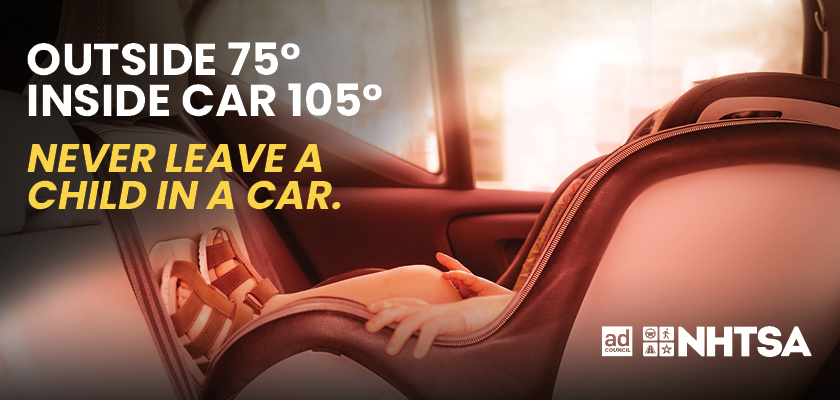
The outside temperature does not need to be extremely high for vehicles to become dangerously hot. VHS has happened with outside temperatures as low as 57 degrees. A car can heat up 20 degrees in 10 minutes on a sunny day, and 72 degrees outside can become 117 degrees in a vehicle within 1 hour. Cracking the window or parking in the shade make little difference in term of the car heating up. Climate change also means more hot days and more extreme heat.

There are steps we can take to minimize the risk of this tragedy:

  • Never leave a child in a vehicle unattended even briefly
  • Make it a habit to open the back door of the car when you park, just to check the backseat.
  • Put some important item you need for your day- purse, iPad, employee badge, etc. in the back seat near your child.
  • Keep a stuffed animal or something similarly eye-catching in the car seat when empty and move it to the front passenger seat when the car seat is in use as a reminder.
  • Remember the phrase “Look before you lock”.
  • Instruct your childcare provider to contact a parent if a child is not dropped off as scheduled.
  • Keep car keys out of reach of kids, and teach them to never play inside cars, trunks, etc.
  • Teach your child to honk the horn if they are trapped inside a car.
  • If a child is missing, check all vehicles and trunks immediately.
  • If you ever see a child alone in a locked vehicle, call 911.

Resources

  • Prevent Child Deaths in Hot Cars / HealthyChildren.org
  • Extreme Heat: Keeping Kids Safe When Temperatures Soar / HealthyChildren.org
  • Kids in Hot Cars – Free Online Course / National Safety Council
  • Prevent Hot Car Deaths, Check the Back Seat / nhtsa.gov
  • Car Seat Safety > Heatstroke Prevention / cpsboard.org

more about The contributor

Dr. Elise Herman

headshot of Dr. Elise Herman
Blog Posts
Profile

Dr. Herman is passionate about community health outreach, school programs, and child/family health and wellness. She has more than 31 years of experience as a pediatrician in Ellensburg, Washington, the last 3 with KVH Pediatrics. In 2022 Dr. Herman mostly retired from practice and continues to contribute blog posts and remain a visible advocate for kids in the community.

Bringing Music into Your Child’s Life

Elise Herman , MD · April 4, 2023 ·

Contributor Dr. Elise Herman

Children seem to love music right from the start, which makes sense since babies in the womb can hear sound beginning around the fourth to the fifth month of pregnancy. Research has shown the many positives of music for kids, so making music part of your child’s life will reap benefits over their lifetime. Music involvement includes listening to music, playing an instrument, singing, and dancing.

Music exposure for young children increases brain development, according to research done at the University of California at Santa Cruz in 2016. This was particularly noted in the areas of language and reading skills. Other research has shown that participation in music classes can increase IQ and standardized test scores along with achievement in English and mathematics. Involvement with music improves patience and listening skills and, therefore, school readiness for young children. Experiencing music and dance of different cultures expands a child’s world view and appreciation of other people.

Music has been shown to decrease stress hormones and anxiety, so much so that it is used in hospitals before surgeries and in dental offices. It increases positive emotions and encourages self-regulation and a sense of calm– obviously beneficial for children of all ages. Playing an instrument and dancing help develop motor skills and encourage self-expression and creativity. Being part of a music or dance class teaches kids how to participate in a group and work with others; kids learn valuable social skills in these settings.

It is never too early to bring music into your child’s life. Sing to your unborn child and continue this from infancy onward. Talent doesn’t matter, so don’t avoid this if you are not a gifted singer (few of us are). Sing lullabies to your infant, and attach certain songs to activates for your toddler, such as songs for cleaning up, nap time, and bedtime. Nursery rhymes and clapping along are delightful to young children. Preschoolers love silly songs and lots of repetition (think “The Wheels on the Bus”). Quiet background music (at times) is a great way to expose your child to music of different types.

Keep simple musical instruments in your child’s play area, like a tambourine and shakers. You can also make your own ‘instruments’, such as using a wooden spoon to beat pots and pans and putting beans in a childproof small plastic container for a shaker.

Older kids enjoy music classes in school and benefit from music and dance lessons outside of school as well. Watching dance videos with your child and trying to learn dances together is a fun musical activity. Going to concerts and dance performances connects kids with others and encourages attention and listening skills.

So, start early by filling your child’s life with music and dance of all types. Have fun, and let it awaken the child within you, too. Look online to find lots of local opportunities for music and dance, both for classes and live events. We are also fortunate to have the outstanding music department at Central Washington University, which offers many concerts which are family-friendly.

more about The contributor

Dr. Elise Herman

headshot of Dr. Elise Herman
Blog Posts
Profile

Dr. Herman is passionate about community health outreach, school programs, and child/family health and wellness. She has more than 31 years of experience as a pediatrician in Ellensburg, Washington, the last 3 with KVH Pediatrics. In 2022 Dr. Herman mostly retired from practice and continues to contribute blog posts and remain a visible advocate for kids in the community.

Gun Safety and Your Child

Elise Herman , MD · February 6, 2023 ·

Contributor Dr. Elise Herman

Parents want to keep their children safe, and an increasingly important part of this relates to gun safety. The leading cause of death in the US for kids (those 18 years old and under) is now firearm-related injuries. There were 301 unintentional shootings by kids in 2022, which caused 133 deaths and 180 injuries. Regardless of opinions on gun control, we all want to prevent these tragedies, making proper storage of weapons and ammunition crucial. Whether you have guns in your home or not, there are important steps you can take to keep kids safe.

Home safety

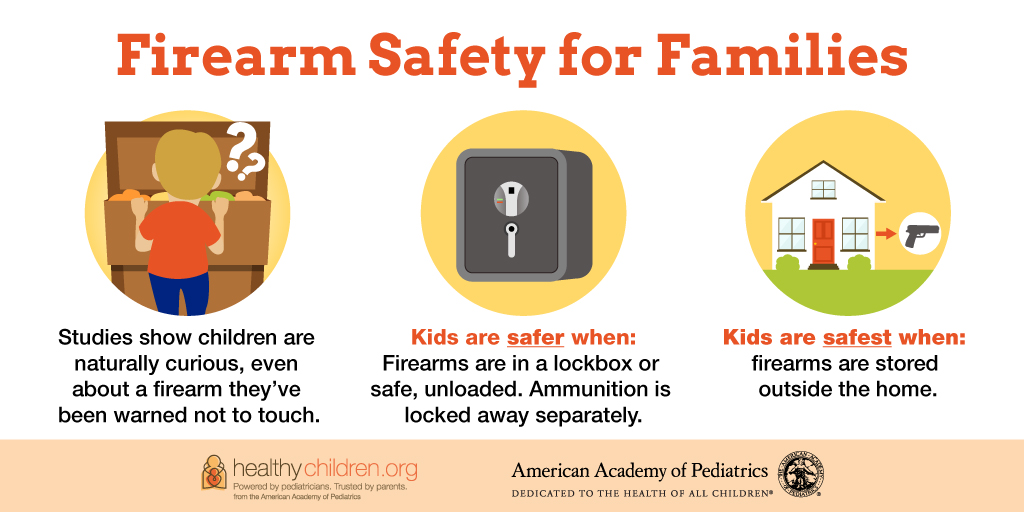
If you decide to keep a firearm in your home, make sure all guns are locked and unloaded, with ammunition stored separately and securely. Store weapons in a gun cabinet, vault, safe, or storage case. Keys and combinations for these need to be hidden. Fingerprint lock technology is another way to prevent children from gaining access to the safe. Consider a trigger lock as well to prevent the gun from firing. If firearms are in a vehicle, they should also be in a locked safe with ammunition stored and secured separately.

Studies have shown that contrary to what parents may believe, children generally do know where guns are in the home, can get access to a loaded weapon in minutes, and many have handled them without adult supervision.

Safety out of the home

Over one third of accidental shootings of children happen in other people’s homes. It is vital that you discuss gun safety with the parents of your child’s friends when arranging get togethers. Just as you would go over other safety information such as food allergies, adult supervision, or bike helmet use if appropriate, you need to ask about guns- in their home and vehicles. Without any judgement, ask if the other family has guns and if so, how the guns and ammunition are stored. You could also volunteer how you secure weapons at your house. If guns and ammunition are not stored appropriately by the other parents, you can suggest that they be secured but if the situation does not seem safe, have the playdate at your home instead. Think of how you would handle the situation if the other family had a pool without safety measures in place. Have similar discussions with family members or caregivers where your child spends time. These conversations may feel awkward at first, but it is your child’s safety on the line.

Talking to your children

Remind kids that if they see a gun that is not locked up, they should refrain from touching it, leave the area and tell an adult right away. Children should be taught to always assume a gun is loaded. Gun safety and hunter responsibility classes are recommended but are not a guarantee that a child will be safe around unsecured guns.

Mental health concerns

If someone in the home has depression or suicidal thoughts, firearms should be removed from the home while there is an active concern. Guns may be stored temporarily with local law enforcement (check on-line) or with a friend or family member living outside the household.

Resources

  • Be SMART (pdf)
  • American Academy of Pediatrics / SAFETY & PREVENTION: Guns in the Home: Keeping Kids Safe
  • Safe Gun Storage Sites / hiprc.org/firearm/firearm-storage-wa

more about The contributor

Dr. Elise Herman

headshot of Dr. Elise Herman
Blog Posts
Profile

Dr. Herman is passionate about community health outreach, school programs, and child/family health and wellness. She has more than 31 years of experience as a pediatrician in Ellensburg, Washington, the last 3 with KVH Pediatrics. In 2022 Dr. Herman mostly retired from practice and continues to contribute blog posts and remain a visible advocate for kids in the community.

Baby, It’s Cold Outside- But Get Out There Anyway!

Elise Herman , MD · January 3, 2023 ·

Contributor Dr. Elise Herman

We know how important it is for our kids to get outside regularly; all that fresh air and running around has numerous benefits. When it is cold, parents sometimes hesitate to let their kids out for fear that colder weather will make them sick. But it is actually the exposure to sick people and the viruses they carry that causes problems this time of year.

Winter play boosts physical and emotional wellness, builds muscle mass, and improves sleep. It means getting away from electronics and the temptation for unnecessary snacking. It also means avoiding crowded indoor spaces which can make it easy for viruses to spread. Vitamin D absorption is another bonus, especially if it is sunny. Exploring the outdoors in winter gives kids important exposure to nature which can lower stress. Getting outside when it is cold, blustery, snowing, etc. builds grit and toughness- in kids and parents!     

Remember your childhood and what you loved to do in winter- maybe building a snow fort or creating a silly snowman. Sledding, cross-country skiing, and just going for snowy walks are terrific activities to do with kids. A scavenger hunt in winter helps kids slow down and pay attention. Can they find a bird’s nest in a tree or animal tracks in the snow? There are lots of suggestions online for outdoor play, but often children will just make their own fun without us adults “scripting” their activity. 

To help keep kids warm out there, remember to dress them in multiple thin layers. Boots and gloves should be insulated and ideally waterproof. A hat and neck gaiter (safer than scarves, especially on younger children) really help on cold days. Infants and babies should wear one more layer than an adult would as a rule of thumb. If clothing gets wet, kids should come in quickly and change to avoid hypothermia. 

There are some recommendations in terms of when it is too cold for kids to be outside safely. Pay attention to both the temperature and even more importantly the wind chill (what the temperature ‘feels like’). If the wind chill is 32 degrees and above, outdoor play is fine. If it is 13-31 degrees, just remember to take breaks to warm up perhaps every 30-60 minutes. Below 13 degrees windchill, outdoor play may not be safe for most kids though older kids may be OK for a limited time if they are dressed appropriately. Infants and babies tend to get cold faster since they are not playing actively and may also not complain of being too cold. Watch them carefully for signs of hypothermia- shivering, red cold skin, and decreased energy level. 

Admittedly, it is easier to get outside on a beautiful spring day, but outdoor exercise in these colder months is equally important. Try to get your kids outside regularly this winter and lead by example. Your whole family will benefit by embracing winter in all its beauty and opportunities.

The local Kittitas Environmental Education Network puts out a seasonal kids’ newsletter and has some great info and ideas for wintertime fun with kids of all ages:https://www.ycic.org/_files/ugd/fbe211_0fb63dcb09744990994f0d205f32cb52.pdf

more about The contributor

Dr. Elise Herman

headshot of Dr. Elise Herman
Blog Posts
Profile

Dr. Herman is passionate about community health outreach, school programs, and child/family health and wellness. She has more than 31 years of experience as a pediatrician in Ellensburg, Washington, the last 3 with KVH Pediatrics. In 2022 Dr. Herman mostly retired from practice and continues to contribute blog posts and remain a visible advocate for kids in the community.

  • « Go to Previous Page
  • Page 1
  • Page 2
  • Page 3
  • Page 4
  • Page 5
  • Go to Next Page »

Primary Sidebar

    Footer Top 2

    603 S. Chestnut Street - Ellensburg, WA 98926
    509.962.9841

    • Facebook
    • Instagram
    • LinkedIn
    • YouTube

    Footer Bottom 1

    Download the MyPatient Portal App
    Apple Store Google Play Store

    Footer Bottom 2

    • About KVH
    • KVH Legal Information
    • Price Transparency
    • Careers
    • Board of Commissioners
    • Contact Us
    • The Foundation at KVH

    Footer Bottom 3

    • Our Locations
    • Hospital Services
    • Clinics & Specialty Services
    • Visiting Information
    • Patient Policies
    • Events & Education
    • Press Releases

    Footer Bottom 4

    Google Translate