• Skip to primary navigation
  • Skip to main content
  • Skip to primary sidebar
  • Contact Us
  • Pay My Bill
  • Patient Portal
KV Healthcare

KV Healthcare

Your Home for Health

  • Find a Provider
  • Clinics & Specialties
        • Primary Clinics

        • KVH Family Medicine – Cle Elum
        • KVH Family Medicine – Ellensburg
        • KVH Home-based Primary Care
        • KVH Internal & Adult Medicine
        • KVH Pediatrics
        • KVH Women’s Health
        • KVH Rapid Access
        • Specialty Services

        • Anticoagulation Clinic
        • Addiction Medicine
        • Specialty Clinics

        • ENT & Allergy
        • Cardiology
        • Dermatology
        • General Surgery
        • Home Health
        • Hospice
        • Neurology
        • Podiatry
        • Orthopedics
        • Urgent Care
        • Urology
        • Vascular Surgery
        • Workplace Health
        • Wound Care
        • Therapy Services

        • Physical Therapy
        • Speech Therapy
        • Occupational Therapy
        • Cle Elum Therapy Services
  • Hospital Services
        • Services

        • Cardiopulmonary
        • Emergency Department
        • Imaging
        • Laboratory
        • Nutrition
        • Pharmacy
        • Surgical
        • Family Birthing Place

        • About Family Birthing Place
        • Class/Event Calendar
        • What to Expect
        • Birth & Family Education
        • Lactation Services
        • 4th Trimester Resource Center
        • Pregnancy & Infant Loss
  • Patients & Visitors
        • Patient Tools

        • Request Medical Records
        • Checking In
        • Language Services
        • Quality of Care
        • Patient Portal
        • Patient Safety & Security
        • Patient Policies
        • Insurance & Billing

        • Accepted Insurance
        • Price Transparency & Billing Services
        • Washington Health Plan Finder
        • Financial Assistance
        • No Surprise Act - Balanced Billing
        • Insurance vs. Self Pay
        • Bills from Other Providers
        • Pay My Bill
        • Visitors

        • Visiting Information
        • Mother’s Room
        • Café
  • About KVH
        • About KVH

        • About KVH
        • Mission & Vision
        • Board of Commissioners
        • Administration
        • Quality of Care
        • DAISY Award Program
        •  

        • News & Blog
        • Events & Education
        • Contact Us
        • Locations
        • Work With Us / Careers
        • Foundation

        • About the Foundation
        • The Foundation Board of Directors
        • Programs to Support
        • Ways to Give
        • Donate Now
        • Foundation Events
  • Donate Now

HealthNews

Dean Tonseth

HealthNews · November 4, 2013 ·

Dean Tonseth

When you develop a life-threatening medical condition that you don’t suspect you have, it pays to have a diligent physician.

Dean Tonseth knows a little providence doesn’t hurt either.

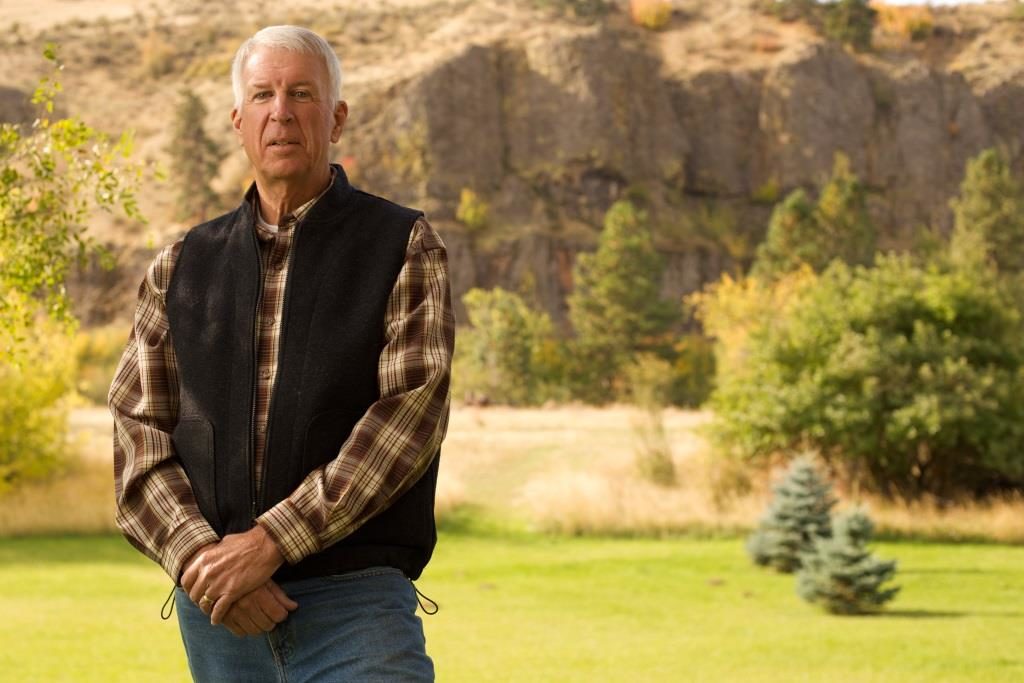
At 67, Tonseth is tall and fit-looking with an active lifestyle, formidable faith and an irrepressibly optimistic outlook on life. Raised on the west side, he was fresh out of the Army and just back from Vietnam when he arrived in Ellensburg in August 1969 to attend Central Washington University. That month, he met an attractive coed named Danielle. The timing was lousy, he warned her. He was going through a divorce – and trying to get his head together.

“Before I went to Vietnam I married my high school sweetheart,” he says. “I came home and got dumped.” In retrospect, “it was the best thing that ever happened to me.”

He and Danielle dated off and on. Cupid persevered.

One day, out with friends in Ellensburg, Dean popped the question. “I said, ‘I need you to keep me in line’,” he says. “She was everything I wanted – a good, moral, beautiful young lady.”

The Tonseths married in June 1972. By then Danielle had landed a teaching job in Kittitas, and Dean was a program coordinator working with developmentally disabled adults and children. Along the way, he found his passion and returned to college to get a degree in special education. He spent three years working in the Cle Elum Roslyn School District, then six years as a stay-at-home dad raising their two young sons.

Nearly forty years later, Danielle is retired after 30 years in teaching; Dean, retired as administrator of a state-run residential program in Yakima after a career with the Department of Developmental Disabilities.

Last July, Dean went for his annual physical with Dr. Jamin Feng of KVH Internal Medicine. Lab results seemed fine, except for what appeared to be a low platelet count. A second test got the same results. Puzzled, Feng ordered an ultrasound and a CT scan.

“I had no pain, no symptoms but the test results showed a suspicious spot, probably no bigger than my thumbnail on my pancreas,” says Dean, who was referred to Virginia Mason Medical Center where more tests confirmed the tumor. “You have pancreatic cancer,” his oncologist said. “My goal for you is a permanent cure.”

It turns out the blood test results weren’t related to any medical issue, and his cancer diagnosis was “a fluke,” according to Dean. Feng later told them there was no rational explanation to why the cancer was discovered so early, saying that it was “the providence of God” that led to the diagnosis.

“He is just an amazing man. Basically, he saved my life,” Dean says. Feng’s caring went beyond the diagnosis. One evening, Dean’s phone rang. It was Feng, saying he was going to Canada for a visit but that Dean should call “at any time” if he had questions. “And he said, ‘I will pray for you.'”

For Dean, that means a lot.

Now undergoing chemotherapy to reduce the tumor in preparation for surgery to remove it, Dean told his oncologist, “I have a lot of people praying for me.”

The oncologist’s reply? “‘Well, that makes my job easier,'” Dean recalls – and beams.

Skip Little

HealthNews · November 21, 2012 ·

Skip Little

When Skip and Suzanne Little moved their family from Florida to Ellensburg, they came looking for a small college town that would be a good place to raise their six children.

But when Skip faced a health crisis, the couple – both psychology instructors at Central Washington University – found something they hadn’t counted on: highly skilled in-home health care that helped them through a daunting time.

After repeated bouts of diverticulitis, Skip had robotic laparoscopic surgery last spring to remove part of his colon. The relatively new procedure is minimally invasive and typically involves less down time than conventional surgery. The procedure isn’t offered locally, so Skip turned to a Seattle hospital. Days later he was home; a few days after that, back in the classroom. 

Then came a check up in Seattle. An MRI showed that the area where his colon had been reconnected was leaking and infected. Skip was rushed to emergency surgery where doctors cleaned up the infection and placed tubes in his abdomen to continue draining it. Because his colon couldn’t be reconnected at that point due to the infection, doctors brought the end of it up to a stoma, an opening in his abdomen where a colostomy bag is attached to collect his waste. 

“I was told I would have been dead within an hour without the surgery,” he says. “If I’d gone back to Ellensburg that day I wouldn’t have made it. So we had an angel on our shoulder.”

Two weeks later, Skip went home, forty pounds lighter, drainage tubes still in his body, and with his incision unhealed because of the infection. He wore a colostomy bag and, too weak to climb the stairs to his bedroom, slept on a couch in the family room. 

Enter Kathy Honeysett, a nurse with KVH Home Health. Operated by Kittitas Valley Healthcare, the service features a team of nurses and therapists who provide medical care and rehabilitation services to homebound patients. The program includes 24-hour-a-day on-call nursing services.

“She’s the whole package – tremendous knowledge and skills, tremendous empathy,” Skip says, recalling how Honeysett taught Suzanne to change his dressings, drain the tubes and empty his bag. She also served up steady doses of encouragement that things would improve.

“Without that, I think I would have withered,” Skip says. “There were just too many things going on. It was the perfect storm.”

Over time, what began as daily visits from KVH Home Health became less frequent. But an unscheduled visit one weekend last summer proved critical. Skip was under the weather. He called Home Health. Nurse Sally Henning responded and sent him to the emergency room. Diagnosed with pneumonia and a pulmonary embolism (blood clot), a potentially life-threatening situation, he was hospitalized and placed on blood thinners.

Now teaching part-time, Skip hopes to have surgery to reconnect his colon this coming spring. First though, his pulmonary embolism has to clear up. Meanwhile, he voices appreciation for Home Health and Hospice at every opportunity. “It’s wonderful thing to have,” he says. “It’s one of those things that you have that you don’t know how wonderful it is until you need it. To me they’re angels.”

Steve Talerico

HealthNews · November 1, 2012 ·

Steve Talerico

Steve Talerico keeps secrets well. Chief among them: his recipe for lasagna and how he turns out melt-in-your-mouth torcetti that wins constant raves. “There are secrets I will never tell. I’ll take them to the grave,” Talerico vows. His voice solemn, the twinkle in his eyes is the only hint that while you’re not going to get his recipes any time soon, he’s pleased you asked.

Not so secret is Talerico’s role as bellman and concierge at Suncadia. A familiar fixture at the Resort, he knows the importance of delivering exceptional service.

After a long day’s work last May, Steve cut his right thumb on a broken glass while doing dishes at home. He knew he needed medical attention. “I did the right things – put pressure and ice on it – but after 45 minutes it hadn’t stopped bleeding,” he says. “I probably could have gotten it to stop and wrapped it. But being that I do the work I do I didn’t want to risk having it break open while I was working.”

It was after hours at KVH Family Practice – Cle Elum. Fortunately, KVH Urgent Care – Cle Elum was there to help. Six stitches and a long sigh of relief later, Talerico was headed back to his home in Roslyn, next door to the house where his mother was born and raised. Thanks to the quick care he received, he felt ready for his next day’s work.

For those who live, work and play in the Upper County, says Talerico, KVH Urgent Care – Cle Elum is “more than just a convenience. It’s a comfort.”

Brooks Murrell

HealthNews · September 1, 2012 ·

Brooks Murrell

It happens in a heartbeat.

One minute, Brooks Murrell, a registration clerk at KVH Hospital’s front desk, is taking information from a patient. Then, Murrell flashes a smile. The patient often smiles back.

Call it Murrell magic.

When he graduated from Ellensburg High in 2004, Murrell wasn’t aiming for a job at the hospital. A native of New Zealand who came to Ellensburg when he was 17, he headed to Alaska to work in the fishing industry.

Cupid lay in wait. A native Alaskan girl working in the kitchen of the cannery where he ran tests on fish caught his eye. Before long, she’d also hooked his heart.”I saw her three times a day. You know the way to a man’s heart is through his stomach,” he jokes. “She had such awesome energy, was happy and fun all the time.”

Not that the girl, Tiffany Stepanoff, leaped at the chance for love. Cannery work is seasonal. People come and go. So do love affairs. “I waited a year before we started dating,” she says.

Like the others, Murrell left. But the next year he was back – and still smitten. “He’d come and visit me after a 15 or 18 hour shift, not go home and sleep like normal people,” she says.

They became a couple. Stepanoff was in college when word came that Murrell’s stepfather was dying. When Murrell headed back to Ellensburg, Stepanoff came with him. They married in 2010.

Four and a half years ago, Murrell landed the job at KVH. Call it a prescription for success.

By nature personable and caring, he knows the importance of accuracy and efficiency in his work. He also knows that, as the first point of contact for many calling or coming in to the hospital, his courtesy, demeanor and professionalism are key.

“Every person who comes through the door is sick, hurt or injured – or visiting someone who is,” says Murrell, whose swing shift schedule means he’s frequently helping patients headed for the emergency room. “The job taught me to be calm,” he says.

Occasionally, people complain about the wait. “It’s actually better than in most hospitals,” he says. “If people complain, the first thing I do is apologize try to explain that it’s not a question of who comes in first, it’s a question of severity. If an ambulance has just arrived, it might make the wait a little longer. If it’s taking a long time I might ask a nurse to come and speak with the person waiting.

“Most people are fine when they understand. I think the worst thing is not knowing why you have to wait.”

Eight months ago, Stepanoff, now attending college on-line, joined KVH as a health information technician. KVH has “a great atmosphere and great teamwork,” she says.

She says her husband is a perfect fit for that team. “He’s social, confident and professional, good at handling uneasy situations, good at finding a way to brighten someone’s day,” she says. “His job is customer service based. Those those qualities make him very good at it.”

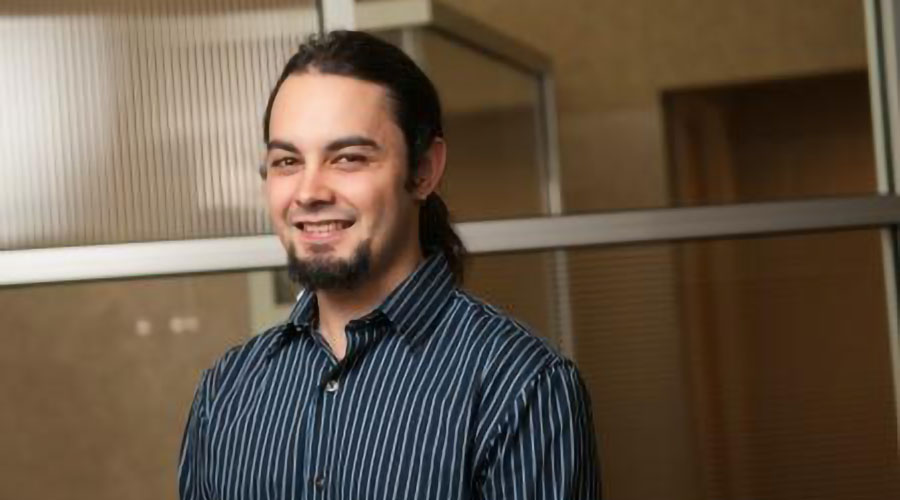
UPDATE: While working full time in Registration, Murrell also volunteered in Pharmacy, studying the discipline via a new online course. Just three months in to what for most is a 6-12 month program, Murrell passed the National Pharmacy Technician Exam. Today, while Murrell’s familiar smile can still be seen in the hospital hallways, he holds a very different position: Pharmacy Technician.

A prescription for success, indeed.

Kara Henderson

HealthNews · July 1, 2012 ·

Kara Henderson

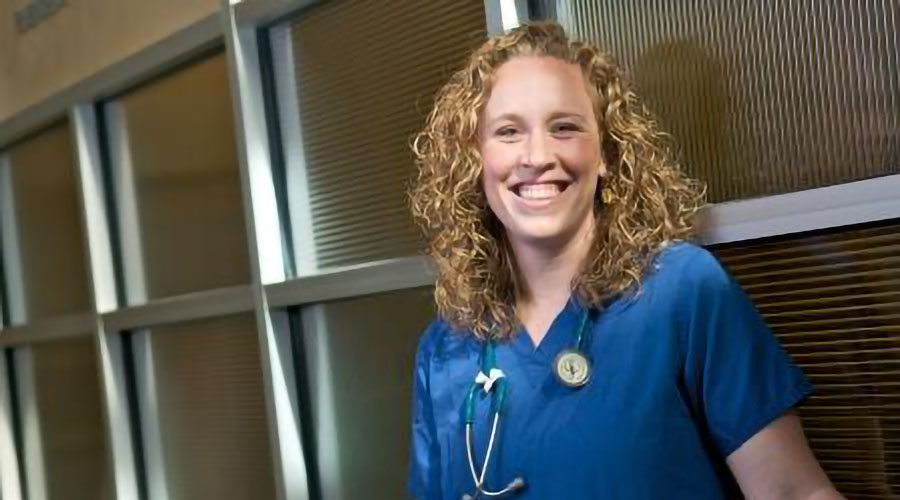
Kara Henderson was born and raised in Ellensburg but when she graduated from Ellensburg High in 2001, she was sure of two things: She wanted to get out of Ellensburg – and she wanted to become a nurse.

She was right about one of them.

“I was 17 when I graduated and so excited about leaving,” she says, laughing at the memory. As it turns out, Ellensburg owned more of her heart than she realized. Within months of enrolling at Shoreline Community College, “I was like, oh no, what was I thinking?’“ she says.

Nursing, on the other hand, proved the perfect fit she’d envisioned.

“I wanted to be a nurse since I was a freshman in high school,” says Henderson. “I’m social, a talker. I love people and I love making them feel better. I knew if I became a nurse I could work anywhere – and I’ve never met a nurse who says they regret being a nurse.”

There were stints in other communities working with orthopedic patients and as an emergency room nurse. “I loved the work, the nursing side,” she says of her time in ER. “But the schedule – nights, weekends, holidays – wasn’t for me.” Three years ago, Henderson joined the staff of KVH Hospital’s surgical outpatient center.

Married and the mother of two children, Henderson says her three-day-a-week schedule helps her juggle family, marriage and career. From admitting patients for surgery to caring for them in recovery; from administering IV antibiotics to preparing patients for colonoscopies – it’s a role she relishes in a hospital she is proud of.“Since I’m local, I know many of my patients. I get to care for people I know and care about, people I see in the store or at coffee,” she says, her enthusiasm unmistakable and her upbeat attitude infectious. “I love that I work with great surgeons and a great staff and I get to do something different every day. I love Ellensburg and am so happy to be in this community.”

Rhonda Holden

HealthNews · January 8, 2012 ·

Headshot of Rhonda Holden

When she moved with her family to Roslyn in 1995, Rhonda Holden never counted on falling in love.

Holden, then manager of a birthing center in Monroe, was at best a reluctant transplant. “I came kicking and screaming,” she admits with a laugh. But Kittitas County’s allure can be hard to resist. Holden soon realized that “just driving across Snoqualmie Pass you could feel the stress slipping away.”

Seventeen years after her arrival, Holden is now Chief Nursing Officer at Kittitas Valley Healthcare and one of the organization’s six senior leaders. She oversees the quality of nursing care throughout the hospital and clinics and is accountable for nursing practice standards, a baseline for quality nursing care.

Ensuring quality nursing care is more than a profession for Holden. It’s a passion. “Patient safety and quality care are my heart,” she says. “As a patient, you need to have a say in your health care and have care designed around your needs. My challenge is making sure that every patient who comes through the door receives quality care and is safe.”

Holden’s interest in health care started early. By 10, she was organizing carnivals in her Springfield, Missouri neighborhood to benefit Jerry’s Kids, a muscular dystrophy fundraiser. At 15, she landed a job washing glassware in a hospital lab. By 16, she was working on a cancer floor. Holden went on to a three year nursing school, then completed a BS and went on to earn an MS in nursing.

In 1992, she moved to Seattle. “I’d heard it was gorgeous,” says Holden, who also came to the Northwest looking for broader career opportunities. She found them. After moving to Roslyn, she did a three year stint with the Kittitas County Public Health Department. When her mother was diagnosed with cancer, Holden moved back to Missouri for five years.

Returning to Washington in 2008, she was offered two positions, one at Virginia Mason in Seattle, the second at Wenatchee’s Central Washington Hospital. Enamored with this part of the state, she chose the latter.In December 2009, Holden joined Kittitas Valley Healthcare, a place she says goes the extra mile for quality patient care. Case in point: though it’s not required by law to do so, KVH voluntarily reports the quality of its care to the Centers for Medicaid and Medicare Services (CMS), a federal agency.

“We’ve been doing that for ten years,” says Holden who makes no secret of her pride in the hospital’s reputation as a leader in rural health care in Washington State. She’s equally proud of KVH’s 2011-2012 designation as one of the Top 100 Critical Access Hospitals in the country. (By definition, a critical access hospital has 25 or fewer beds and is 30 or more miles from another hospital.)

“I think we have a real gem of a hospital here,” Holden says. “I think sometimes people take you for granted when you’re in their own backyard. The transformation the hospital has undergone in the last few years is tremendous. We have a strong team here. We work well together. We’re also good stewards of the resources we have.”

And as for the place where she lives and works, consider Kittitas County to have worked its predictable magic. “My heart is in central Washington,” she says with a smile. “I love the lifestyle. It just feels like home.”

Mike Katz

HealthNews · November 1, 2011 ·

Mike Katz

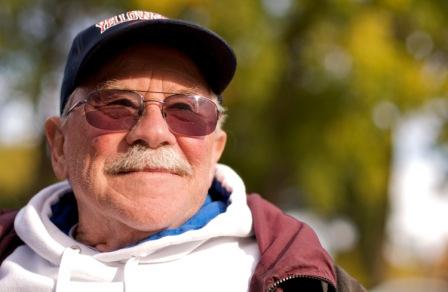
Mike Katz was flying high, pursuing his passion for aviation as a private pilot.

Then a routine FAA physical in the spring of 1989 revealed that Katz had Type 2 diabetes. He was hardly alone. It’s estimated that more than 25 million people in the United States have Type 2 diabetes, a condition associated with an inactive lifestyle, weight gain, family history and age.

Katz, a retired Air Force veteran who taught school in Kittitas, didn’t waste any time addressing his issue. The diagnosis, which not only threatened how long he might be able to continue flying but also threatened his overall health, was no stranger. Both his father and an uncle had diabetes.

“My father got an infection in a toe (a complication of his diabetes) and wound up without a leg just below the knee,” Katz says. “They made him an artificial leg but he never wore it. The last seven years of his life he was pretty much in a wheelchair.”

That vivid reminder of what diabetes can do if blood sugar isn’t well controlled isn’t lost on Katz. “I don’t want to lose my legs,” he says. “I had that example.”

Intent on writing a different outcome for his own life and determined to continue flying as long as possible, Katz embarked on an effort to develop a healthier lifestyle. With the support of his wife Wendy and the help of a Registered Dietitian, he improved his diet and lost weight. He added regular exercise into his routine. Two knee replacements have helped him stay active. 

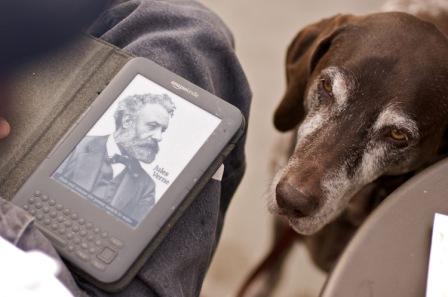
He took up cycling and although he doesn’t consider himself a serious cyclist, he’s participated in a number of road rides including one in October sponsored by the American Diabetes Association. More than two decades after his diagnosis, he takes near-daily walks around the Central Washington University campus in the company of Whidbey, his German shorthaired pointer.

“For about five years I controlled my diabetes with diet,” Katz says. “Then I had to start taking oral medication. I really fought off (insulin) injections. I just didn’t want to do that. Finally one day my doctor said, ‘Diabetes can’t be cured. But it can be controlled.’ So now I do an injection every night at bedtime (in addition to taking oral medication).”

Regular check-ups, a healthy diet and exercise have helped Katz thrive even while living with diabetes. So, too, has participation in a diabetes education and support group offered by Kittitas Valley Healthcare. The group provides free monthly meetings that offer the latest information on diabetes self-care and nutrition as well as a chance to talk with others who share the same condition. “I don’t go every month. I probably go to half of them,” he says. “They talk about diet, about medication, about keeping things under control – what’s good, what’s bad.”

It’s a good way to stay informed, says Katz who refuses to let diabetes ordain a life without some simple – albeit managed – pleasures. “You can take all the joy out of life,” he says, enjoying a muffin outside Starbucks with Whidbey at his side. “I don’t want to do that. If I feel like having a muffin, I have a muffin. 

Mike Katz

“I think people should get informed and stay informed, do what their doctor tells them and get into some kind of rhythm. I think controlling weight and exercise is important. I don’t think I exercise as much as I should and I could stand to lose a little weight, but I’m managing.”

Managing, indeed. 

Katz, who turns 78 this month, is still flying – and still sharing his love of flying as a volunteer pilot with the Young Eagles, a program of the Experimental Aircraft Association begun  in 1992 that gives youth from 8 to 17 a chance to take a free flight in a private airplane. “I’ve taken 181 kids up,” Katz, who recently participated in this year’s event, says proudly. With no plans to hang up his license any time soon, Katz hopes to keep on introducing young people to the joy of flying. 

“It’s something not everyone does,” he says. “You get into a small plane and get off the ground. It’s something different – and the aviation community is very tight-knit.”

  • « Go to Previous Page
  • Page 1
  • Interim pages omitted …
  • Page 11
  • Page 12
  • Page 13

Primary Sidebar

    Footer Top 2

    603 S. Chestnut Street - Ellensburg, WA 98926
    509.962.9841

    • Facebook
    • Instagram
    • LinkedIn
    • YouTube

    Footer Bottom 1

    Download the MyPatient Portal App
    Apple Store Google Play Store

    Footer Bottom 2

    • About KVH
    • KVH Legal Information
    • Price Transparency
    • Careers
    • Board of Commissioners
    • Contact Us
    • The Foundation at KVH

    Footer Bottom 3

    • Our Locations
    • Hospital Services
    • Clinics & Specialty Services
    • Visiting Information
    • Patient Policies
    • Events & Education
    • Press Releases

    Footer Bottom 4

    Google Translate