• Skip to primary navigation
  • Skip to main content
  • Skip to primary sidebar
  • Contact Us
  • Pay My Bill
  • Patient Portal
  • Show Search
KV Healthcare

KV Healthcare

Your Home for Health

  • Find a Provider
  • Clinics & Specialties
        • Primary Clinics

        • KVH Family Medicine – Cle Elum
        • KVH Family Medicine – Ellensburg
        • KVH Home-Based Primary Care
        • KVH Internal & Adult Medicine
        • KVH Pediatrics
        • KVH Women’s Health
        • KVH Rapid Access
        • Specialty Services

        • Anticoagulation Clinic
        • Addiction Medicine
        • Specialty Clinics

        • ENT & Allergy
        • Cardiology
        • Dermatology
        • General Surgery
        • Home Health
        • Hospice
        • Neurology
        • Podiatry
        • Orthopedics
        • Urgent Care
        • Vascular Surgery
        • Workplace Health
        • Wound Care
        • Therapy Services

        • Physical Therapy
        • Speech Therapy
        • Occupational Therapy
        • Cle Elum Therapy Services
  • Hospital Services
        • Services

        • Cardiopulmonary
        • Emergency Department
        • Imaging
        • Laboratory
        • Nutrition
        • Pharmacy
        • Surgical
        • Family Birthing Place

        • About Family Birthing Place
        • Class/Event Calendar
        • What to Expect
        • Birth & Family Education
        • Lactation Services
        • 4th Trimester Resource Center
        • Pregnancy & Infant Loss
  • Patients & Visitors
        • Patient Tools

        • Request Medical Records
        • Checking In
        • Language Services
        • Quality of Care
        • Patient Portal
        • Patient Safety & Security
        • Patient Policies
        • Insurance & Billing

        • Accepted Insurance
        • Price Transparency & Billing Services
        • Washington Health Plan Finder
        • Financial Assistance
        • No Surprise Act - Balanced Billing
        • Insurance vs. Self Pay
        • Bills from Other Providers
        • Pay My Bill
        • Visitors

        • Visiting Information
        • Mother’s Room
        • Café
  • About KVH
        • About KVH

        • About KVH
        • Mission & Vision
        • Board of Commissioners
        • Administration
        • Quality of Care
        • DAISY Award Program
        •  

        • News & Blog
        • Events & Education
        • Contact Us
        • Locations
        • Work With Us / Careers
        • Foundation

        • About the Foundation
        • The Foundation Board of Directors
        • Programs to Support
        • Ways to Give
        • Donate Now
        • Foundation Events
  • Donate Now
Hide Search

HealthNews

KVH Urgent Care – Cle Elum to Expand Hours

HealthNews · January 28, 2016 ·

Beginning Sunday, January 8, KVH Urgent Care – Cle Elum will expand to 12 hours of daily operation, from 10 a.m. to 10 p.m.

Over the past several years the urgent care has been open for eight hours on weekdays and 15 hours on weekends, for a total of 70 hours per week.  The new schedule will provide 84 hours of coverage per week. 

The decision to change the hours comes after a thorough analysis of patient volumes.  Data show that patients tend to arrive most frequently in the afternoon, with visits tapering off in the evening hours.

“By opening earlier in the day, we hope that urgent care will be more convenient for our community,” said Rhonda Holden, Chief Ancillary Officer for KVH. “We also believe that holding the same hours daily will provide more consistency and be easier to remember.”

Another factor in the decision to change the hours was the ability to adequately staff the urgent care center. It is easier to staff a healthcare facility that runs on consistent 12-hour shifts than a facility that has varying hours of operation with different shift lengths. Most providers at KVH Urgent Care – Cle Elum also work several 12-hour shifts per month at the KVH Hospital Emergency Department in Ellensburg. 

Visits to urgent care are not scheduled.  Patients can walk in during open hours to be seen for a variety of non-life threatening conditions, including fever, earache, cold or flu symptoms, minor allergic reactions or asthma attacks, rashes, strains, sprains, and simple wounds or fractures.

KVH Urgent Care – Cle Elum is located at 201 Alpha Way in Cle Elum, near Safeway and McDonald’s.

Many of these conditions can also generally be treated using KVH Virtual Care, which is available 24/7 for a flat fee of $40 at www.kvhealthcare.org or 855-962-1KVH.

Jerry Grebb

HealthNews · December 3, 2015 ·

From pizza and steak to homemade brownies, Jerry Grebb has an appetite for the good things in life.
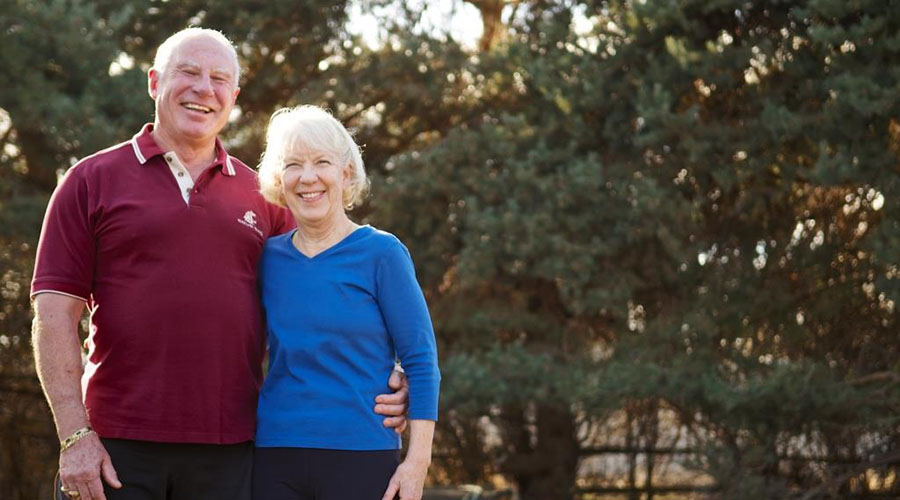
But when eating led to unexplained abdominal pain, Grebb got a taste of something different – Kittitas Valley Healthcare.

A Washington State University grad who grew up in Quincy, Grebb, a CPA, fell in love with Ellensburg when he moved here 40 years ago. When his now 38-year-old daughter was born, Grebb also fell in love with KVH Hospital. This past September reminded him why.

For months, Grebb had experienced periodic pain after eating. The week before Labor Day he saw an internal medicine specialist who, suspecting gallstones, scheduled an ultrasound for the following Tuesday. But the Sunday before Labor Day, Grebb landed in the emergency room at KVH Hospital where a CT scan revealed a hiatal hernia.

The bottom of Grebb’s stomach, including the duodenum and beginning of his small intestines, had worked its way into the opening where the esophagus passes through the diaphragm to the stomach. “The opening was stretched or torn,” he says. “Two thirds of my stomach was up in the hernia above my diaphragm.” It was pressing on his heart and lungs and keeping him from normal eating.

Dr. Timothy O’Brien of KVH General Surgery arrived within minutes, ordered Grebb’s stomach evacuated and told Grebb he’d need surgery. But first Grebb would be hospitalized for treatment of a pancreatic inflammation. “I liked Dr. O’Brien’s style,” Grebb says. “He was very matter-of-fact. He’s a very bright man and so plain spoken. He doesn’t try to dazzle you.”

Two days later when Grebb had the previously scheduled ultrasound O’Brien was on hand. So was Dr. Ken Harris, a trusted friend of Grebb’s who runs a private practice out of the KVH General Surgery clinic. So was the newest partner in the KVH General Surgery clinic Dr. Tom Penoyar who is trained in laparoscopic surgery for hiatal hernias, a cutting edge procedure that is less invasive than conventional surgery and results in shorter hospital stays and quicker recovery. “With laparoscopic, it’s one day in the hospital. With conventional, it’s five,” Grebb says.

On Thursday, with Harris assisting, Penoyar operated on Grebb. Working through five small abdominal incisions, Penoyar pulled Grebb’s stomach down from his chest and into proper position and narrowed the hernia by sewing its two edges together. He then wrapped the upper part of Grebb’s stomach around and behind Grebb’s esophagus, sewing the stomach to itself to create a “collar” that will keep it from sliding up into Grebb’s chest.

Called the Nissen technique, Penoyar performed the procedure an estimated 30 times while training in the Boston area. That may not sound like a lot, he says, but the nationwide average during training is six.

On Friday, Grebb went home. On Saturday, he walked downtown. On Monday, he went to work. Not long after, he was eating pizza without problems and calling his experience a perfect collaboration between the old and new guard at KVH.

“Dr. Penoyar has done more hiatal surgeries than Dr. Harris because of where he trained, at a big hospital in Massachusetts,” Grebb says. “It was wonderful that he was able to perform the procedure here. And I was so impressed by the sageness of Dr. O’Brien and Dr. Harris.

“That’s what the punch line is here,” Grebb says. “We’ve got both – the sage older team and the new surgeon trained with the latest technology. I couldn’t have asked for a better outcome.”

Rogels

HealthNews · July 1, 2015 ·

Rogels

The moment she met him, Cori Rogel knew Dr. Mark Larson of KVH Family Medicine – Ellensburg was someone special.

It was December 2003. Cori and her husband Mike were expecting their first child, a daughter they would name Quinn. Friends recommended Larson, who as a family physician treats patients of all ages for chronic and acute conditions, performs health screenings and coordinates treatment for patients he refers on to other doctors.

“I just loved him instantly,” Cori recalls. “You could tell he wanted to know you as a person, not just a patient.” When Quinn arrived the following August, the couple liked Larson so much that instead of finding a pediatrician they made him their family doctor.

Eleven years later, the Rogels, now living on the west side, are so confident in him that they drive 280 miles round trip for appointments.

They say Larson, who has guided them through a myriad of health issues over the years, makes well-being a family affair with a personal touch.

Example: the birth of their second daughter Layne. When Cori’s pregnancy turned difficult, Larson didn’t hesitate to refer her on to a specialist and checked up on her even while on vacation with his family.

When Layne developed MRSA at 3, Larson was at their side. “It was such a scary time,” Cori says. “At first we heard from him every day. I always knew he was there – even at 3 a.m.”

Quinn broke her leg at 3 and her collarbone at 5. Anxious by nature, she “hates hospitals but loves Dr. Larson,” her mother says. Gentle and patient, he built rapport by taking an interest in her love of horses.

In 2013, Cori consulted Larson about a spot on her leg.  “Whether you want to hear it or not, he’s honest,” she says. “He said he’d do a biopsy but wanted me to know he thought it was melanoma.”

He was right. When he called to tell her, he’d already referred her to a specialist he respected in Seattle. “I had surgery to take a chunk out of my leg and they took lymph nodes from my groin to see if it had spread,” she says. Then came the nervous wait for results – and a moment quintessentially Larson.

“When he got the results he showed up on my doorstep at 7 p.m. because he was so thrilled it hadn’t spread,” Cori says. “What doctor does that?”

She calls Larson compassionate, brilliant but humble enough not to hesitate to refer patients on and “totally committed to our family’s well-being. He’s been with us as we walked through life,” she says. “But it’s not just us. I have many friends who say the same thing. It’s a unique gift he has.”

Stefan Ward

HealthNews · May 1, 2015 ·

Stefan Ward

Tall, athletic and active, Stefan Ward, PhD, an associate professor at Central Washington University, seemed the image of good health.

Then, fate tossed him a life-threatening curve – and a partnership between Kittitas Valley Healthcare and Virginia Mason Medical Center in Seattle helped him survive it.

In 2011, the fingers of his left hand began tingling, twitching and then going numb. “It felt like pins and needles,” Ward says.

Ward, whose doctorate is in sports and exercise, figured it for a pinched nerve – and ignored the problem for a year. In 2012, he mentioned it to his primary care provider. Over time, the frequency, intensity and the duration of the symptoms increased, recovery took longer and the symptoms had spread up his arm. Even after multiple referrals to specialists and extensive diagnostic testing, no one had an answer.

A neurologist he saw in Yakima suggested it might be the start of MS. A friend remarked that her grandfather, who had ALS, experienced similar symptoms.  

By 2013, Ward was desperate. Whatever was wrong had affected his proprioception, the ability to know where a limb is in terms of space. Simple tasks like closing his eyes and touching his nose with his left hand had become impossible.

“When it got to my face I knew we had to do something,” says Ward, who tried physical therapy, occupational therapy, acupuncture and chiropractics – “basically anything my insurance would cover.”

Still, nothing helped.

Enter Dr. Charles Nussbaum, a neurosurgeon with Virginia Mason Medical Center in Seattle. Through a partnership with Kittitas Valley Healthcare, Nussbaum averages two days a month in Ellensburg doing consultations – primarily for spine-related issues – at KVH Physical Therapy. In 2014, Ward’s doctor suggested Ward meet with Nussbaum. After the consultation, Nussbaum asked Ward to come to Virginia Mason for further evaluation.

“I had a bunch of appointments and tests,” Ward recalls. Doctors ruled out MS. But at the end of the day, there was still no answer. Nussbaum scheduled a brain MRI at KVH Hospital, prescribing valium to relax Ward’s muscles.

Ward came home from the hospital, took a nap and woke to find multiple calls from Nussbaum’s office.

The diagnosis? A baseball-sized tumor growing between his skull and his dura, the outermost lining of the brain and spinal cord, was compressing his brain. The result was myoclonic seizures that caused symptoms of numbness, tingling and twitching. The good news: the tumor, probably the result of full brain radiation Ward had as a child battling leukemia, was an atypical benign meningioma – and not malignant.

When Ward said he didn’t want to drive to travel to Seattle just to set up whatever came next, Nussbaum called back. “I said, ‘We’re going to do surgery, right?’” Ward says. “He said that would be his recommendation.” Ward asked Nussbaum to schedule the surgery.

“Within three weeks I was at Virginia Mason,” Ward says. On a Friday in April 2014 doctors performed an angiogram to cut off blood to the tumor. The following Monday, he had surgery to remove the tumor. On Wednesday he went home to Ellensburg.

Six months later, when an MRI showed that part of the tumor had begun to grow back, Ward underwent 32 radiation treatments. He continues to get an MRI every three months.

Although he still has some residual symptoms, Ward says the improvement after his surgery was dramatic and immediate. Grinning, he leans back in his chair and tosses a small ball against the wall of his office, deftly catching it with his left hand, a feat that had become impossible before his surgery.

Finally getting a diagnosis “was awesome,” Ward says. “I never thought I’d say “thank God I have a benign brain tumor.’ But it wasn’t MS or ALS.”

Nussbaum, he says, was a lifesaver.

“If I hadn’t seen Nussbaum or if I’d gone to someone less qualified I’d be dead or have more brain damage,” he says. “He gives you the straight facts, is super solid and has a great bedside manner. He’s awesome – a great guy.”

Bob Cory

HealthNews · March 1, 2015 ·

Bob Cory

The pain started in 2008, occasional at first, then increasingly relentless, robbing him of his ability to enjoy life. Hiking became agony, climbing stairs difficult.

By last year Yakima resident Bob Cory, a retired utility manager at the Yakima Training Center who loves the outdoors, knew he had to do something about it. Fortunately, Cory is a man smart enough to take his own good advice: He made an appointment with Dr. Gary Bos of KVH Orthopedics.

Already acquainted, they’d met in 2012 when Cory’s late brother-in-law, Albert Schelert of Toppenish, then 85, was referred to Bos for a hip replacement. At the time, Bos was practicing in Yakima. Cory went with him to his appointments. “It was like being with a group of old friends but getting good medical advice,” Cory, now 69, says. “There are some doctors who care and some doctors who are just good. This doctor is good – and he cares. Everything turned out wonderful.”

Not shy about spreading the word, in the spring of 2014 when his sister, 74-year-old Ellen Davis of Zillah, needed knee surgery, Cory recommended Bos, by then practicing in Ellensburg. Davis had surgery last June at KVH Hospital.

Six months later, Cory followed suit. “My right knee had been wearing out. I’d let it go and let it go until I was in constant pain,” Cory says. “I was miserable.”

Cory calls Bos first class. So, Cory and his wife Sharon agree, is KVH Hospital.

“The hospital itself – from the front desk to the volunteers to all the staff to the people in the business office – are unbelievably prompt, efficient and fun to work with,” Cory says. “I’ve been in a number of hospitals and I have yet to see a better hospital for patient care.”

KVH also gets high marks for family care, the couple says. Sharon recalls how someone in a lab coat poked her head into the room where Sharon and her daughter were waiting to ask if they needed anything. “It wasn’t really her area but she was taking time to check in,” Sharon says. “The other thing I saw was that if Bob called someone came quickly.” And pleasantly, Cory adds.

“Service was so impeccable at every level,” Cory says. “And when I said ‘thank you’ they thanked me. They were thanking me for the opportunity to help me. It was an awesome experience.”

Three days after his surgery, Cory was home. Ten weeks later he was pain-free, walking two miles a day and among the ranks of those whose quality of life has been improved by Bos. “The lady across the street had her knee replaced (by Bos) this year,” he says, nodding at his neighbor’s home.  “The lady next door is 72. After I had my knee done she called and wanted to know who did it. This past Wednesday she and her husband went to see Dr. Bos.”

Bos reviewed the woman’s x-rays, said he wanted to try Ibuprofen therapy and that he also wanted an MRI. Some places that might have meant another appointment, Cory says. Not at KVH Orthopedics.

“She told me he picked up the phone, made a call and got an MRI set up immediately,” Cory says. “She got the MRI, had lunch and went back to get the results.” Her reaction: “She’s saying, ‘I love this guy and the level of cooperation at KVH’.”

No surprise that, Cory adds. “He tries to make things as convenient as possible,” he tells those who ask, “and Ellensburg is just up the road.”

Applicants Sought for Kittitas County Public Hospital District No. 1 Board of Commissioners

HealthNews · January 6, 2015 ·

The Board of Commissioners for Kittitas County Public Hospital District No. 1 is seeking applicants for a vacant position.

Kittitas County Public Hospital District No. 1 is the governing body for Kittitas Valley Healthcare, which provides service to Kittitas County through its hospital facility in Ellensburg and outpatient clinics and specialty services in Ellensburg and Cle Elum.

Interested persons should submit a letter of interest, including relevant background information, by January 31.  Interviews will be conducted in February, prior to the February 26 meeting of the Board.

The individual who is appointed will hold the position through December 31, 2015. The position will be on the ballot in the November 2015 general election. The elected commissioner will serve the remainder of the term for the position, through December 2019.

Applicants must be registered voters residing in Kittitas County Public Hospital District No. 1. 

Letters of interest should be sent electronically to fstorlie@kvhealthcare.org or by hard copy to the Board of Commissioners, Attn: Franki Storlie, Executive Coordinator, Kittitas Valley Healthcare, 603 S. Chestnut St., Ellensburg, WA 98926.  For additional information, please contact Franki Storlie at (509) 962-7302.

Muriel Douglass

HealthNews · November 1, 2014 ·

Muriel Douglass

They grew up in the Okanogan and were sweethearts in high school. But after graduation, Muriel and Larry Douglass went their separate ways.

She spent a year at Western Washington University, then moved to southern California where she found work, fell in love and married. He married someone else and forged a career with the Department of Natural Resources.

Then, Cupid got a second chance.

By 1981, Muriel’s marriage was over and she was preparing to come home to the Okanogan. By then, Larry was widowed. One day he ran into Muriel’s sister, inquired about her and asked if he could contact her.

His first letter arrived before she left California. She was touched. “He was a nice boy,” she says. “I always liked him.” Correspondence renewed their friendship; romance blossomed anew. Married in 1982, the couple made their home in Ellensburg.

Larry died a decade later. Not long after his death, Muriel began experiencing unexplained bouts of upset stomach. Suspecting Meniere’s Disease, an inner ear disorder that can cause vertigo and nausea, her primary care physician Dr. Don Solberg referred her to a specialist in Seattle.

“They strapped me into this special chair and turned me one way and then the other, trying to make me dizzy, but I didn’t get dizzy,” Muriel says. “The doctor said he thought I had Meniere’s but couldn’t be sure.”

Over time, symptoms worsened. Rolling over onto her left side in bed triggered vertigo so severe she had trouble focusing her eyes. The room would spin. The vertigo, which occurred only when she was sleeping, sometimes forced her to crawl to the bathroom, sick to her stomach but too dizzy to stand.

“They call it a vertigo episode,” she says. “It’s worse than that. They should call it an attack. When it happens I am so sick. I feel like I’ve been thrust into space.” The only thing that helped control the attack was focusing on something vertical like a door jam.

By last summer, Muriel was sick and tired of being sick and dizzy.

She’d heard of a non-surgical procedure, called the Epley Maneuver, that helps some patients and contacted Dr. Solberg who referred her to KVH Physical Therapy.

What came next was life-changing.

Four years ago, staff at KVH Physical Therapy received specialized training in recognizing and treating vertigo-related conditions. “It’s still not a routine or ordinary part of most physical therapy training,” Dr. Solberg says.

Physical therapist Anne Merrill-Steskal advised Muriel that the technique only works on patients with Benign Proxysmal Positional Vertigo (BPPV), a condition, like Meniere’s, that causes vertigo. BPPV occurs when a tiny crystal forms in the movement-sensing part of the brain and breaks loose. As it moves around, it stimulates tiny nerves in the inner ear, tricking the brain into thinking the person is moving when they’re not.

The Epley Maneuver, popularized in the last ten to fifteen years, repositions the crystal. “I already knew there was a solution,” Muriel says. “It amazed me there was someone in Ellensburg who could do it.”

Merrill-Steskal “put me on the table, held my head and moved it in a certain direction,” Muriel says. “She taught me how to position my head the same way so I could do it myself if an attack occurred at home. It took me four days before I didn’t worry that I was going to get sick if I rolled over in bed.”

Muriel calls learning how to manage those attacks “the greatest thing since sliced bread.” As for Merrill-Steskal, “she’s fabulous,” Muriel says. “I love her to pieces.” 

Debi Hofferber

HealthNews · March 1, 2014 ·

Debi Hofferber

Nobody plans a trip to the emergency room.

But when the need arises, everyone wants an emergency room that delivers top quality treatment with attentive care in timely fashion.

At KVH Hospital, seeing is believing. Just ask Cle Elum’s Debi Hofferber.

The 57-year-old Hofferber lived in Canada until she and her husband Rick met online, clicked over a “coffee date” in Bellingham, and fell in love. She’s no stranger to hospital emergency rooms and years of dealing with the Canadian health care system left her jaded. Emergency rooms were crowded. Wait times were often long. When Hofferber’s then 14-year-old daughter Shawna was hit by a car, breaking both legs, she waited more than seven and a half hours for surgery.  “I’d never had a good experience in an emergency room,” Hoffeber says.

Until now.

Flash back to Oct. 12, 2013. Hofferber, recently returned from a visit to Virginia Beach, woke up with what she thought might be stomach flu. Time passed. Her discomfort didn’t.

That evening, her husband Rick, a retired Boeing business manager, convinced her to go the KVH Urgent Care clinic in Cle Elum. A provider, suspecting appendicitis, ran tests. Results were negative. Her temperature was normal.

He sent her home with pills to ease her symptoms – but her pain mounted.

Soon, Hofferber knew she was in trouble. 

Rick offered to drive her to the west side. She demurred. “As bad as I feel,” she said, “take me to Ellensburg. It’s closer.”

They arrived at the Emergency Department just before midnight. A registration clerk quickly assessed the situation, arranged for Rick to fill out paperwork and had Hofferber immediately escorted to an exam room. Nurse Doreen Mohn examined her and hooked up an IV. Dr. Matthew Seaman, an ER physician, examined her, told her he believed she had appendicitis and ordered pain medication. A CT scan confirmed his diagnosis. 

Dr. Frank Smith, a general surgeon, arrived.  “He’s upbeat and funny and just a wonderful man who puts you at ease,” Hofferber says. “He explained everything perfectly.” Four days after her appendectomy, she was home – and sharing her experience.

“I was shocked to find that kind of care in this little hospital in this little town,” she says. “I couldn’t believe it. Boom! I got in right away. The hospital is so modern. Everybody was so nice.  The nurse was always with me. I’ve been in Canadian hospitals. We’re talking night and day here.”

On a scale of one-to-ten, her experience was “definitely a ten,” she says. “I don’t ever want to have to go back to a hospital again. But if I do, I want to go to this one.”

Dean Tonseth

HealthNews · November 4, 2013 ·

Dean Tonseth

When you develop a life-threatening medical condition that you don’t suspect you have, it pays to have a diligent physician.

Dean Tonseth knows a little providence doesn’t hurt either.

At 67, Tonseth is tall and fit-looking with an active lifestyle, formidable faith and an irrepressibly optimistic outlook on life. Raised on the west side, he was fresh out of the Army and just back from Vietnam when he arrived in Ellensburg in August 1969 to attend Central Washington University. That month, he met an attractive coed named Danielle. The timing was lousy, he warned her. He was going through a divorce – and trying to get his head together.

“Before I went to Vietnam I married my high school sweetheart,” he says. “I came home and got dumped.” In retrospect, “it was the best thing that ever happened to me.”

He and Danielle dated off and on. Cupid persevered.

One day, out with friends in Ellensburg, Dean popped the question. “I said, ‘I need you to keep me in line’,” he says. “She was everything I wanted – a good, moral, beautiful young lady.”

The Tonseths married in June 1972. By then Danielle had landed a teaching job in Kittitas, and Dean was a program coordinator working with developmentally disabled adults and children. Along the way, he found his passion and returned to college to get a degree in special education. He spent three years working in the Cle Elum Roslyn School District, then six years as a stay-at-home dad raising their two young sons.

Nearly forty years later, Danielle is retired after 30 years in teaching; Dean, retired as administrator of a state-run residential program in Yakima after a career with the Department of Developmental Disabilities.

Last July, Dean went for his annual physical with Dr. Jamin Feng of KVH Internal Medicine. Lab results seemed fine, except for what appeared to be a low platelet count. A second test got the same results. Puzzled, Feng ordered an ultrasound and a CT scan.

“I had no pain, no symptoms but the test results showed a suspicious spot, probably no bigger than my thumbnail on my pancreas,” says Dean, who was referred to Virginia Mason Medical Center where more tests confirmed the tumor. “You have pancreatic cancer,” his oncologist said. “My goal for you is a permanent cure.”

It turns out the blood test results weren’t related to any medical issue, and his cancer diagnosis was “a fluke,” according to Dean. Feng later told them there was no rational explanation to why the cancer was discovered so early, saying that it was “the providence of God” that led to the diagnosis.

“He is just an amazing man. Basically, he saved my life,” Dean says. Feng’s caring went beyond the diagnosis. One evening, Dean’s phone rang. It was Feng, saying he was going to Canada for a visit but that Dean should call “at any time” if he had questions. “And he said, ‘I will pray for you.'”

For Dean, that means a lot.

Now undergoing chemotherapy to reduce the tumor in preparation for surgery to remove it, Dean told his oncologist, “I have a lot of people praying for me.”

The oncologist’s reply? “‘Well, that makes my job easier,'” Dean recalls – and beams.

Skip Little

HealthNews · November 21, 2012 ·

Skip Little

When Skip and Suzanne Little moved their family from Florida to Ellensburg, they came looking for a small college town that would be a good place to raise their six children.

But when Skip faced a health crisis, the couple – both psychology instructors at Central Washington University – found something they hadn’t counted on: highly skilled in-home health care that helped them through a daunting time.

After repeated bouts of diverticulitis, Skip had robotic laparoscopic surgery last spring to remove part of his colon. The relatively new procedure is minimally invasive and typically involves less down time than conventional surgery. The procedure isn’t offered locally, so Skip turned to a Seattle hospital. Days later he was home; a few days after that, back in the classroom. 

Then came a check up in Seattle. An MRI showed that the area where his colon had been reconnected was leaking and infected. Skip was rushed to emergency surgery where doctors cleaned up the infection and placed tubes in his abdomen to continue draining it. Because his colon couldn’t be reconnected at that point due to the infection, doctors brought the end of it up to a stoma, an opening in his abdomen where a colostomy bag is attached to collect his waste. 

“I was told I would have been dead within an hour without the surgery,” he says. “If I’d gone back to Ellensburg that day I wouldn’t have made it. So we had an angel on our shoulder.”

Two weeks later, Skip went home, forty pounds lighter, drainage tubes still in his body, and with his incision unhealed because of the infection. He wore a colostomy bag and, too weak to climb the stairs to his bedroom, slept on a couch in the family room. 

Enter Kathy Honeysett, a nurse with KVH Home Health. Operated by Kittitas Valley Healthcare, the service features a team of nurses and therapists who provide medical care and rehabilitation services to homebound patients. The program includes 24-hour-a-day on-call nursing services.

“She’s the whole package – tremendous knowledge and skills, tremendous empathy,” Skip says, recalling how Honeysett taught Suzanne to change his dressings, drain the tubes and empty his bag. She also served up steady doses of encouragement that things would improve.

“Without that, I think I would have withered,” Skip says. “There were just too many things going on. It was the perfect storm.”

Over time, what began as daily visits from KVH Home Health became less frequent. But an unscheduled visit one weekend last summer proved critical. Skip was under the weather. He called Home Health. Nurse Sally Henning responded and sent him to the emergency room. Diagnosed with pneumonia and a pulmonary embolism (blood clot), a potentially life-threatening situation, he was hospitalized and placed on blood thinners.

Now teaching part-time, Skip hopes to have surgery to reconnect his colon this coming spring. First though, his pulmonary embolism has to clear up. Meanwhile, he voices appreciation for Home Health and Hospice at every opportunity. “It’s wonderful thing to have,” he says. “It’s one of those things that you have that you don’t know how wonderful it is until you need it. To me they’re angels.”

  • « Go to Previous Page
  • Page 1
  • Interim pages omitted …
  • Page 10
  • Page 11
  • Page 12
  • Page 13
  • Go to Next Page »

Primary Sidebar

    Footer Top 1

    HRSA National Health Service Corps Site

    Footer Top 2

    603 S. Chestnut Street - Ellensburg, WA 98926
    509.962.9841

    • Facebook
    • Instagram
    • LinkedIn
    • Twitter
    • YouTube

    Footer Top 3

    Footer Bottom 1

    Download the MyPatient Portal App
    Apple Store Google Play Store

    Footer Bottom 2

    • About KVH
    • KVH Legal Information
    • Price Transparency
    • Careers
    • Board of Commissioners
    • Contact Us
    • The Foundation at KVH

    Footer Bottom 3

    • Our Locations
    • Hospital Services
    • Clinics & Specialty Services
    • Visiting Information
    • Patient Policies
    • Events & Education
    • Press Releases

    Footer Bottom 4

    Google Translate