• Skip to primary navigation
  • Skip to main content
  • Skip to primary sidebar
  • Contact Us
  • Pay My Bill
  • Patient Portal
KV Healthcare

KV Healthcare

Your Home for Health

  • Find a Provider
  • Clinics & Specialties
        • Primary Clinics

        • KVH Family Medicine – Cle Elum
        • KVH Family Medicine – Ellensburg
        • KVH Home-based Primary Care
        • KVH Internal & Adult Medicine
        • KVH Pediatrics
        • KVH Women’s Health
        • KVH Rapid Access
        • Specialty Services

        • Anticoagulation Clinic
        • Addiction Medicine
        • Specialty Clinics

        • ENT & Allergy
        • Cardiology
        • Dermatology
        • General Surgery
        • Home Health
        • Hospice
        • Neurology
        • Podiatry
        • Orthopedics
        • Urgent Care
        • Urology
        • Vascular Surgery
        • Workplace Health
        • Wound Care
        • Therapy Services

        • Physical Therapy
        • Speech Therapy
        • Occupational Therapy
        • Cle Elum Therapy Services
  • Hospital Services
        • Services

        • Cardiopulmonary
        • Emergency Department
        • Imaging
        • Laboratory
        • Nutrition
        • Pharmacy
        • Surgical
        • Family Birthing Place

        • About Family Birthing Place
        • Class/Event Calendar
        • What to Expect
        • Birth & Family Education
        • Lactation Services
        • 4th Trimester Resource Center
        • Pregnancy & Infant Loss
  • Patients & Visitors
        • Patient Tools

        • Request Medical Records
        • Checking In
        • Language Services
        • Quality of Care
        • Patient Portal
        • Patient Safety & Security
        • Patient Policies
        • Insurance & Billing

        • Accepted Insurance
        • Price Transparency & Billing Services
        • Washington Health Plan Finder
        • Financial Assistance
        • No Surprise Act - Balanced Billing
        • Insurance vs. Self Pay
        • Bills from Other Providers
        • Pay My Bill
        • Visitors

        • Visiting Information
        • Mother’s Room
        • Café
  • About KVH
        • About KVH

        • About KVH
        • Mission & Vision
        • Board of Commissioners
        • Administration
        • Quality of Care
        • DAISY Award Program
        •  

        • News & Blog
        • Events & Education
        • Contact Us
        • Locations
        • Work With Us / Careers
        • Foundation

        • About the Foundation
        • The Foundation Board of Directors
        • Programs to Support
        • Ways to Give
        • Donate Now
        • Foundation Events
  • Donate Now
  • Pay My Bill
  • Patient Portal
  • Find a Provider
  • Clinics & Specialty Services
  • Hospital Services
  • Patients & Visitors
  • About KVH
    • Mission & Vision
    • Board of Commissioners
    • Administration
    • Contact Us
    • KVH News
    • Our Locations
    • Quality of Care
  • Careers at KVH
    • Culture & Mission
    • Education
    • Providers
    • Non-Clinical
    • Volunteer
    • Nursing
    • Professional Development
    • Clinical
  • The Foundation at KVH
    • Donate Now
    • About the Foundation
    • The Foundation Board of Directors
    • Foundation Events
    • Programs to Support
    • Your Impact
    • Ways to Give

HealthNews

Behind the Scenes: Central Billing Office

HealthNews · August 5, 2019 ·

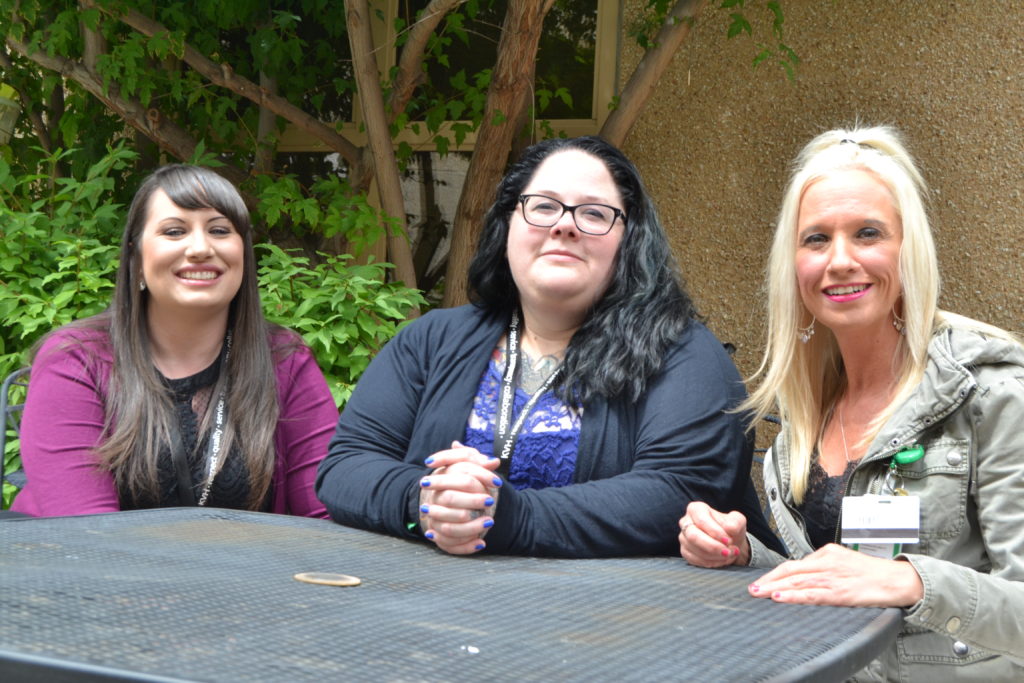
Located in two separate facilities, the KVH Central Billing Office covers a range of services and responsibilities. We sat down with three long-time CBO employees for a glimpse at the work they do to serve our patients, the community, and the organization itself.

Photo (L-R): Tara, Kelly, Leah

Leah, you and Jill and Yvette are the faces of KVH Hospital. What’s a typical day for you?

L: As a Registration Clerk, I register hospital patients for all the different areas, like lab, imaging and emergency. I also train our staff on the patient registration process.

Does everybody in Registration work the main desk and ER?

L: Yes. We train everyone to work at both.

What was it like for you when you first started here?

L: Well, I’ve worked in healthcare since I was 18. Before I came here, I worked at Swedish and at Overlake Hospital. So I was able to draw on those experiences.

So, say somebody comes up to your window and they don’t feel well or they’re upset. How do you deal with that?

L: I’m very compassionate with patients. Some come regularly for care. One patient comes to mind who, when she checks in, she could be crying or happy, but I always reach out my hands for her to grab onto, and she feels better right there.

A lot of folks get comfortable with you and they don’t want to go to anyone else to get checked in. I try to do everything I can.

Tara, what is the billing office like?

T: No day is the same, with the constant changes in payers (entities paying claims, such as insurance) and healthcare.  We review claims for errors and fix them, submit claims to payers, do claim/denial follow up, post payments, send patient statements, and do self-pay follow-up and collections.

And as Billing Office Supervisor, what does your team look like?

T: We have three billers for primary (main) insurance, two billers for secondary insurance (which happens, for instance, when a patient has insurance through their work and also has coverage through a spouse’s insurance – one insurance is primary, the other is secondary), two self-pay financial counselors, a revenue cycle clerk who collects patient payments, and a cash poster who posts patient and insurance payments.

Kelly, what do you do?

K: I’m the Charge Master Coordinator. Tara and I’ve been here just about the same amount of time – 14 years, and some change.

I manage the charge master, which is a database. Anything that could possibly be charged, for clinic and hospital care, is housed either in our charge master or in the pharmacy’s charge master. I work closely with Coding and Billing to ensure every CPT (Current Procedural Terminology) code is attached to a charge, that the codes are correct, that they’re hitting the bill correctly, and that we’re not overcharging.

I audit a lot of accounts. The Quality team reaches out if they need a chart audit done. So by the time it hits my desk, there’s a problem or it’s one we didn’t look at. And then they’ll have denials or claims that won’t get pushed through because something’s wrong. So I look at those, as well.

When people ask, “What do you do?” I’m like, “It’s probably easier to say what I don’t do.”

How have you spent your 14 years at KVH?

K: I started actually in Revenue Cycle Management, which at the time also covered nighttime registration. I did a lot of the cash posting and chart auditing.

T: I started working as a Registration Clerk right out of high school, and also worked for a short time in Home Health before I came to Billing.

So, you all spend a good amount of time on the phone in your jobs. How do you feel about that?

L: It’s more about how the patients feel, right? Until recently, when folks called for Imaging, we’d answer the phone, then they’d be transferred to Imaging’s phone tree. It was backwards. Now, when you’re calling the hospital, a phone tree picks up with options for Billing, Imaging, Lab, HIM (medical records), and ‘Other’. Callers can select ‘Imaging’ and connect with a live person in Imaging. It’s so much better for patients.

Tara and Kelly work in traditional office settings, but your work environment is…

L: It’s like the mall. (Laughter)

With busy times and quiet times. What do you do when there’s no one to register?

L: We have other duties, and we try to do them when we can, but it’s tough to get things done between patients, so we do more on the weekends and early mornings and evenings.

So you didn’t mention the mail, you guys do mail?

L: We take mail out in the morning and then I take it in that afternoon to the post office. 

I’m sure it’s fun when somebody does a massive mailing.

L: Like Marketing. (Ouch!)

What are the challenges of your jobs?

T: One of the biggest challenges we have is keeping up with the changes in healthcare as everything effects our department.

K: People don’t think about us until the end. Absolutely everything that happens upstream stops with us. If it’s broken, if it’s not working right, if the charge didn’t drop, if the documentation isn’t there to support the charges, if there’s the wrong information on the claim because it was registered incorrectly – things that if looked at upstream would make our jobs a lot easier.

T: We have really been working to improve the communication between departments organization-wide. We have implemented weekly and bi-weekly meetings with other departments to discuss any current issues we may be having.

As billers, we are wired to correct issues regardless of where they originated, so we can quickly get the claim out the door. Because of this, we’re not always the best at communicating those issues. That’s why we’ve implemented Registration and Coding work queues, and are able to send any issues we come across back to the departments for corrections. Plus, when we implement changes like these, we see our AR decrease.

L: For registration, the challenge is making sure things are done accurately from the start, with the right insurance and demographics for the patient. Our CFO recently told us our self-pay list went from 4% to 2% after all the training we did at the clinics. That’s a good improvement to help with Billing’s challenges.

In your roles, you’ve got to be compassionate, but do you ever feel like you are absorbing people’s stress? Are you there for each other?

L: Definitely. We also have good bosses. In Registration, Yvette is there whenever we need to troubleshoot or be encouraged.

T: We’re a family. We really are. We’re pretty blessed with our departments.

So you kind of tiptoed into the next question: what are some of the rewards of working in your areas?

L: I love challenges in my job. If there is an issue, I usually can fix it. And when my shift’s over, it’s over. I can go home and be with family and leave work at work.

How do you see what you do as being part of the mission to provide patient care?

K: We talk the patients through complaints a lot of times before they even get to Quality. We’re able to work out billing issues, charge issues, things like that. If we keep the patients happy, we keep them coming back. You know, times are tough right now. Just having a conversation is helpful for many patients, who don’t necessarily understand their insurance, let alone charges from the hospital. Just giving them that additional information, then they’re like, okay, I get it. Nobody wants to pay those bills, but they get it, you know?

T: Even though we’re not providing direct patient care, we are the last department that the patient encounters, so we have a huge responsibility to meet their needs – whether that’s explaining their charges or insurance benefits, or helping them set up payment arrangements. One of our biggest challenges is that most patients don’t understand their insurance benefits.

Anything else you’d like to share?

K: It’s always important to remember what it was like before we got involved in healthcare: how much did we really know? You know, you presented your insurance card and you didn’t worry about it. Remembering that, and having understanding and compassion for patients is so important.

We all feel that way, and it helps that we work with a really good team of people.
KVH Medical Arts Center – Call for artists

HealthNews · July 19, 2019 ·

Kittitas Valley Healthcare seeks to commission artists or artist teams to design artwork for its new Medical Arts Center (MAC) at 100 E Jackson Ave in Ellensburg. The Medical Arts Center will be home to KVH Family Medicine – Ellensburg, KVH Women’s Health, and KVH Pediatrics, as well as other healthcare partners and collaborators.

For centuries, art has played a powerful role in the healing process. Florence Nightingale, the founder of modern nursing, knew about the healing power of images and proclaimed: “Variety of form and brilliancy of color in the object presented to patients are an actual means of recovery.” It is our belief that if art can enhance someone’s mood or take their mind off their pain for a short while, it is no longer just a decoration. It’s part of the entire model of care.

Contact us for more details on how to be involved in this exciting project for our community.

Joe Davis (ER)

HealthNews · July 9, 2019 ·

Joe Davis (ER)

Meet Joe Davis, EHS Class of 2019. ASB President. Football, basketball, and track. An adventurous spirit, ready and willing to take on life’s challenges with the vigor of a healthy 18 year old.

Until the day in December when he ate his first macaroon.

“I figured I’d try it,” says Joe, who took one bite, not knowing the cookie was loaded with almond flour. It wasn’t long before he felt a reaction. “I thought, ‘Oh, there must be some nuts in that.’ And I went to my next class.”

This wasn’t Joe’s first tangle with nut allergies – a condition he shares with his mother, Janet. “There were times where he would accidentally eat nuts,” she recalls. “He’d have itching around his mouth, and his mouth ‘felt weird’ and swollen. Sometimes he’d tell me and sometimes he wouldn’t, but the symptoms would always resolve with time.

“It’s never been a real issue,” declares Joe. “I wait, drink some water, and it’s gone in 10 minutes.” He’d never had to use an epinephrine (“epi”) pen or mobilize the emergency plan established with his school.

This time was different.

“I went to a class for an hour. I wasn’t feeling better, so I stayed at school for lunch. Then I started getting hot and my body was really irritated, so I laid down on the couch in the ASB office.” At fourth period, Joe was joined by fellow ASB officers, who told him in no uncertain terms that he looked horrible. 

“By then I was having a hard time breathing. My breath was really raspy.” Enter the white knight in Joe’s story: his best friend Connor Timko. Experienced with his own peanut allergy, Connor heard the labored breathing and knew what was happening. He told Joe, “You’re going into anaphylactic shock.”

“Thank God for Connor,” says Janet, who in the midst of a busy afternoon was on her way out the door when Joe called her, his voice barely audible. Once Janet figured out what was wrong, she had Joe put Connor on the phone. Her son’s friend described the symptoms he was seeing, and they agreed he should immediately drive Joe to the ER.

“Connor could get him there faster than I could,” she says. “I dropped everything and sped to the ER and met them there.” Within twenty minutes, she was joined by her husband Bob. By then, emergency staff had dosed Joe with epinephrine, steroids and Benadryl, and were closely monitoring his condition.

As a social worker on staff at KVH, Janet often serves in the emergency department. She considers it familiar territory. Nevertheless, “It’s so different when it’s your own kid. Joe is our youngest,” she says quietly, her voice catching.

The ER team involved in Joe’s care included provider Jocelyn Judd, and nurses Doug Henson and Susan Penick. “I have colleagues that hit the ground running and know exactly what to do,” says Janet. “I never felt like there was a question about the exact treatment. I could just be the mom and rely on them to do what they do best.”

It’s been over six months since that fateful evening, and Joe’s life is back to normal, with one glorious exception: certain nuts are now a regular part of his diet. Shortly after the ER visit, Joe had extensive allergy testing, which narrowed down the list of culprits to three: walnuts, pecans, and the one that sent him to the hospital – almonds.

Freed by this new information, on their way home from the allergist, Joe and his mom went shopping for things he’d always wanted to eat but never dared – pistachio ice cream, Nutella, and pesto sauce. “He loves it all,” laughs Janet.

Later this summer, the Davis family travels to Italy. This fall, Joe heads to Japan for a two-year mission, then to an out-of-state college. As terrible as Joe’s anaphylactic episode was for his entire family, Janet has found a silver lining. “Now, Joe can travel knowing he needs to be very careful and carry an epi pen. And he can enjoy foods that used to be off-limits.

“Things were lined up in the perfect way for Joe to get help and information he could use through the rest of his life,” she says, which according to Joe will include college track, and possibly a career in international business or cardiology.

“Whatever the future holds, it’ll be busy,” Joe grins. “I’m excited.”

Behind the Scenes: Finance

HealthNews · June 19, 2019 ·

Finance

We sat down with KVH Senior Finance Analyst Jason Adler and Accounts Payable Specialist Deborah Connors, to try to get a handle on the mystery that is healthcare finance.

How is the work divided between the team in your department?

Jason: Accounting is a part of finance, and finance is also the whole revenue cycle. They all partner together.

Deborah: And you do a lot of budgeting.

Jason: I do the budget and it rolls into accounting to compare the budget or financial plan to the actual accountings.

Deborah: I have a very small part of the whole accounting department. Pretty much just paying the bills.

Jason: Well, I think she has a really big part. How much money did you spend last year?

Deborah: You know, I don’t remember, but I did hear Kelli [Goodian Delys, Finance Director] say that I wrote over 10,000 checks. One night I was here until 7:30 doing checks and someone’s like, wow, you’re here late. I’m like, I’m just trying to keep the lights on.

Jason: Literally.

If you were to give a really high level of what your teammates do, what are the different roles? Kelly Winters does payroll.

Deborah: Kelly does payroll. I pay the bills. Vicky Sterkel pays the bills. She enters employee deductions and things like that. She also sorts the mail that comes in and helps do a lot of data entry in Cerner for matching invoices to purchase orders.

And Sharoll Cummins?

Deborah: Sharoll does just about everything else.

Jason: She puts in journal entries to account for things like bills we haven’t paid yet, like when a company bills us about a month behind, but we need to expense it at the time of service to ensure we have the money for it.

Deborah: Sharoll also keeps track of all the fixed assets, whether it’s a new computer system or a building.

What program do you use for all of this work?

Jason: We probably use Excel the most. Multiview is our general ledger software. So that’s where everything comes together in our general ledger, which is like the book of truth, I guess you would say.

What’s different about working in finance in healthcare?

Deborah: I had to learn a lot of terminology. My first six months I googled a lot of things, many of which I wish I’d never looked up. But, accounting is accounting. The basic principles are the same. It’s just the terminology that is a little bit different.

I just know from my perspective in marketing, but marketing in a healthcare environment has that layer of ‘it’s for a greater good.’

Deborah: That is actually part of what drew me to wanting to come to work here. You know, being part of an organization that does good things for people.

Jason: I guess one of the biggest differences with healthcare is learning how we actually get paid, and what we can charge for. Every payer pays us differently.

Deborah: Incredibly complicated.

Jason: Yeah. And contracts with insurance companies will conflict. You might have a contract with one insurance company where a service is allowed and paid for and another company that is complete opposite.

Deborah: There are a lot of things that are very negotiable.

How do you keep all of it straight?

Jason: It takes the whole team. There’s little things like with Medicare and Medicaid where location is really important on how you get paid. We can do the exact same service in two different areas and what we get paid for the services can be significantly different.

Deborah: And even things like the utility bill. Engineering absorbs most of the utility bills into their department, but not all. The ones for the Rural Health Clinics get charged to the clinics, so they can be included on the Medicare Cost Report reimbursements.

I think that’s the single biggest thing that I learned since coming here, is how complex the entire finance system is.

Jason: We do the cost report, so we’re paid on cost from Medicare and Medicaid, which is about 60 percent of our business, but pays about 33% of our costs by the time we factor out all non-allowable expense. It’s just accuracy with the most basic things such as square footage of my office compared to a patient room. Just the square footage makes a huge difference on payment for services.

Speaking of having numbers right, how often do audits come into play?

Deborah: Two a year.

Jason: The state audit, and the independent audit.

Deborah: It’s my understanding that government agencies whose revenue exceeds a certain dollar amount are required by law to have independent audits done on an annual basis.

Jason: It’s required that the board choose a firm for the independent audit. Our firm is DZA and they just did the report out at the last board meeting. We have a state audit every fall.

Deborah: We don’t just go, “Hey, it’d be a great idea to get audited.” It’s required by law.

Jason: We’ll have payers do audits, too. We hire a third party audit to audit patient accounts. Just at random, to check that we’re doing a good job.

Deborah: And that’s a big part of the audits. It’s not just “What are you doing wrong?” It’s like, “This is the way we’ve been doing things. Can we do it better?”

What are the challenges of finance?

Deborah: I have a huge volume of work that comes through. It never stops.

Jason: Yeah, the volume’s a big one. I’ve just learned that even though I’ll have some periods with tighter deadlines, I do what I can, and at the end of the day I go home, because it’s never really done.

Rewards of working in finance?

Deborah: I like solving puzzles. Accounting’s a big puzzle. Sometimes you don’t know what it’s supposed to look like, and I like that part of it.

Jason: Being part of a community hospital and community health care. I know that I need health care, my family needs health care, and it’s great to be a big part of this and then know the numbers, the behind-the-scenes of why we do everything.

We try to keep it improving continuously for the small community. It feels like I’m actually helping friends and neighbors, unlike a big city where it’s thousand people I don’t know. I see patients I know every day. It’s really rewarding.

What would you tell a new teammate to bring with them for a successful day on the job?

Deborah: I’d say patience and a sense of humor.

Jason: Ditto. Especially patience.

For many of us, being in a hurry with our work can create more problems than we’re solving.

Deborah: Yeah, that’s true. I usually find when I’ve made mistakes, it’s because I’ve got rushed through something.

Jason: I like to try to have a second set of eyes on things.

Any misconceptions that folks tend to have about finance that you would like to dispel here or anything that people might find interesting about your work?

Deborah: Well, I don’t think accounting is boring, but a lot of people do.

Jason: Yeah, I don’t think a lot of people are going to find accounting interesting.

Well, but they’re seeing it from the outside, right? Getting directly involved in it might make it interesting.

Deborah: I think people might be surprised to learn that just because you work in accounting doesn’t mean you don’t have to be able to relate to people really well, because a lot of what we do is talking with people. Even if most of it’s in emails and spreadsheets, you still need to be able to communicate really well to do accounting.

How does your department’s work support the KVH mission of quality care?

Jason: Well, there’s access and financial sustainability too, right?

Oh yes. Our core values. If you couldn’t afford to have the doors open. You said something before about the lights being on.

Jason: Well, timely bills keep supplies coming in and the lights on.

Deborah: And monitoring those expenses in addition to the revenue, just to make sure that we’re not paying more than we need to, that we’re not getting taken advantage of.

You also are making it so that there’s a future here. We have, like, rainy day funds and we have operating costs and, I mean, all that stuff is all, you know.(Because clearly, I don’t know.)

Deborah: And in that way it’s not a lot different than your household budget. You always have to put a little money aside because you never know when that money coming in might slow down.

Just on a much larger scale here.

Jason: Exactly.

It’s pretty important work you all do. I still don’t understand a lot of it, but I’m really glad you’re here to take care of it all.

Behind the Scenes: Community Relations

HealthNews · June 6, 2019 ·

Normally, Behind the Scenes pieces open with the line “We sat down with…,” but in this case, Community Relations intern Arianna Walker wrote the post herself from start to finish. As you’ll see, she has a wonderful writing voice. Our team has enjoyed working with Arianna over the past months, and we warmly congratulate her on earning a Bachelor’s in Public Relations. Watch out world, here she comes! 

Arianna Walker

There’s no place like marketing…I read that phrase every day that I’m in my office. This is mostly because it’s taped to the stapler that sits on my desk, but this phrase has also grown on me in the past couple of months.

I’ve been a public relations/advertising student at CWU for around two years now. Before that, I took courses in communication studies and graphic design. The experience I’ve gained through doing public relations/advertising in the classroom has helped me discover an enthusiasm and a passion for this line of work. The more I’ve learned, the more I have wanted to go out and experience this career in the real world.  KVH Community Relations gave me the opportunity to do this.

I heard about this KVH internship opportunity through my boyfriend’s uncle, who works at KVH. He was aware that I was looking for an internship for my last quarter of school and told me that Community Relations was interested in having a student intern. I jumped on the opportunity because it sounded like the perfect fit: something in town, something close by, and an opportunity to use my skills and knowledge in a real-world setting.

Before starting as an intern here, I hadn’t thought much about public relations/advertising in the healthcare industry. Even though I have learned in my studies that public relations is a need across almost all industries, I mainly associated it with companies that market products or food and companies that market specialty services. I was not sure what to expect in terms of projects, content creation, advertising, and other areas. The work I have done has been just the kind of experience I’ve been looking for.

During my two months interning in the Community Relations Department, I have worked on a variety of projects and utilized my skills and knowledge in multiple ways. I have created advertisements, assisted with event coordination/scheduling/promotion, created a newsletter, written web content, and so much more. I have also had the opportunity to work with two women who are experienced professionals. Michele Wurl and Jan Powell have both given me constructive feedback on the work I’ve done, which has helped me learn and grow as a professional. 

The most rewarding part of this internship has not only been seeing the successful finished products that I have created, but also the value of the experience I have gained. I have been able to see my hard work put in motion and produce results. The work I have done for KVH has been rewarding and valuable experience for my career.

Another rewarding part of this internship is the people I’ve met and the acquaintanceships I’ve made. Michele and Jan have both been a pleasure to work with and have supported me throughout my time here. I have also met most everyone on the administrative team and all of them have been friendly and have made me feel at home here.

The skills and professionalism I have gained during my internship are things I will carry with me as I begin my career after college. I am truly grateful for this experience and opportunity to “dip my toes” in the KVH Community Relations pool.

KVH Medical Arts Center remodel to improve healthcare access

HealthNews · May 24, 2019 ·

Kittitas Valley Healthcare will partner with VK Powell for the remodel of its medical arts center, which was acquired by the public hospital district in late 2017 as an impactful step in the district’s goal to improve access to healthcare for patients and visitors to Kittitas County. The contractor was accepted as low bidder at last night’s regular meeting of the KVH Board of Commissioners.

“We’re excited to see the strategic plan take shape in such a meaningful way,” says Commissioner Liahna Armstrong. “Our early focus on patient and community needs quickly uncovered a need for increased access, and for engaging the community. In fact, these two needs became strategic goals for the organization.”

The new facility plan is about much more than bricks and mortar; it focuses on improving care processes, as well as identifying new space for patient services. “Recent provider recruitment has been so successful that we do not have adequate space for incoming providers,” said KVH CEO Julie Petersen. “We have reached the point where our facilities are the limiting factor in being able to care for our community.”

Rather than continue with previous plans to build and expand facilities on the main KVH campus, the Board opted to integrate care services by using and improving existing locations in the community, taking a neighborhood approach rather than concentrating services in a single location. In addition to reducing construction costs, this decision allows KVH to increase collaboration, and to partner with services that might otherwise be seen as competitors, in the spirit of providing as much quality patient care to the community as possible.

KVH began the process of expanding and relocating services to the Medical Arts Center in the fall of 2018 when KVH Women’s Health moved into a temporary location on the first floor. The action taken at yesterday’s meeting will allow for construction to begin on the unoccupied remainder of the building.

When completed in early 2020, the Center will be home to KVH Family Medicine – Ellensburg, KVH Pediatrics and KVH Women’s Health, joining fellow tenants VM Memorial / North Star, Orthopedics Northwest and Canyon View Physical Therapy, who will continue to occupy space in the three-story building.

The KVH Medical Arts Center is located at 100 E. Jackson Avenue. View a video rendering of the future KVH Family Medicine – Ellensburg clinic at http://tinyurl.com/NewFME.

Behind the Scenes: KVH Commissioners

HealthNews · May 20, 2019 ·

Libenow Altman

We sat down with KVH Commissioners Matt Altman, President, and Erica Libenow, Secretary, to learn more about the work and role of the five-person board in serving and representing the community.

What is the Board of Commissioners at KVH?

Matt: It’s easy to say what we’re not, right? We are not running the hospital. We don’t hire and fire anybody except the CEO. We task the CEO with running the organization. We form the strategic goals of the organization, and oversee the administration as they accomplish or implement those goals.

Do you have different areas of focus or interest?

Matt: We take on areas based on our interests. Erica’s is community engagement. As a local doc with a small business, Bob Davis has perspective on how the business is run. And with my background in medical ethics and health care policy, I bring that interest to the board. So we each bring a certain expertise, with different perspectives.

Being able to follow your passions must make it more rewarding to serve.

Erica: It does, and the amount of material that we have learned—it’s been an education in and of itself. Just looking back on how far I’ve come is gratifying. It’s been a long process.

Matt: You learn a bunch of stuff, then you figure out that there are five other things you don’t understand, so then you go and learn that stuff. And then each one of those has five other things…

Erica: Rabbit holes in every direction.

You’re both busy individuals, why add board service to your lives? And how do your feel your backgrounds have prepared you to do this work?

Erica: I saw a need for a new perspective on the board. I asked my friends who I thought would be really good at it, but they were all very busy or had other interests they were pursuing. I thought, somebody has to do this. And then I realized that I was somebody! So I put my name in the hat.

You have your own health care background, Erica?

Erica: Not clinical, but I worked in dental and oral surgery for several years in patient relations, billing, and insurance. Now I’m going to nursing school. When I graduate in December, I’ll be looking at emergency care. Making a difference for someone in their time of need is a soul moving experience. 

And you, Matt?

Matt: I teach medical ethics to premed students at Central, and occasionally to med students at Pacific Northwest University of Health Sciences. I have an interest in issues around doctor-patient relationships, healthcare, and various other medical ethics topics. I was on the ethics committee at KVH for six years. I’ve also published a bit on healthcare. But personally, I realize how important the hospital is to the community. Both my kids were born here. I want to support it as best I can. This is my community and I want to invest my time and energy in contributing to the community; this seemed like the best way I could do that, given my background.

What does it mean to you to serve in an elected position?

Erica: I’m constantly listening. I try my hardest to be a voice for all who approach me. It’s about representation and working with my fellow board members to encourage improvement across the organization. We always strive for improvement.

Matt: We have things like Coffee with a Commissioner, where people can come and talk to us about concerns that they have. We try to represent their views as their elected representatives. But we also do what we can to shape the organization, to serve the needs of the community. We do our best to maintain high quality and keep KVH as a strong, independent community hospital.

One of our strategic plan areas is access. And so we’re trying to expand the number of services and access to those different services. We opened the clinics to new patients for the first time in many years. We’ve expanded therapy services. We have dermatology now, and occupational health and wound care. These are all attempts to serve the needs of the community as best we can.

Having all clinics open to accepting new patients is a major, visible accomplishment.

Erica: I’ve heard community members say they’re happy we’re accepting new patients. My perception is that we are approachable as commissioners and people seem to feel at ease talking with us. That’s so important, to remain receptive to people’s thoughts and ideas. It’s important to keep our ears open.

Matt: When we’re talking about fiscal responsibility, there are a couple of different ways to do it. One is to cut back and reduce expenses. But another is to expand services to meet needs and to try to keep people in the community getting quality care here rather than going elsewhere. That’s our approach, and that’s Julie’s (Petersen, CEO) approach – to tap into an untapped market, and try to keep people in the community, getting the high quality healthcare that we can offer.

How does the board help to fulfill the mission of KVH?

Matt: Well, one way is to establish the mission, right? A couple of years ago, we put together a new mission, vision, and values. The four pillars of that mission really encapsulate what the board is interested in. (1) Providing access to the community with new services and access to existing services. (2) Overseeing the financial sustainability of the organization so we can remain independent and focused on the community, as opposed to just an outpost of some larger organization. (3) Collaborating and partnering with all local providers rather than competing with them. Working together to provide the community with what it needs. (4) Engaging with the community, finding out their needs and then serving them as best we can.

Erica: When we did strategic planning and formed the mission, we sought input from the organization and community. People are invested in their ideas, so it just naturally flows that they would uphold a mission they helped create with their input. That’s a lot easier than determining a mission with no outside input and then hoping people will embrace it.

Matt: And each member of the board is tasked with overseeing one piece of that mission. We get together regularly with our partners in the administration who are carrying out the specific tasks that will accomplish those things.

What are the challenges of being a commissioner?

Erica: On a national level, health care is a bit of a swinging pendulum – it can be hard to keep up with the changes. On a local level, we must consider how change affects our organization and what we do as board members, while remaining nimble. It is a real challenge.

Matt: You have to have some decent grasp of finances, but you also have to have a decent grasp of politics and where healthcare policies are going, as well as a decent grasp of good science and what care we should be providing. You need to have some sense of HR and hiring practices, too.

Erica: It’s really highlighted to me how important it is to be a part of a team that you can trust. I’m very grateful that we have expertise in all our departments, people who know what they’re doing and can convey their understandings to the board in a way that makes sense to us.

What are the rewards of being a commissioner?

Matt: You’re actually doing something that has an impact on the community and on people’s lives. Personally, it’s rewarding because I’m learning so much and can bring my academic interest to bear on my work at KVH. What I learn here also informs the work I do on campus with students and other faculty and in my research. But the main reward is in serving people.

Erica: Serving patients, staff, and our community, knowing that the board is a way that they can have their voice heard. That’s why I set out to do this; to put it into action is rewarding.

Matt: It feels really good to work with competent people. If the board has questions, we’ll get those questions answered, clearly, in a timely manner. We know that when things come down from the CEO or the board that the people involved are going to do a good job of carrying those things out. And that amount of trust is really valued by the board.

What does it take to be a commissioner? What advice would you give on that?

Matt: Listen to what people have to say. Be inquisitive, and if you don’t understand something or you don’t agree with something, be ready to ask questions. You don’t want to be overbearing, but you also don’t want to be passive, because we do have a role to play as an elected board. Negotiating that balance can be difficult.

Erica: I agree with Matt.  Also, don’t be afraid to ask about “alphabet soup.” Maybe more than anybody else on the board, I’m like, “What does this acronym mean?” There are acronyms for acronyms! 

That’s something you have in common with many of us.

Erica: You just need to keep an open mind, ready to fill it with information. There’s so much to learn, and I don’t anticipate that that’s ever going to change. Every encounter I have as a commissioner, there’s tons of learning going on. And that’s the way it should be.

How would you like people to remember this board’s accomplishments and your service here?

Erica: As the board that was devoted to serving the community. I hope we are remembered for improving and increasing opportunities and services so people can stay local for care. We have a lot of talent here that people outside of KVH might not be aware of. When I was running for commissioner, there was this concern that KVH was going to be swallowed up by a larger entity. The community was very clear that we should stay independent, and I intend to hold that banner up as long as I serve.

Matt: One of the things that’s been a guiding principle from the beginning is an appreciation of what people do on a day-to-day basis. Those who do the work to give patients the excellent care that they deserve. Nurses and housekeeping and doctors and lab technicians and everybody else – the organization can’t function without them. So, one of the things that I want to accomplish as a board member is to turn the focus back on staff and away from administration, who are also important but already pretty visible in the community.

Erica: Can I cosign that? It’s true. And I feel that deeply – an appreciation for frontline staff and less visible heroes of the organization.

Matt: If we want to talk about strategy, I think the board is going to be remembered for being able to operate in a financially responsible way, and, as Erica said, maintain that community focus and the independence of the hospital in a time of great challenges in health care.

I was just at an American Hospital Association meeting in DC, and there are independent community hospitals all over the country that are closing. It’s incredible. There’s this great pressure to consolidate, to be swallowed up by large organizations, but we’ve hired a CEO with a very good strategy for growth and financial sustainability. We’ve increased the footprint of KVH in the community with some strategic building purchases, and we’ve increased and expanded services. So I think that our big legacy is maintaining independence while growing services in a challenging time.

Not just surviving, but thriving. Right?

Matt: Yes. And if you want to attribute that line to one of us when you write up this interview…

Anything else that you would like to add?

Erica: Just an expression of gratitude for this organization. I feel fortunate that of all the places to serve, this is the board I serve on.

It is a great place to work. Thank you both for your service.

Josh Kirk

HealthNews · May 7, 2019 ·

Josh Kirk

“I like art. I like science. Dentistry is a perfect blend of the two.”
 
Dr. Josh Kirk’s childhood was cavity-free. “It was always fun. I loved getting my teeth polished. I still do.” But at 16, Kirk was surprised when a dentist started to numb his mouth without telling him why: he had his first cavities. Kirk left abruptly, and returned to his childhood dentist, who performed the procedure. “He did a fantastic job,” says Kirk, who still has those first fillings.

For Kirk, that childhood experience was also a lesson in the importance of provider/patient communication.
 
These days, you’ll find 33-year-old Kirk at his own bustling practice, Mountain View Dental Center, where his wife, Amy, also works as office manager. “I couldn’t do it without her,” admits Kirk, who spends roughly ten hours a day in patient care. 
 
The couple first met in dental school: Kirk was a student, and Amy on staff. “I knew right away I wanted to marry her,” declares Kirk. And so they wed, and soon after moved from Arizona to Texas, where Amy experienced her first snow. “It snowed a lot there, actually,” he recalls. “We got tornadoes, blizzards, extreme flooding. It was incredible! The northwest seems mild by comparison.”
 
The couple moved to Ellensburg in 2017 with their son James, now three years old and big brother to ten-month old Julianna. The move brought Kirk back to his roots. Born in Kennewick, his parents live in the Tri Cities. “But my mom went to college here, and so did I. So did my siblings. We’re all honorary Ellensburgians,” Kirk grins.
 
Last year, the extended family was celebrating Thanksgiving together when Kirk noticed a protrusion in his lower abdomen. “I don’t know how it happened,” he jokes, “but I’m sure that the second helping of turkey didn’t help. It didn’t hurt at first, so it’s hard to say when or how it began.” 
 
Over the next few weeks, the inguinal hernia continued to grow and become painful. After a consult with Dr. Tom Penoyar, Kirk was scheduled for surgery.
 
“He told me it could be done laparoscopically,” recalls Kirk, who was then given written instructions for the days leading up to his surgery. Kirk was grateful for the details. “It’s all good information to know. I’d hate to schedule surgery, take time off work, and then need to cancel because of something I hadn’t done correctly.” As a dentist, Kirk regularly performs in-clinic surgeries. Now in the role of patient, despite his jovial nature, Kirk was serious about preparing for his own procedure.
 
When the day for surgery arrived, Kirk answered routine questions while being prepped for surgery. While he describes the staff as professional, “I could tell everybody was in good spirits. I was happy to be there.” Kirk has nothing but praise for everyone involved – from check-in, to pre-op, to the OR where the nurse anesthetist explained his process to Kirk, and the nurse started an IV.
 
When he woke up after surgery, Kirk felt nauseous, a typical side effect of anesthesia. “They gave me all the time I needed,” says Kirk, “and brought me some gentle foods, including chocolate pudding – my favorite.” A short time later, Kirk was ready to leave. Amy drove him home and got him in the recliner.
 
Dedicated to his patients, Kirk returned to work the following Monday. It might have been a little too soon. “I only missed two days of work, but that first day back was tough,” he says.
 
After a visit with Dr. Penoyar two weeks later, Kirk was officially cleared for all activity. And Kirk is nothing if not active.
 
Already an avid cyclist and runner, Kirk put mountains on his 2019 bucket list. After climbing Mt. St. Helens with his brother-in-law in 2017, this year, the two plan to tackle Adams, Baker, and then Rainier. “That’s the big one,” Kirk says, eyes shining with anticipation.
 
As a life-long learner who embraces new challenges, no one who knows Kirk doubts he’ll scale any obstacles in his way. Now fully back on his feet, he’s eager to let the community know about the quality of “awesome care” he received.
 
“What would that say about me, if I’m asking people to come to me as a local provider and yet I’m not willing to receive local care?” Kirk asks. “You have a choice. You can stay local and support your community, people that live down the road from you. So, why not? Give them a chance. They won’t let you down.”

AAFP interview

HealthNews · May 7, 2019 ·

Dr. Merrill-Steskal talks with AAFP News about keeping adolescent immunization rates high. Find highlights here: https://www.aafp.org/news/health-of-the-public/20190424vaccineq-a.html

KVH Speech Therapy & Occupational Therapy to Showcase New Facility

HealthNews · May 2, 2019 ·

KVH Speech Therapy and KVH Occupational Therapy invite the public to tour their new facility at 309 E. Mountain View Ave. on Tuesday, May 7 from 4-6 p.m.

Moving from their previous 2nd Street location to Mountain View Ave. allows our therapy teams to expand and upgrade the services offered to the community.  New features include pediatric gyms, a sensory room, and a lymphedema treatment room. The new facility also includes several offices for speech therapy, children’s therapy, and women’s pelvic health.

KVH speech therapists provide individualized treatment to enhance the communication, oral motor skills, swallowing, and feeding skills of adult and pediatric patients. KVH occupational therapists work with people of all ages who, because of physical, developmental, social or emotional problems, need specialized assistance to lead independent and productive lives. Occupational therapy helps people maximize their abilities and provides skills for everyday living.

The Open House will provide an opportunity for the public to tour the new facility, see some of the services first hand and to meet the dedicated professionals working in this program. Light refreshments will be provided.

  • « Go to Previous Page
  • Page 1
  • Interim pages omitted …
  • Page 6
  • Page 7
  • Page 8
  • Page 9
  • Page 10
  • Interim pages omitted …
  • Page 13
  • Go to Next Page »

Primary Sidebar

    Footer Top 2

    603 S. Chestnut Street - Ellensburg, WA 98926
    509.962.9841

    • Facebook
    • Instagram
    • LinkedIn
    • YouTube

    Footer Bottom 1

    Download the MyPatient Portal App
    Apple Store Google Play Store

    Footer Bottom 2

    • About KVH
    • KVH Legal Information
    • Price Transparency
    • Careers
    • Board of Commissioners
    • Contact Us
    • The Foundation at KVH

    Footer Bottom 3

    • Our Locations
    • Hospital Services
    • Clinics & Specialty Services
    • Visiting Information
    • Patient Policies
    • Events & Education
    • Press Releases

    Footer Bottom 4

    Google Translate