• Skip to primary navigation
  • Skip to main content
  • Skip to primary sidebar
  • Contact Us
  • Pay My Bill
  • Patient Portal
  • Show Search
KV Healthcare

KV Healthcare

Your Home for Health

  • Find a Provider
  • Clinics & Specialties
        • Primary Clinics

        • KVH Family Medicine – Cle Elum
        • KVH Family Medicine – Ellensburg
        • KVH Home-Based Primary Care
        • KVH Internal & Adult Medicine
        • KVH Pediatrics
        • KVH Women’s Health
        • KVH Rapid Access
        • Specialty Services

        • Anticoagulation Clinic
        • Addiction Medicine
        • Specialty Clinics

        • ENT & Allergy
        • Cardiology
        • Dermatology
        • General Surgery
        • Home Health
        • Hospice
        • Neurology
        • Podiatry
        • Orthopedics
        • Urgent Care
        • Vascular Surgery
        • Workplace Health
        • Wound Care
        • Therapy Services

        • Physical Therapy
        • Speech Therapy
        • Occupational Therapy
  • Hospital Services
        • Services

        • Cardiopulmonary
        • Emergency Department
        • Imaging
        • Laboratory
        • Nutrition
        • Pharmacy
        • Surgical
        • Family Birthing Place

        • About Family Birthing Place
        • Class/Event Calendar
        • What to Expect
        • Birth & Family Education
        • Lactation Services
        • 4th Trimester Resource Center
        • Pregnancy & Infant Loss
  • Patients & Visitors
        • Patient Tools

        • Request Medical Records
        • Checking In
        • Visiting
        • Language Services
        • Quality of Care
        • Patient Portal
        • Patient Policies
        • Insurance & Billing

        • Accepted Insurance
        • Price Transparency
        • Financial Assistance
        • Pay My Bill
        • No Surprise Act - Balanced Billing
  • About KVH
        • About KVH

        • About KVH
        • Mission & Vision
        • Board of Commissioners
        • Administration
        • Quality of Care
        • DAISY Award Program
        •  

        • News & Blog
        • Events & Education
        • Contact Us
        • Locations
        • Work With Us / Careers
        • Foundation

        • About the Foundation
        • Board of Directors
        • Ways to Give
        • Donate Now
        • Foundation Events
  • Donate Now
Hide Search

healthy eating

The Importance of a High Fiber Diet for Kids

Elise Herman , MD · November 4, 2025 ·

Kids have an increasingly processed diet, which contributes to higher risk of obesity and Type 2 diabetes, as well as overall poor nutrition. There is another concern: inadequate dietary fiber. Fiber is very important for kids’ health and may play a role in decreasing colorectal cancer in young people, which although still uncommon, has alarmingly tripled in 15-19 year olds in the last 20 years. A high fiber diet is associated with a lower rate of all cancers, so starting this habit in childhood can pay off in the long run.

There are 2 types of fiber: soluble and insoluble. Soluble fiber dissolves in water, binds to fats and lowers cholesterol, thereby helping to prevent heart disease.  The beneficial  bacteria in the gut feed on the soluble fiber, increasing the health of the microbiome (microorganisms in the intestinal tract). By controlling the blood sugar, soluble fiber also decreases the risk of Type 2 diabetes. Since soluble fiber causes a feeling of fullness, it helps regulate the appetite and assists with weight control.

Insoluble fiber does not dissolve in water. It softens stool, helping keep bowel movements soft and waste going through the intestinal tract. By preventing constipation, insoluble fiber also decreases the risk of hemorrhoids and diverticulitis.

Getting fiber through a healthy diet is better than relying on fiber supplements. Healthy fiber-containing foods also have other nutrients and vitamins that a fiber supplement does not. Good sources include fruits, vegetables, nuts, lentils, beans, and whole grains. Avoid peeling fruit if possible (except for oranges, etc.) and serve the whole fruit instead of juice which has no fiber but is high in sugar. Avoid processed foods which usually have little fiber.

Include a fruit and/or veggie at each meal and emphasize fiber-containing snacks such as nuts, dried fruits, and carrot/celery sticks. Not all whole grain foods contain adequate fiber, so do look at nutrition labels, aiming for at least 3 grams of fiber per serving.  Popcorn (ideally without butter) has 6 grams of fiber per serving so is fine as an occasional snack.

To estimate how much fiber your child should have daily, add 5-10 to their age. As an example, a 5-year-old should take in 10-15 grams of fiber per day. For comparison, an adult should have about 25-30 grams daily. Go slowly as you increase the fiber, otherwise bloating and discomfort may occur. If your child is old enough, you can look up recipes together using beans, lentils, and other high fiber foods and then have fun cooking up healthy meals. The whole family should make this change to a healthier high fiber diet together, with parents, as aways, leading by example.

more about The contributor

Dr. Elise Herman

Blog Posts
Profile

Dr. Herman is passionate about community health outreach, school programs, and child/family health and wellness. She has more than 31 years of experience as a pediatrician in Ellensburg, Washington, the last 3 with KVH Pediatrics. In 2022 Dr. Herman mostly retired from practice and continues to contribute blog posts and remain a visible advocate for kids in the community.

Encouraging Healthy Eating Habits for Your Child

Elise Herman , MD · February 15, 2022 ·

Contributor: Dr. Elise Herman

As parents, we want our children to eat well. Yet all we can do is set the stage for healthy eating; it is up to the child in terms of how much and exactly what they eat from the food offered. Here are some guidelines that help kids develop healthy eating habits; starting early with these habits can help prevent childhood obesity, diabetes, and other problems.

Have family meals

Eating together encourages conversation, connection, and healthier food choices and portion sizes. Research has shown that teens who have regular family dinners have lower rates of depression, substance abuse, eating disorders, and obesity. And remember– no TV or electronic devices at the table for kids and adults alike.

Avoid struggles around food

Toddlers tend to be picky, and preschoolers often have a decreased appetite. It is better to look at their intake over a week as opposed to pressuring your child to ‘clean their plate’ or eat what is served at any one meal. Children actually eat less overall if they are coaxed to eat, and mealtime is not much fun. Trust your child to eat what they need to stay healthy. 
Go by “MyPlate.gov”

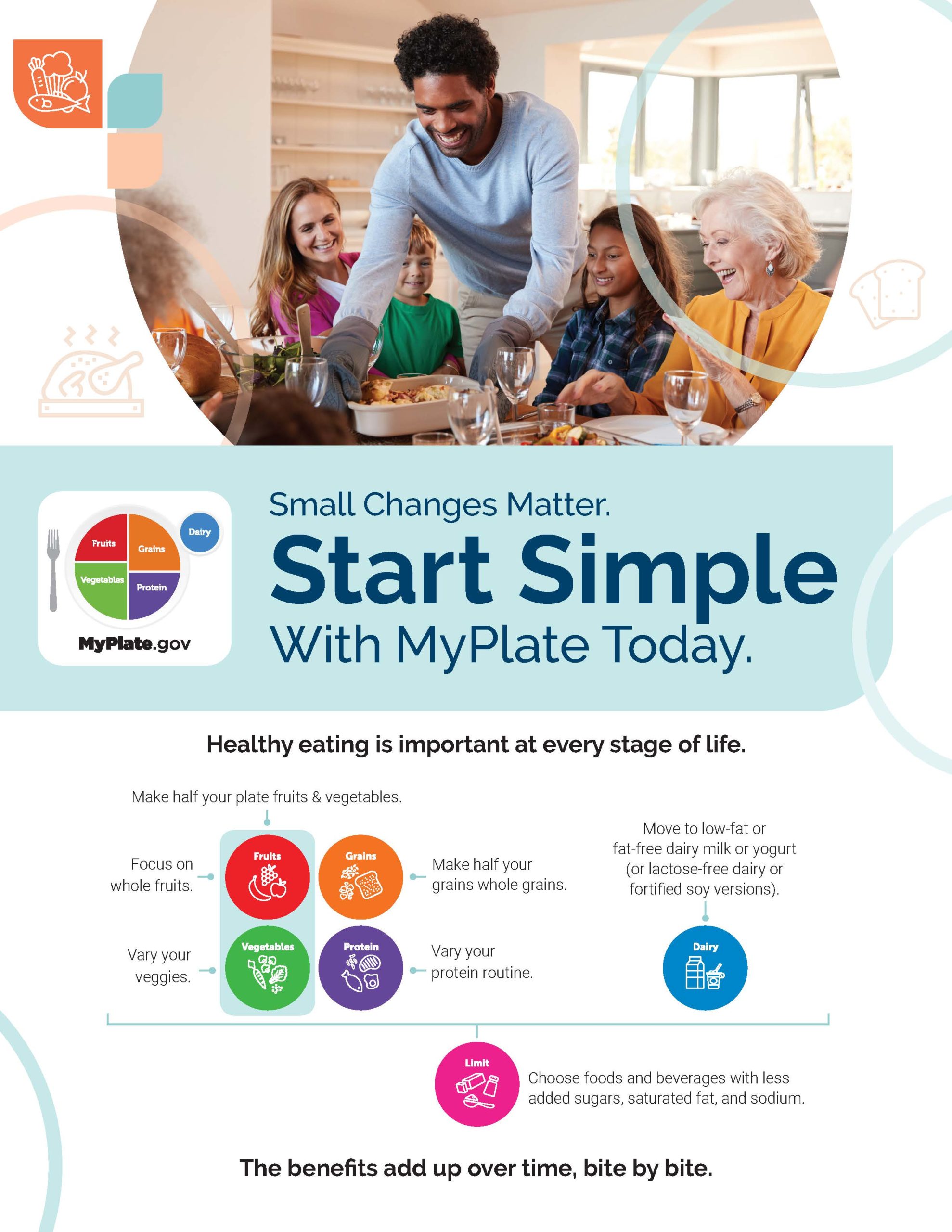
This is the government’s recommendation for healthy eating that has replaced the Food Pyramid (more information at MyPlate.gov). Half of the ‘plate’ should be fruits and veggies (with slightly more veggies than fruit), the other half should be split between grains and protein. Half the grains should be whole grains like oatmeal, whole wheat bread and brown rice. Protein may include non-meat sources such as beans, lentils, plain yogurt, and tofu. Turkey, chicken, and lean ground beef are appropriate choices if your family eats meat, though meat is not needed every day. 

Kids Activity Downloads / Fun Word Search Crossword Puzzle

Offer appropriate portion sizes

Portion sizes that are too large encourage overeating. An easy way to judge is to compare portions to the size of your child’s hand (this conveniently works as your child grows). Fruits, veggies, cereal, and rice servings should be about the size of a closed fist. Meat portions should be the size of the palm and added fats such as butter and mayonnaise should be about the size of the tip of the thumb. If kids want seconds, make it salad or veggies. 

Don’t forget the beverages

Water should be your child’s mainstay. From age 1-2 years, whole milk is recommended (unless your child is still breastfeeding) and thereafter choose low fat milk. 16-24 ounces is a good daily maximum. After age 2 years, 2-2 ½ cups of dairy (be it milk, cheese, yogurt, etc.) is recommended. Drinking milk excessively may decrease the appetite for healthy solids and interfere with iron absorption which can lead to severe iron deficiency. Remember to stop bottles by age 1 year and to limit juice (if any) to a max of 4 ounces a day. It is much better to eat a fruit (with its healthy fiber) than to drink juice which contains as much sugar as soda. No sugar-sweetened drinks should be given on a regular basis (this includes chocolate milk).

Be smart about snacks

Avoid chips and processed snack foods and instead choose healthy snacks such as fruits, veggies, peanut butter, and plain yogurt. Adding a bit of honey or jam to plain yogurt is better than fruited yogurts which are high in sugar. Canned fruit is fine but choose “no sugar added” types.

Be a good role model

Talk about enjoying nourishing yourself with healthy food. Don’t discuss any food struggles you may have (dieting, poor body image, etc.). Model the idea of stopping eating when you are satisfied and full. Limiting fast food and processed food is important, but still OK to enjoy occasionally. 

Get your child involved

Kids love to help and can do so by looking at recipes, setting the table, assisting with cooking when age appropriate, and learning to pick healthy foods at the grocery store. This may translate to more enthusiasm at the dinner table as well as good training for when they are older and more independent.

more about the contributor

Dr. Elise Herman

Blog Posts
Provider Profile

Dr. Herman is passionate about community health outreach, school programs, and child/family health and wellness. She has more than 31 years of experience as a pediatrician in Ellensburg, Washington, the last 3 with KVH Pediatrics. In 2022 Dr. Herman retired from practice and continues to contribute blog posts and remain a visible advocate for kids in the community.

Primary Sidebar

    Footer Top 1

    HRSA National Health Service Corps Site

    Footer Top 2

    603 S. Chestnut Street - Ellensburg, WA 98926
    509.962.9841

    • Facebook
    • Instagram
    • LinkedIn
    • Twitter
    • YouTube

    Footer Top 3

    Footer Bottom 1

    Download the MyPatient Portal App
    Apple Store Google Play Store

    Footer Bottom 2

    • About KVH
    • KVH Legal Information
    • Price Transparency
    • Careers
    • Board of Commissioners
    • Contact Us
    • Foundation

    Footer Bottom 3

    • Our Locations
    • Hospital Services
    • Clinics & Specialty Services
    • Patients & Visitors
    • Patient Policies
    • Events & Education
    • Press Releases

    Footer Bottom 4

    Google Translate